Pharmacometric analyses of various ivermectin dose regimens in Kenya to inform dosing in mass drug administration trials for malaria vector control - Takeaways - MDSpire
Coming Soon: Introducing MDSpire News. Learn more
Conexiant’s news site is now MDSpire News. Learn more

Pharmacometric Evaluation of Ivermectin Dosing Strategies in Kenya to Guide Mass Drug Administration for Malaria Vector Control

  • By

  • Charlotte Kern

  • Yvonne Kamau

  • Kelly Ominde

  • Mercy Tuwei

  • Lawrence Babu

  • Jonathan Karisa

  • Jane Adetifa

  • Marc Pfister

  • Regina N. Rabinovich

  • Carlos Chaccour

  • Marta Maia

  • Urs Duthaler

  • Felix Hammann

  • September 1, 2026

Share

  • 1

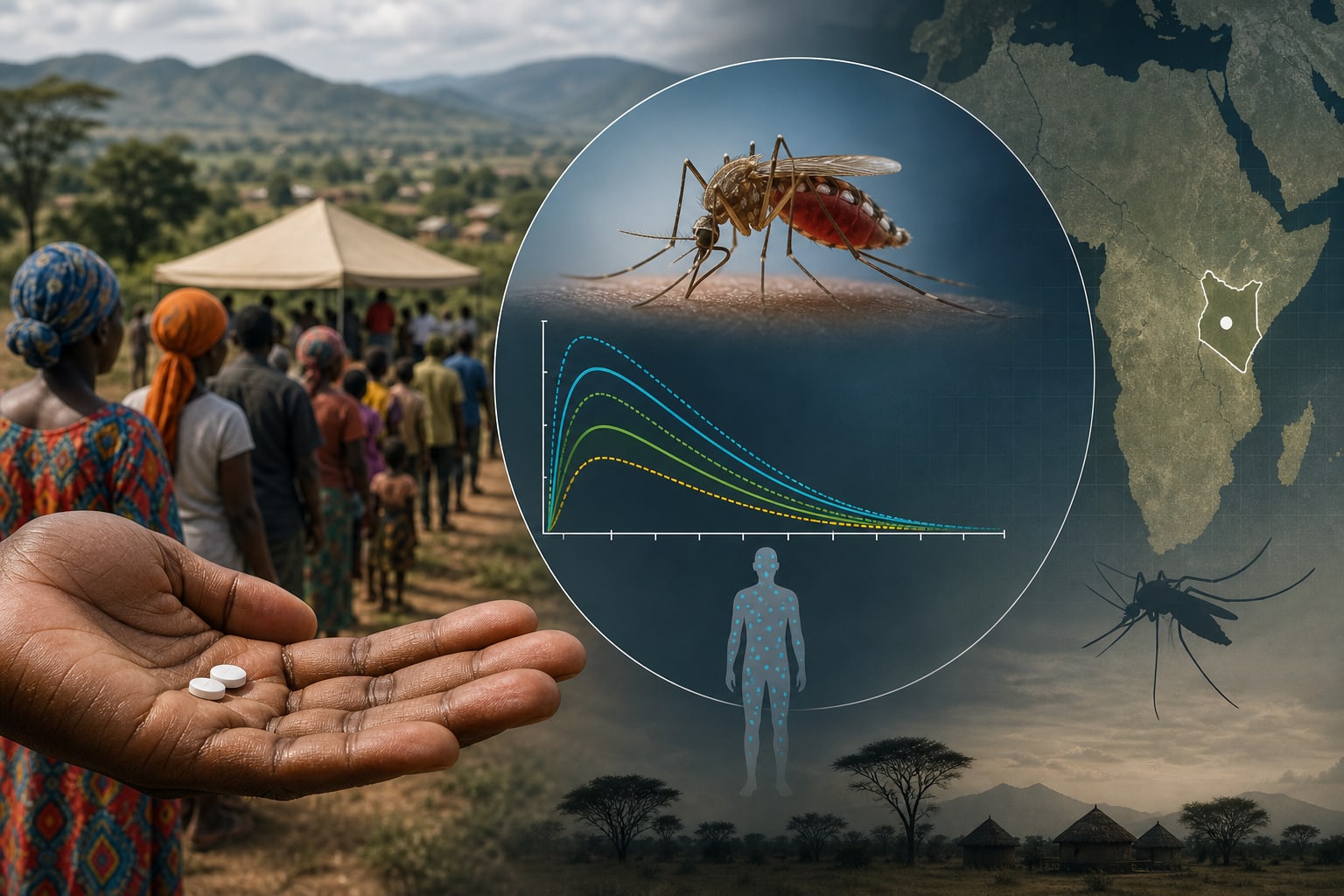
    Ivermectin mass drug administration (MDA) is being evaluated as a complementary strategy for malaria vector control amid residual transmission and increasing resistance to insecticides and antimalarial drugs.

  • 2

    In the BOHEMIA trials, monthly MDA with 400 µg/kg ivermectin for 3 consecutive months reduced malaria incidence by 26% versus an albendazole control in children aged 5–15 years.

  • 3

    The study compared ivermectin exposure after a single 400 µg/kg dose with a 3-day regimen of 300 µg/kg in healthy Kenyan volunteers.

  • 4

    Dried blood spot sampling was evaluated as a field-friendly alternative to plasma sampling because it requires less blood, allows finger-prick collection, and simplifies sample transport and storage.

  • 5

    The research aimed to develop a population pharmacokinetic model and simulate ivermectin regimens to characterize exposure variability and inform dosing and deployment strategies for malaria vector control.

Original Source(s)

Related Content