Percutaneous nephrostomy as a marker of clinical vulnerability in non-metastatic muscle-invasive bladder cancer: prognostic and infectious implications - Takeaways - MDSpire

Percutaneous nephrostomy as a marker of clinical vulnerability in non-metastatic muscle-invasive bladder cancer: prognostic and infectious implications

  • By

  • İlkay Çıtakkul

  • Yasemin Bakkal Temi

  • Ece Baydar

  • Elif Şahin

  • Umut Kefeli

  • Devrim Çabuk

  • Kazım Uygun

  • May 29, 2026

  • 0 min

Share

  • 1

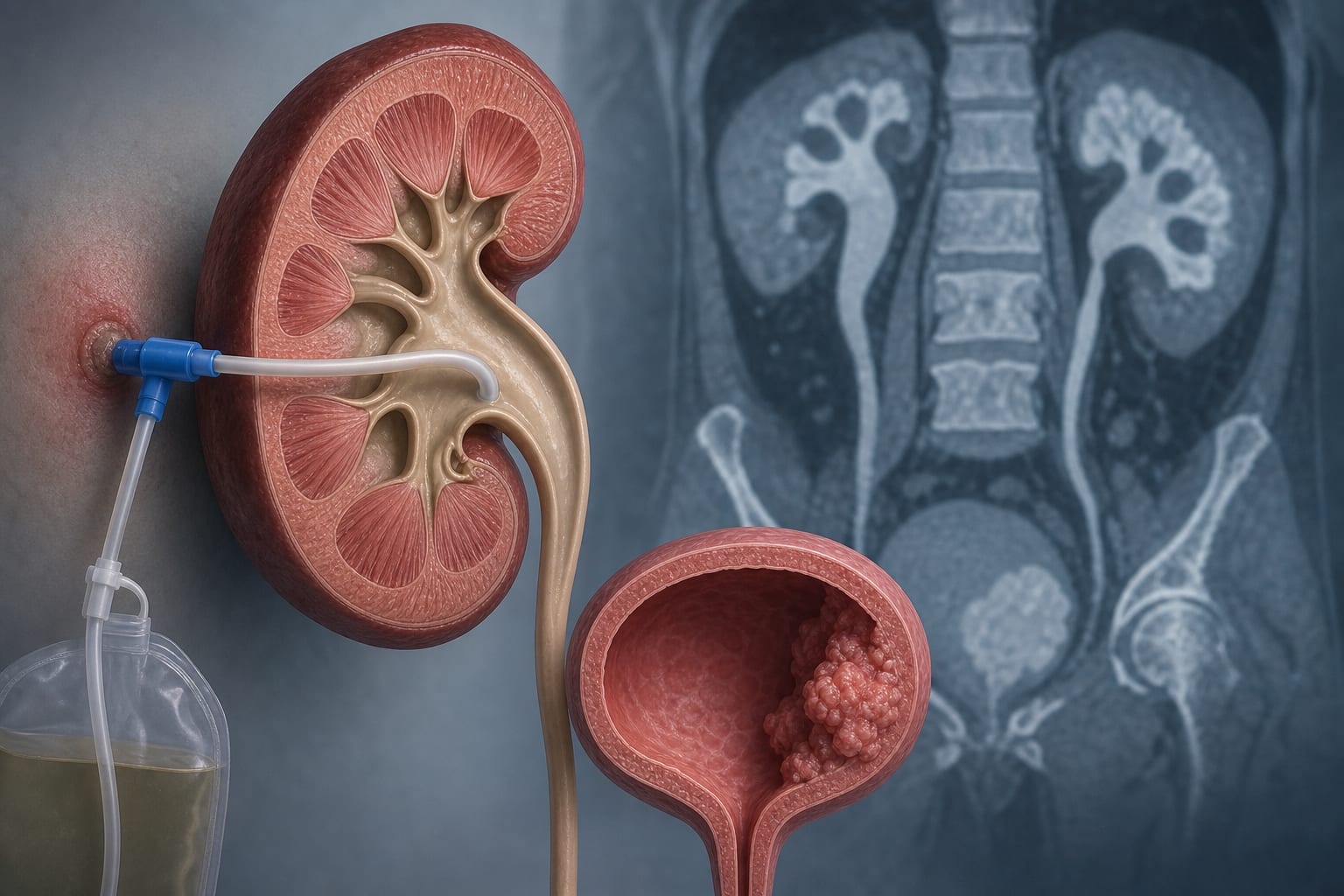
    Percutaneous nephrostomy (PCN) was performed in 27.1% of patients with non-metastatic muscle-invasive bladder cancer (MIBC) in the study.

  • 2

    Median overall survival was shorter in the PCN group compared to non-PCN patients, but PCN did not remain an independent predictor of survival after adjustment.

  • 3

    ECOG performance status, CRP levels, and N stage were identified as independent predictors of overall survival in patients with non-metastatic MIBC.

  • 4

    PCN was strongly associated with increased rates of positive urine cultures and infection-related hospitalizations in the studied population.

  • 5

    The findings suggest that PCN serves as a marker of clinical frailty, necessitating careful evaluation and management of infection risks.

Original Source(s)

Related Content