Establishment of an antepartum predictive model for postpartum hemorrhage in preterm delivery: a retrospective matched case-control study - Takeaways - MDSpire
Coming Soon: Introducing MDSpire News. Learn more
Conexiant’s news site is now MDSpire News. Learn more

Development of a Predictive Model for Postpartum Hemorrhage in Preterm Deliveries: A Retrospective Matched Case-Control Analysis

  • By

  • Qiuping Liao

  • Baomei Xu

  • Lin Lin

  • Lianghui Zheng

  • Jinying Luo

  • Qian Yu

  • Jianying Yan

  • August 20, 2026

Share

  • 1

    A predictive model for postpartum hemorrhage (PPH) in preterm deliveries was developed using clinical data from 728 singleton pregnant women.

  • 2

    Logistic regression analysis identified significant risk factors for PPH, including induced abortions, gestational diabetes, anemia, and polyhydramnios.

  • 3

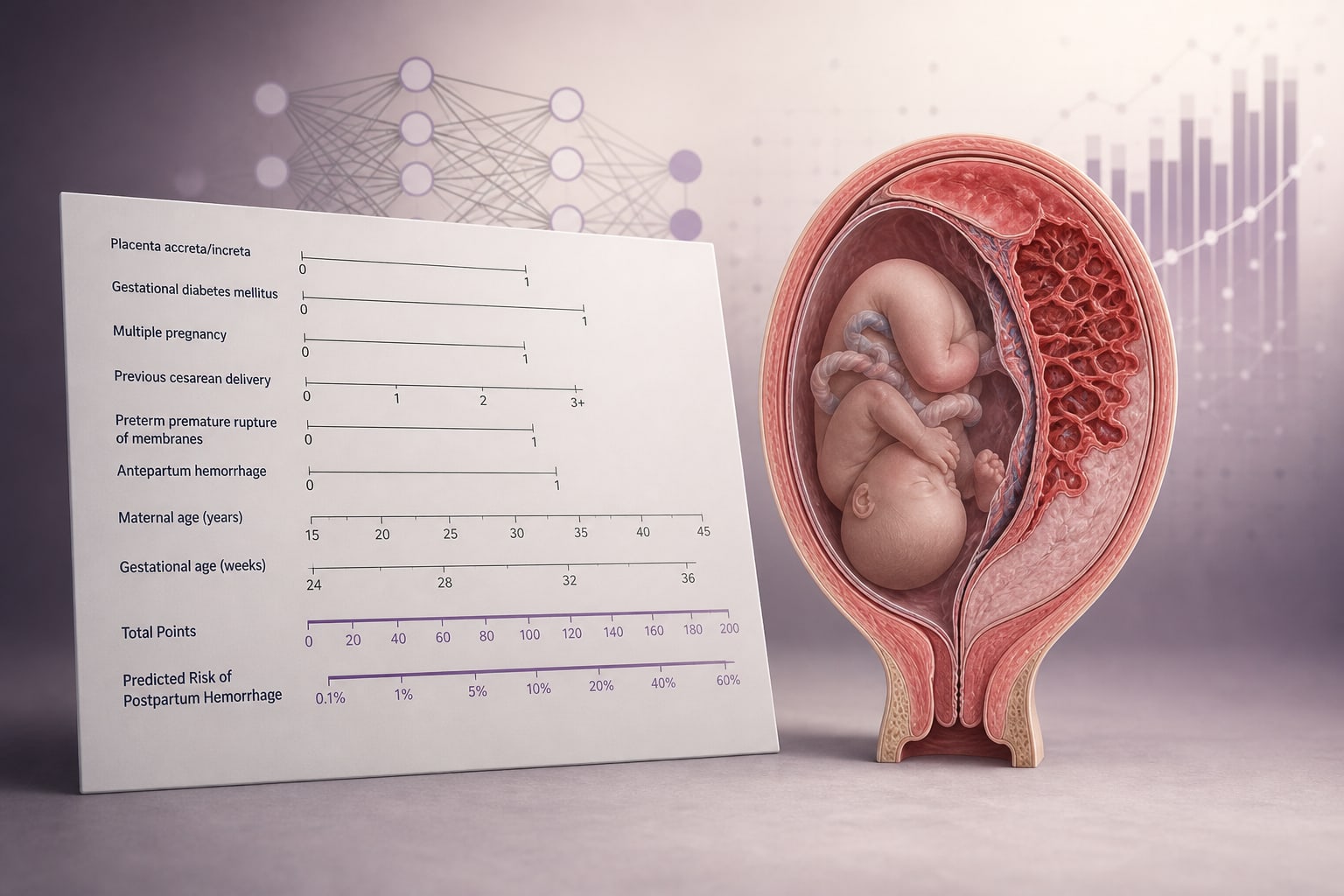
    The nomogram prediction model achieved a receiver operating characteristic (ROC) curve area under the curve (AUC) of 0.770.

  • 4

    Placenta accreta and increta were highlighted as the most significant risk factors for PPH in preterm deliveries, according to the BP neural network analysis.

  • 5

    The study's findings indicate that the predictive model has moderate capability for identifying women at high risk for PPH during preterm delivery.

Original Source(s)

Related Content