Commentary: Assessment of treatment effectiveness, follow-up results, and recurrence patterns in children with Helicobacter pylori infection - Takeaways - MDSpire
Coming Soon: Introducing MDSpire News. Learn more
Conexiant’s news site is now MDSpire News. Learn more

Discussion: Evaluating the Efficacy of Treatment, Follow-Up Outcomes, and Recurrence Trends in Pediatric Helicobacter pylori Infections

  • By

  • Toshihiko Kakiuchi

  • September 3, 2026

Share

  • 1

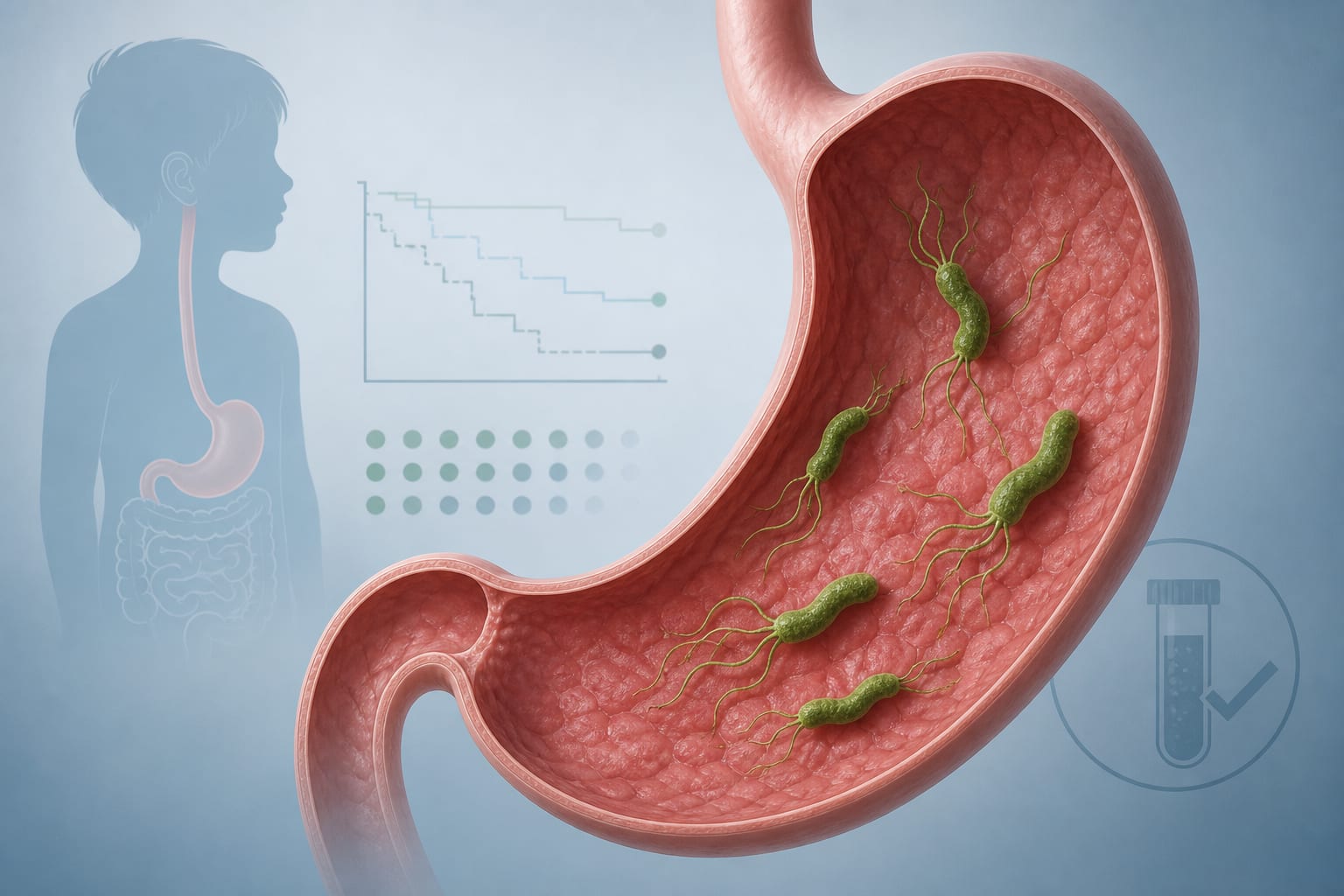
    Luo et al. provided longitudinal evidence on recurrence after Helicobacter pylori eradication therapy in children.

  • 2

    Recurrence is defined as H. pylori reappearing after an initially negative post-treatment test, distinct from recrudescence and reinfection.

  • 3

    The study evaluated eradication only four weeks post-treatment, which may lead to false-negative results before residual organisms are detectable.

  • 4

    The lack of bacterial strain typing in the study limits the ability to differentiate between recrudescence and reinfection.

  • 5

    Proper interpretation of recurrence is crucial, as mislabeling it could affect treatment efficacy assessment and epidemiological understanding.

Original Source(s)

Related Content