Comparative characteristics and outcomes of bacterial and fungal skull base osteomyelitis: a retrospective analysis of 127 cases - Takeaways - MDSpire
Coming Soon: Introducing MDSpire News. Learn more
Conexiant’s news site is now MDSpire News. Learn more

Outcomes and Distinctive Features of Bacterial versus Fungal Skull Base Osteomyelitis: A Retrospective Study of 127 Cases

  • By

  • Léo Mimram

  • David Lebeaux

  • Benjamin Verillaud

  • Florian Chatelet

  • Samia Hamane

  • Mathilde Liberge

  • Rishma Amarsy

  • Philippe Herman

  • Jean-Michel Molina

  • Anne-Lise Munier

  • August 26, 2026

Share

  • 1

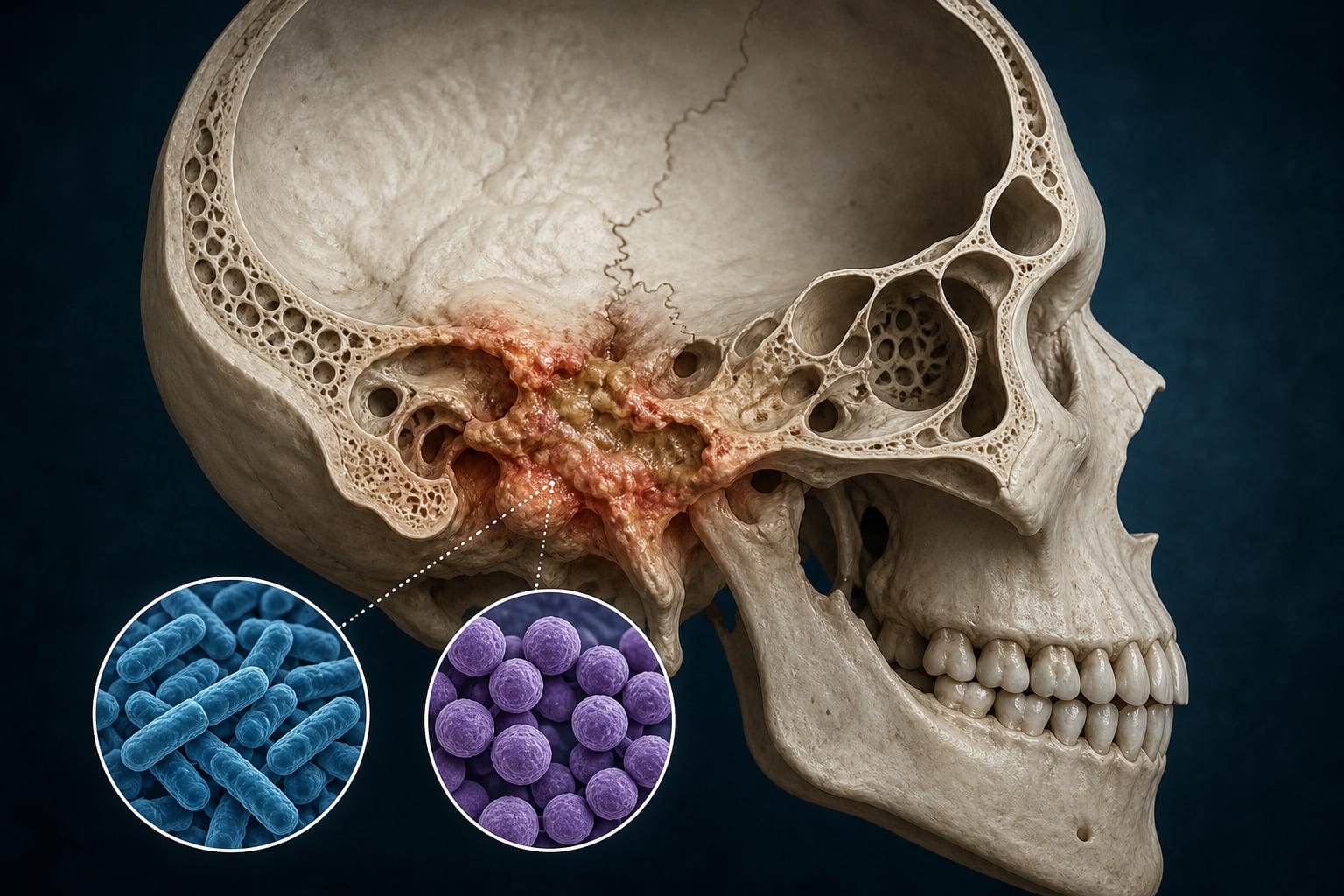
    Skull base osteomyelitis is a severe infection that often develops through contiguous spread from otitis, particularly in patients with poorly controlled diabetes or immunocompromising conditions.

  • 2

    Pseudomonas aeruginosa was the most frequently identified pathogen, while Aspergillus flavus was the most common fungus in the study cohort.

  • 3

    The retrospective study analyzed 127 SBO cases treated at a Paris tertiary hospital between January 2012 and August 2022.

  • 4

    Deep surgical sampling was more frequently required to diagnose fungal SBO and often added information beyond superficial sampling that changed diagnosis and treatment.

  • 5

    No official guidelines exist for SBO diagnostic or treatment modalities, and standardized diagnostic and clinical-cure criteria remain unavailable.

Original Source(s)

Related Content