-
1
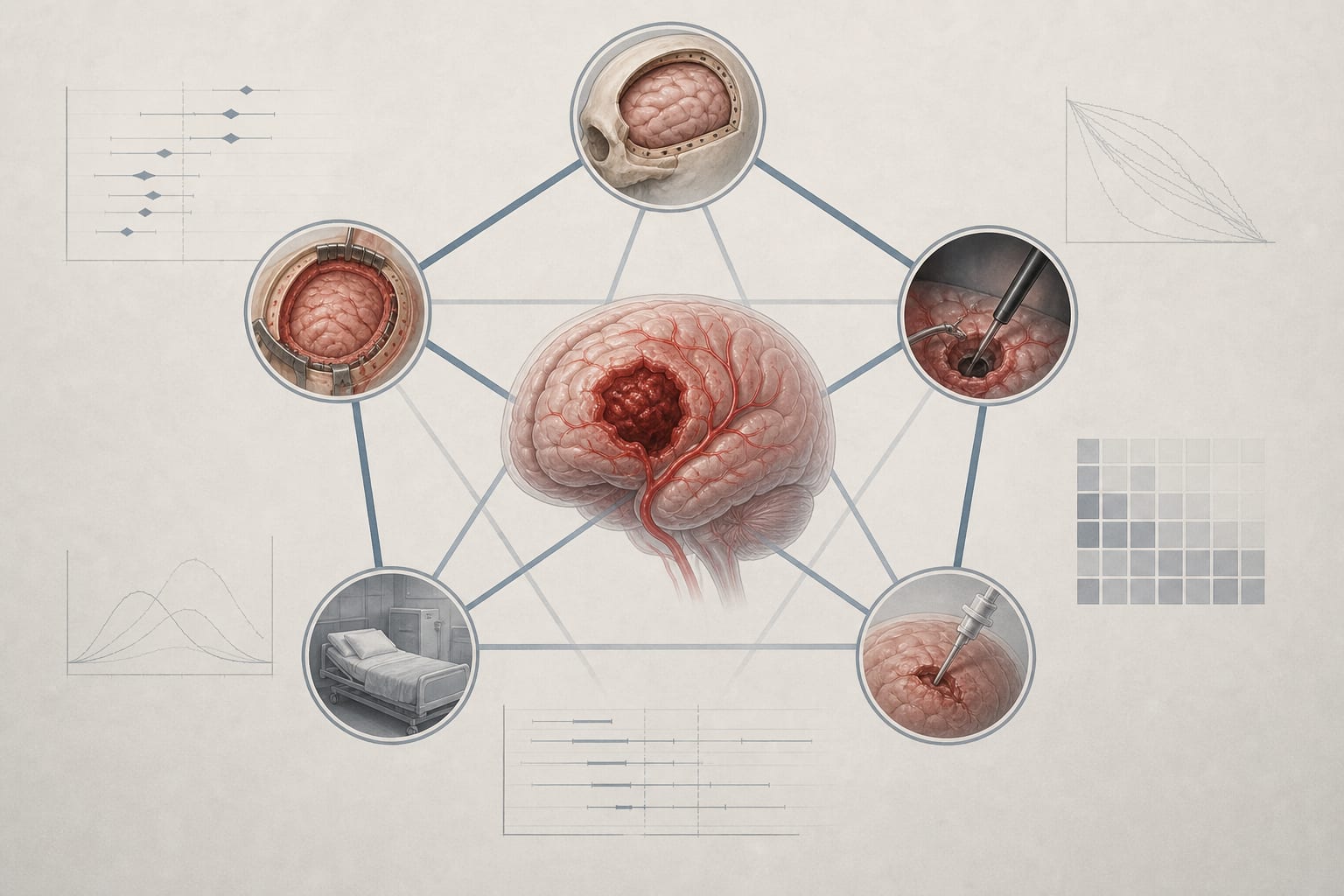
This study conducted a Bayesian network meta-analysis to compare conservative medical treatment and various surgical interventions for spontaneous intracerebral hemorrhage.
-
2
Minimally invasive puncture surgery (MIPS) and endoscopic surgery (ES) ranked highest for good functional outcomes at 6 months, outperforming conventional craniotomy and conservative treatment.
-
3
Decompressive craniectomy (DC) showed the highest probabilistic ranking for 6-month mortality, although most comparisons lacked statistical significance.
-
4
ES and MIPS significantly reduced operative time and intraoperative blood loss compared to conventional craniotomy, with MIPS showing the largest reductions.
-
5
The findings suggest that MIPS and ES may improve functional recovery and reduce perioperative burden, while DC may offer survival benefits, warranting further research.