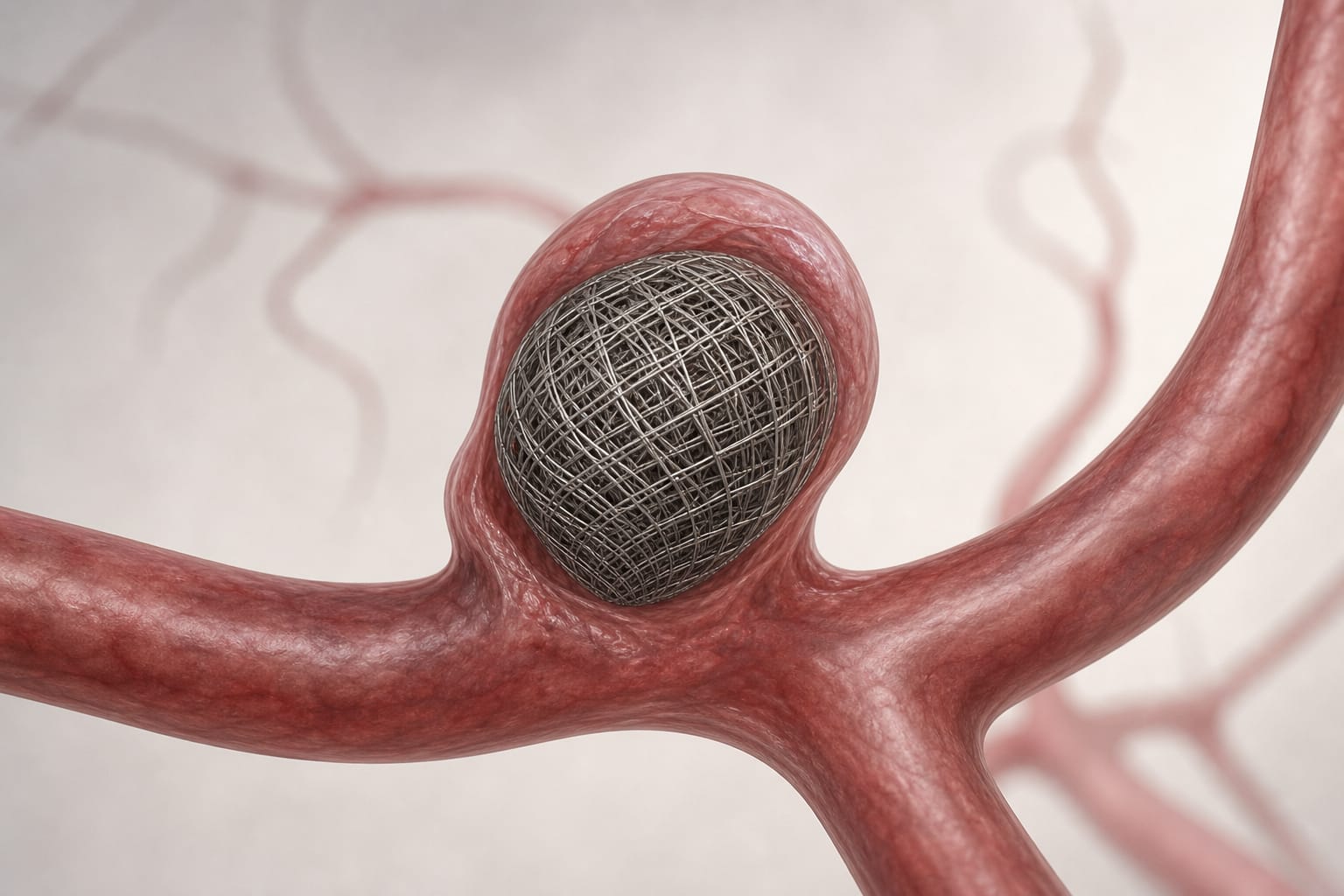
Reduced retreatment rates observed with smaller WEB devices compared to larger counterparts: findings from the WorldWideWEB study
-
By
-
Franja Dugar
-
Hamza Adel Salim
-
Basel Musmar
-
Nimer Adeeb
-
Mahmoud Dibas
-
Davide Simonato
-
Yan-Lin Li
-
Muhammed Amir Essibayi
-
Oktay Algin
-
Sherief Ghozy
-
Sovann V. Lay
-
Adrien Guenego
-
Leonardo Renieri
-
Joseph Carnevale
-
Guillaume Saliou
-
Panagiotis Mastorakos
-
Eimad Shotar
-
Markus Möhlenbruch
-
Michael Kral
-
Charlotte Chung
-
Mohamed M. Salem
-
Ivan Lylyk
-
Paul M. Foreman
-
Hamza Shaikh
-
Vedran Župančić
-
Muhammad U. Hafeez
-
Joshua Catapano
-
Muhammad Waqas
-
Ahmet Gurhan Gurcay
-
Giyas Ayberk
-
Muhammet Arslan
-
James D. Rabinov
-
Onur Ergun
-
Julian Maingard
-
Clemens M. Schirmer
-
Mariangela Piano
-
Anna L. Kühn
-
Caterina Michelozzi
-
Robert M. Starke
-
Ameer Hassan
-
Mark Ogilvie
-
Jesse Jones
-
Waleed Brinjikji
-
Marios Psychogios
-
Marie T. Nawka
-
Jens Fiehler
-
Thi Dan Linh Nguyen-Kim
-
Bryan Pukenas
-
Jan-Karl Burkhardt
-
Thien Huynh
-
Juan Carlos Martinez-Gutierrez
-
Sunil A. Sheth
-
Diana Slawski
-
Rabih G. Tawk
-
Benjamin Pulli
-
Boris Lubicz
-
Pietro Panni
-
Ajit S. Puri
-
Guglielmo Pero
-
Eytan Raz
-
Christoph J. Griessenauer
-
Hamed Asadi
-
Adnan Siddiqui
-
Elad I. Levy
-
Neil Haranhalli
-
David Altschul
-
Andrew F. Ducruet
-
Robert W. Regenhardt
-
Christopher J. Stapleton
-
Peter Kan
-
Vladimir Kalousek
-
Pedro Lylyk
-
Srikanth Boddu
-
Jared Knopman
-
Stavropoula I. Tjoumakaris
-
Hugo H. Cuellar-Saenz
-
Pascal M. Jabbour
-
Frédéric Clarençon
-
Nicola Limbucci
-
Maurizio Fuschi
-
Aman B. Patel
-
Mohammad Almohammad
-
Andre Kemmling
-
Adam A. Dmytriw
-
Peter B. Sporns
-
September 8, 2026