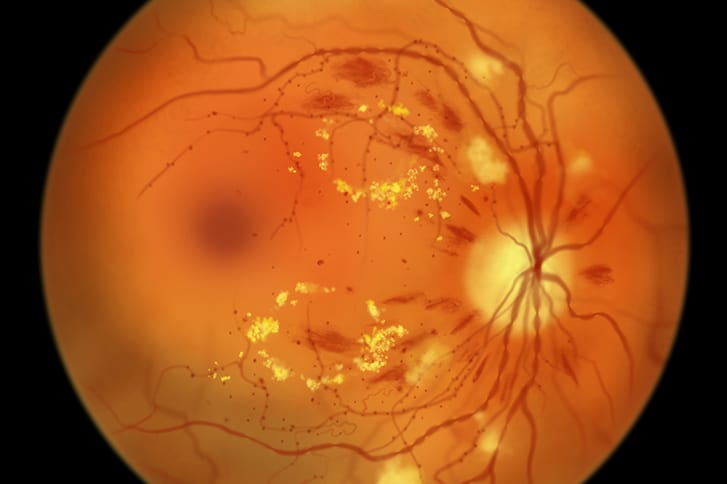
Machine learning models achieved AUC values of 0.94 or higher for classifying diabetic eye disease stages using age, sex, and up to three visual function tests.
2
The study evaluated 1,901 eyes from 1,032 participants, primarily from Northern Ireland, classifying them into four diabetic eye disease groups.
3
Top-performing models combined three visual function tests, with single-test models being rare and primarily limited to specific tasks.
4
The research highlighted the potential of simplified testing for diabetic eye disease, achieving similar performance to traditional nine-test batteries.
5
Future longitudinal studies are needed to explore the predictive capability of visual function measurements on morphological changes in diabetic eye disease.