Transcranial magnetic stimulation combined with functional near-infrared spectroscopy to elucidate the neurophysiological mechanisms of post-stroke hemiplegia: a systematic review - Takeaways - MDSpire

Transcranial magnetic stimulation combined with functional near-infrared spectroscopy to elucidate the neurophysiological mechanisms of post-stroke hemiplegia: a systematic review

  • By

  • Yuzhe Zou

  • Xiangfeng Lai

  • Qian Liu

  • Hongmei Zhang

  • Hui Li

  • Wei Li

  • Dingwei He

  • Liqing Yao

  • Xue Yang

  • June 10, 2026

  • 0 min

Share

  • 1

    Post-stroke hemiplegia often results in motor dysfunction due to imbalanced interhemispheric competition and abnormal neural network reorganization.

  • 2

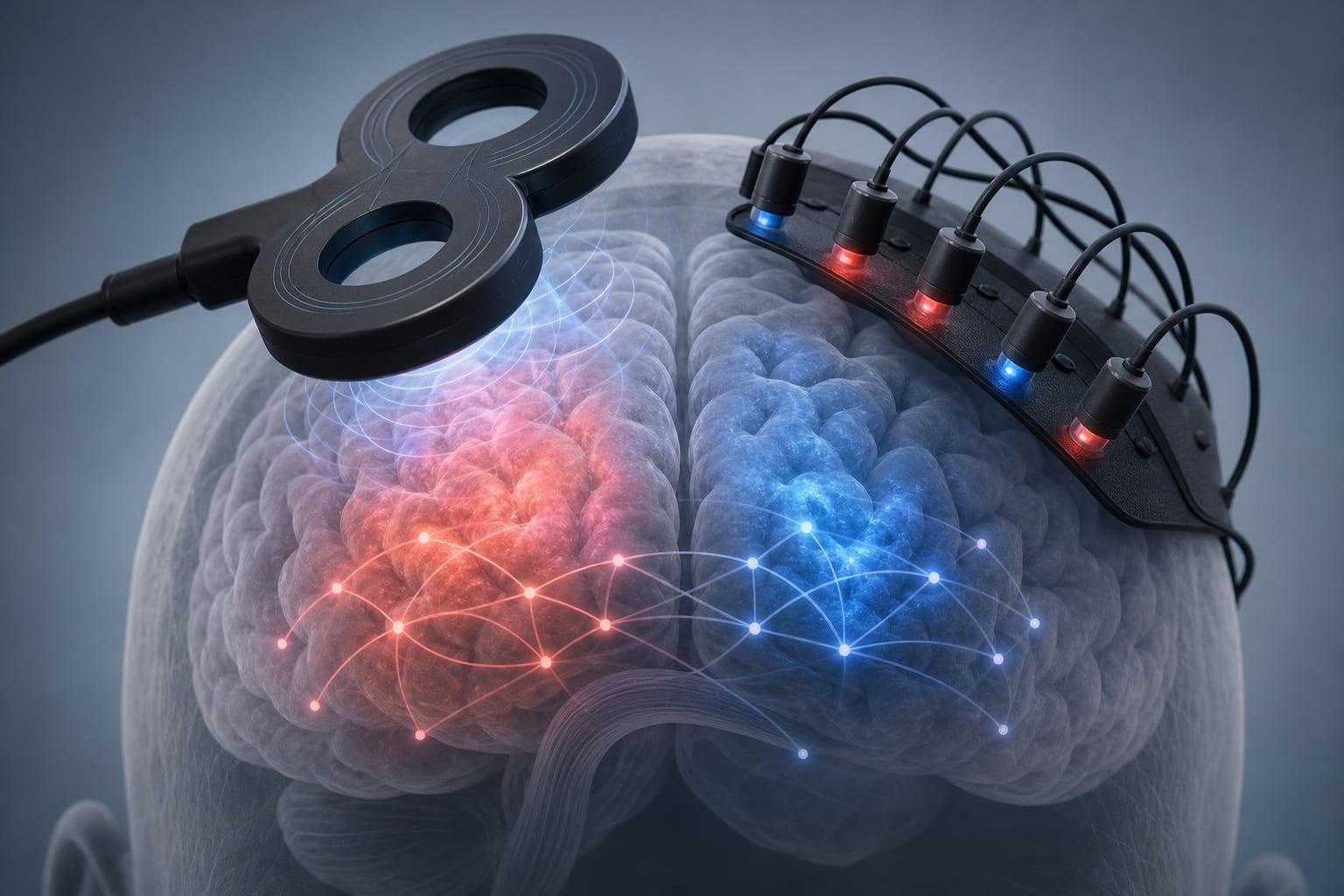
    The combined use of transcranial magnetic stimulation (TMS) and functional near-infrared spectroscopy (fNIRS) shows promise for assessing and improving post-stroke motor function.

  • 3

    Six out of nine studies in the review reported significant improvements in motor function using the TMS-fNIRS protocol, indicating its clinical efficacy.

  • 4

    Effective TMS interventions enhance activation of the ipsilesional primary motor cortex and improve interhemispheric balance and functional connectivity.

  • 5

    Current studies on TMS-fNIRS have limitations such as small sample sizes and high risk of bias, necessitating larger, standardized trials for better evidence.

Original Source(s)

Related Content