-
1
Exercise is recognized as an effective intervention for depression, but its biological mechanisms are not fully understood.
-
2
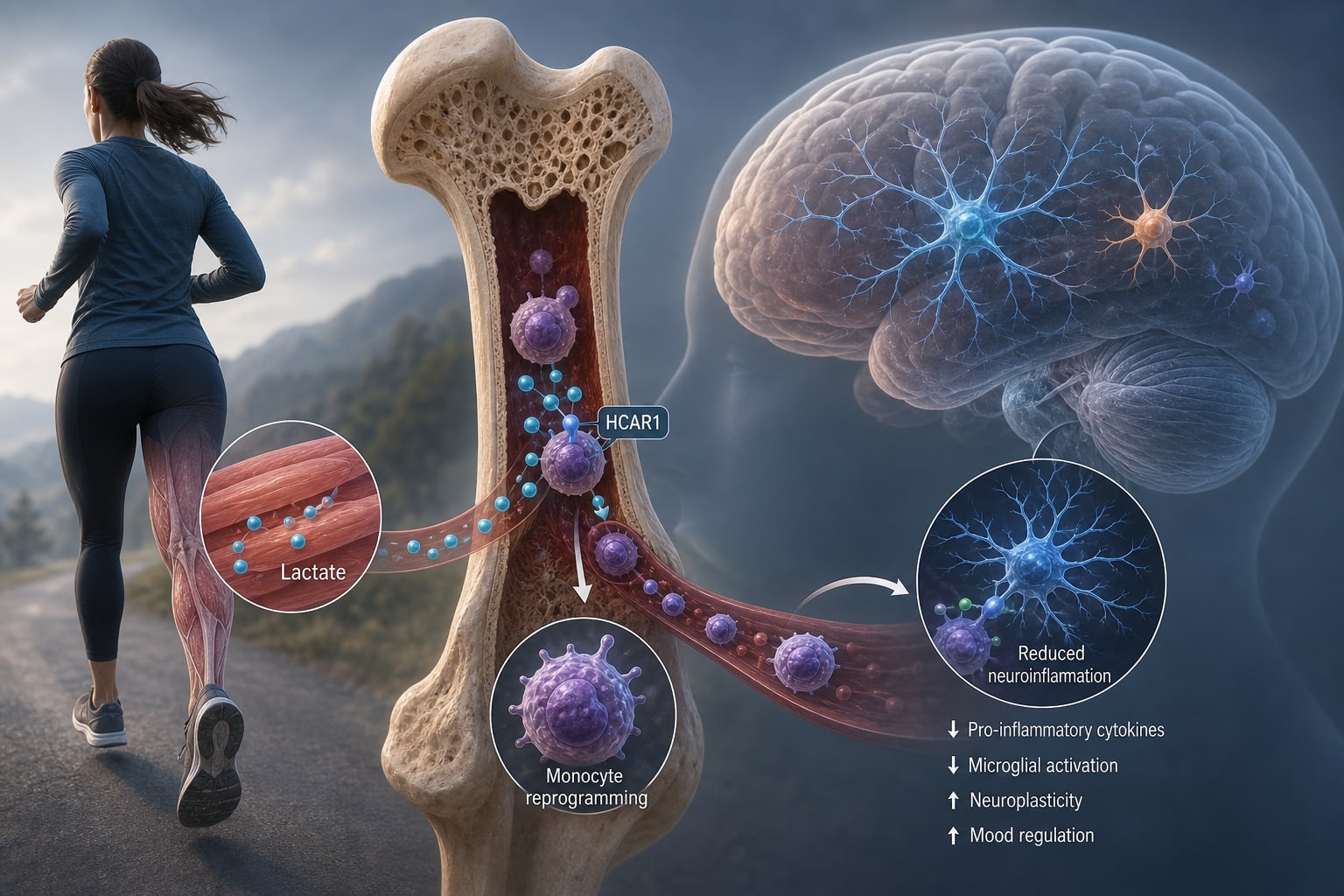
The review proposes that exercise-induced lactate acts as an immunometabolic signal, linking exercise metabolism to inflammation-related depression.
-
3
Lactate is produced during exercise as a dynamic pulse, influencing immune, vascular, and brain-associated cells through HCAR1.
-
4
The framework integrates various biological systems, including skeletal muscle metabolism and immune responses, into exercise psychiatry.
-
5
Future studies should validate the lactate-HCAR1 pathway and its implications for patient stratification in mechanistic trials.