Endocrine-driven inflammatory–epigenetic adaptation as a proposed axis of radioresistance in endocrine-exposed prostate cancer: a translational hypothesis - Takeaways - MDSpire

Endocrine-driven inflammatory–epigenetic adaptation as a proposed axis of radioresistance in endocrine-exposed prostate cancer: a translational hypothesis

  • By

  • Miloš Grujić

  • Marija Živković Radojević

  • Tinatin Alaverdashvili

  • Imdat Eroglu

  • Katarina Krasić

  • Katarina Janković

  • Neda Milosavljević

  • June 23, 2026

  • 0 min

Share

  • 1

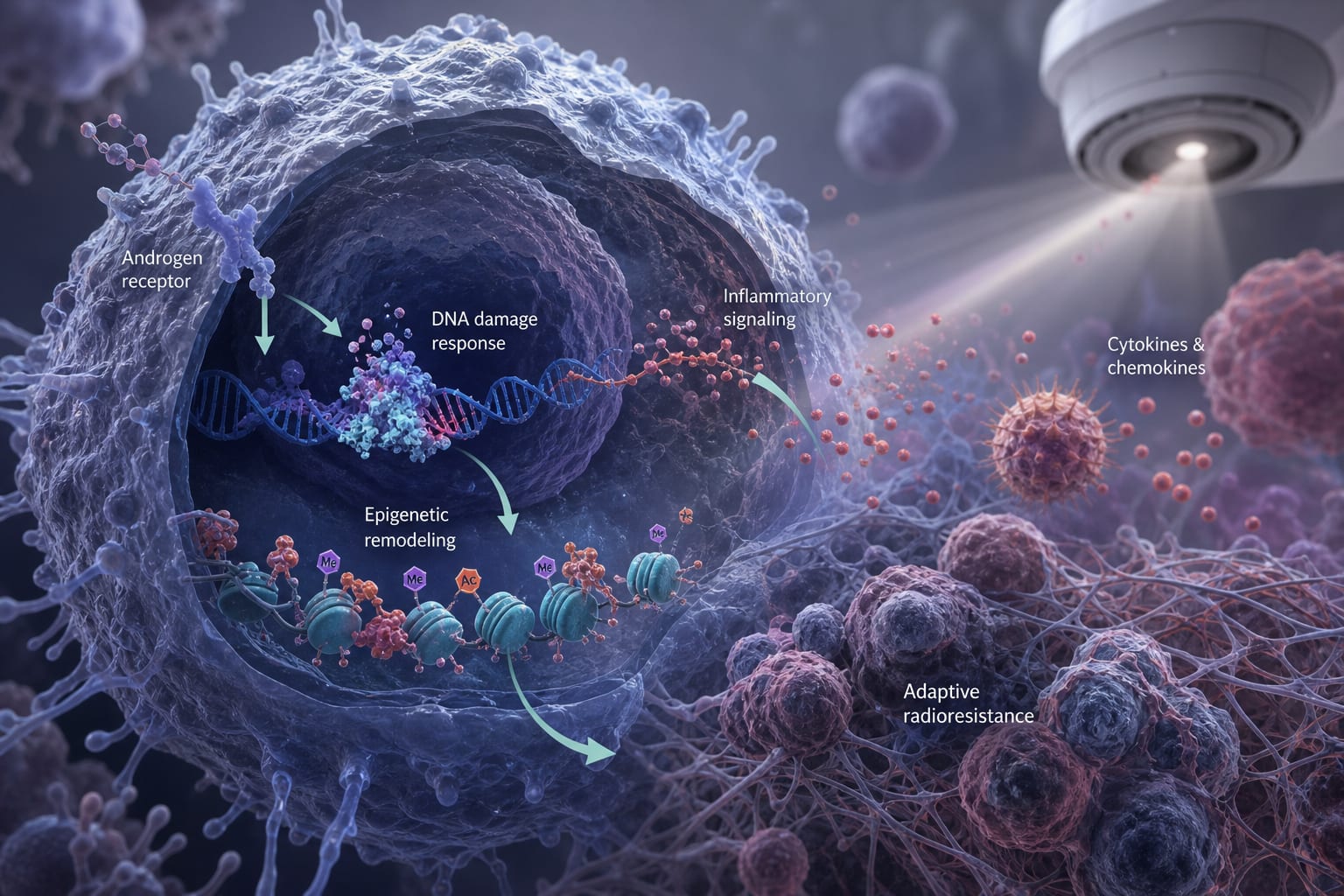
    Prostate cancer radioresistance is influenced by androgen receptor signaling, DNA damage response, inflammatory adaptation, and lineage plasticity.

  • 2

    Endocrine therapy, particularly androgen deprivation therapy, can initially impair DNA damage response but may later promote inflammatory signaling and epigenetic changes.

  • 3

    Adaptive inflammatory signaling and epigenetic remodeling can stabilize treatment-tolerant states in prostate cancer, affecting radiotherapy outcomes.

  • 4

    IL-6 signaling is linked to prostate cancer progression and radioresistance, suggesting a connection between endocrine stress and diminished radiation response.

  • 5

    The proposed model emphasizes the dynamic nature of endocrine-associated radiosensitization, which may vary over time in response to treatment.

Original Source(s)

Related Content