Clinical heterogeneity and treatment optimization in anti-KLHL11 encephalitis: two case reports and literature review - Takeaways - MDSpire

Clinical heterogeneity and treatment optimization in anti-KLHL11 encephalitis: two case reports and literature review

  • By

  • Lin Han

  • Ying Li

  • Chuan Li

  • Lin Li

  • Dan Yao

  • Yunfeng Hao

  • Xuan Zhou

  • Yuting Dang

  • Rong Zhang

  • Lan Gao

  • Jun Luo

  • Jiaxin Yang

  • Ying Du

  • Wei Zhang

  • June 1, 2026

  • 0 min

Share

  • 1

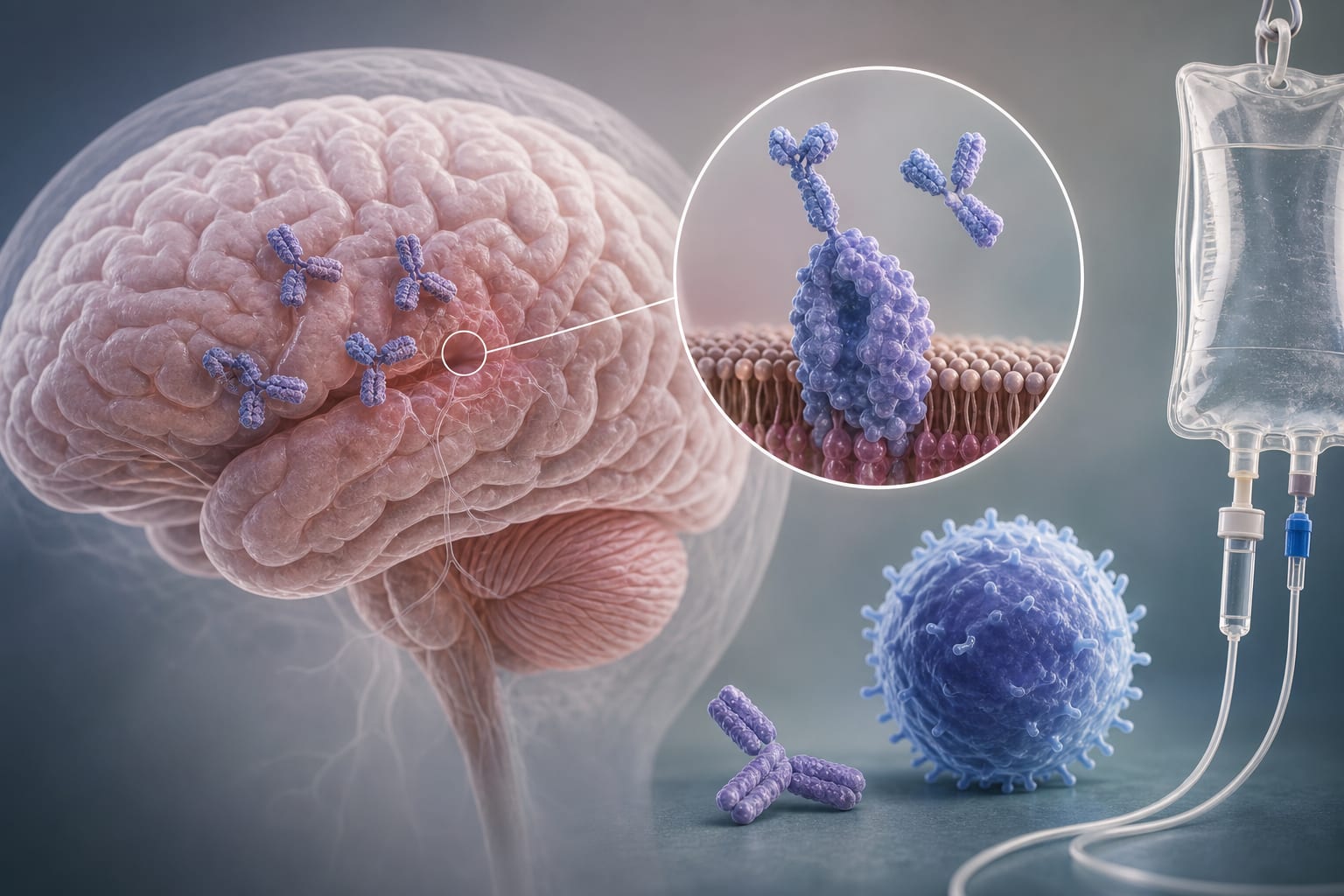
    Anti-KLHL11 encephalitis is a recently identified autoimmune encephalitis subtype, often associated with testicular germ cell tumors in males.

  • 2

    Clinical manifestations of anti-KLHL11 encephalitis are diverse, including neuropsychiatric symptoms, seizures, and limbic encephalitis features.

  • 3

    Treatment strategies include immunotherapy with intravenous immunoglobulin and rituximab, but responses can vary significantly among patients.

  • 4

    A high serum anti-KLHL11 titer (1:320) may indicate treatment refractoriness, necessitating further validation in larger studies.

  • 5

    Efgartigimod shows promise as a therapeutic option for anti-KLHL11 encephalitis, particularly in refractory cases.

Original Source(s)

Related Content