MERS-CoV in the Middle East and Africa: from surveillance gaps in humans and dromedary camels to One Health frameworks for spillover, prevention, research and response preparedness - Takeaways - MDSpire
Coming Soon: Introducing MDSpire News. Learn more
Conexiant’s news site is now MDSpire News. Learn more

MERS-CoV in the Middle East and Africa: Addressing Surveillance Deficiencies in Humans and Dromedary Camels Through One Health Approaches for Spillover Prevention, Research, and Preparedness

  • By

  • Esam I. Azhar

  • Manaf Alqahtani

  • Abdullah M. Assiri

  • Seif S. Al-Abri

  • Tieble Traore

  • Francine Ntoumi

  • Moses Bockarie

  • Eskild Petersen

  • Giuseppe Ippolito

  • David S. Hui

  • Brian McCloskey

  • Stanley Perlman

  • Alimuddin Zumla

  • September 3, 2026

Share

  • 1

    MERS-CoV was first identified in 2012 in a patient from Saudi Arabia with severe pneumonia and renal failure.

  • 2

    As of July 5, 2026, WHO had reported 2,637 laboratory-confirmed human MERS-CoV cases from 27 countries, including 965 deaths (36.6%).

  • 3

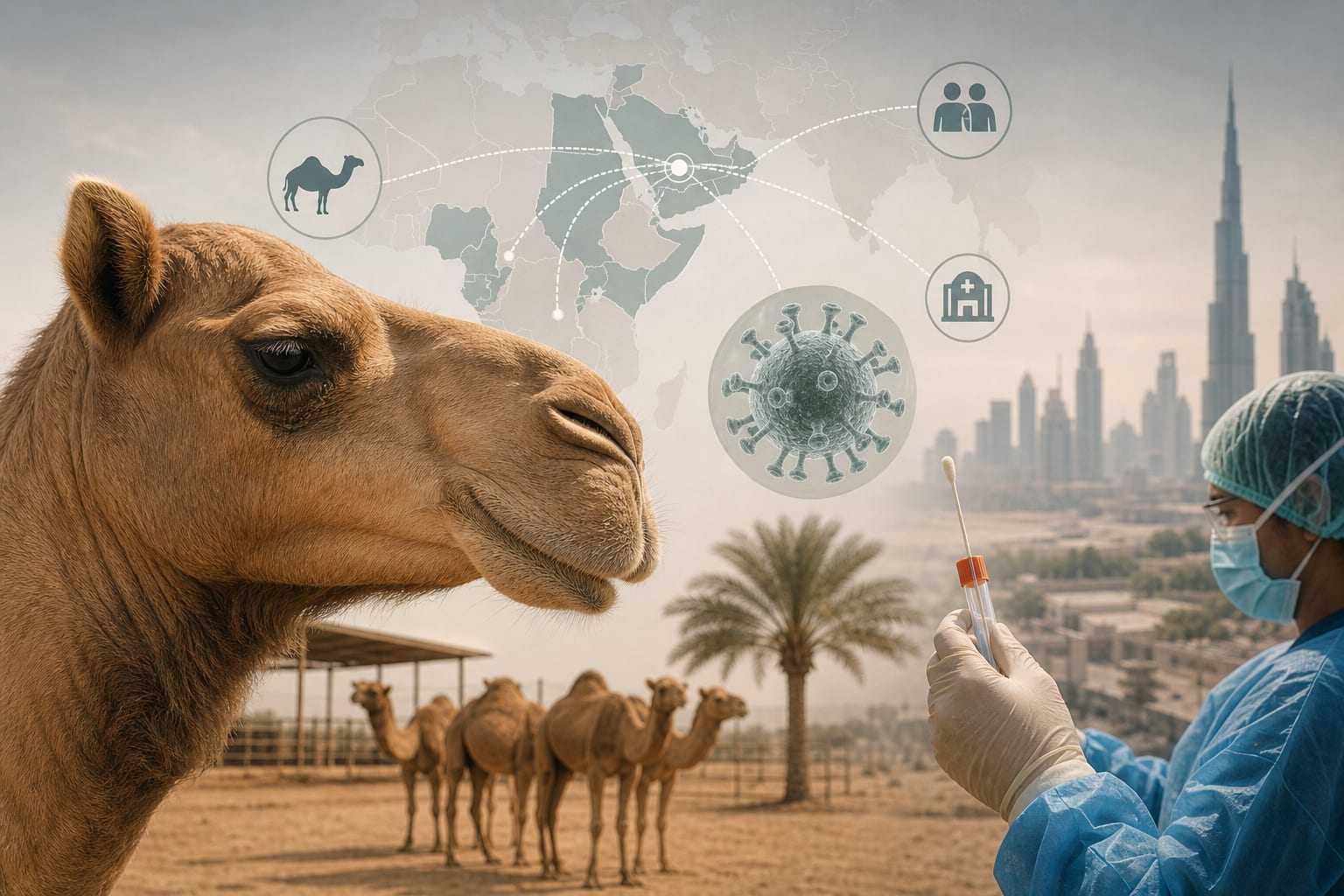
    Extensive MERS-CoV infection or exposure occurs in dromedary camels across Africa, while PCR-confirmed human disease is rarely reported, creating the “Africa paradox.”

  • 4

    The authors propose a two-barrier One Health model that links spillover prevention at the camel–human interface with prevention of healthcare-associated amplification after human infection.

  • 5

    The framework emphasizes reciprocal capacity strengthening and shared Middle Eastern and African leadership in surveillance, laboratory and genomic work, research, data interpretation, and benefit sharing.

Original Source(s)

Related Content