The association of remnant cholesterol inflammatory index with the risk of major adverse cardiovascular events in patients with angina undergoing percutaneous coronary intervention: a retrospective study - Takeaways - MDSpire

The association of remnant cholesterol inflammatory index with the risk of major adverse cardiovascular events in patients with angina undergoing percutaneous coronary intervention: a retrospective study

  • By

  • Yazhao Sun

  • Xiao Yu

  • Chunlan Bai

  • Dongsheng Liu

  • Wenrui Xiong

  • June 17, 2026

  • 0 min

Share

  • 1

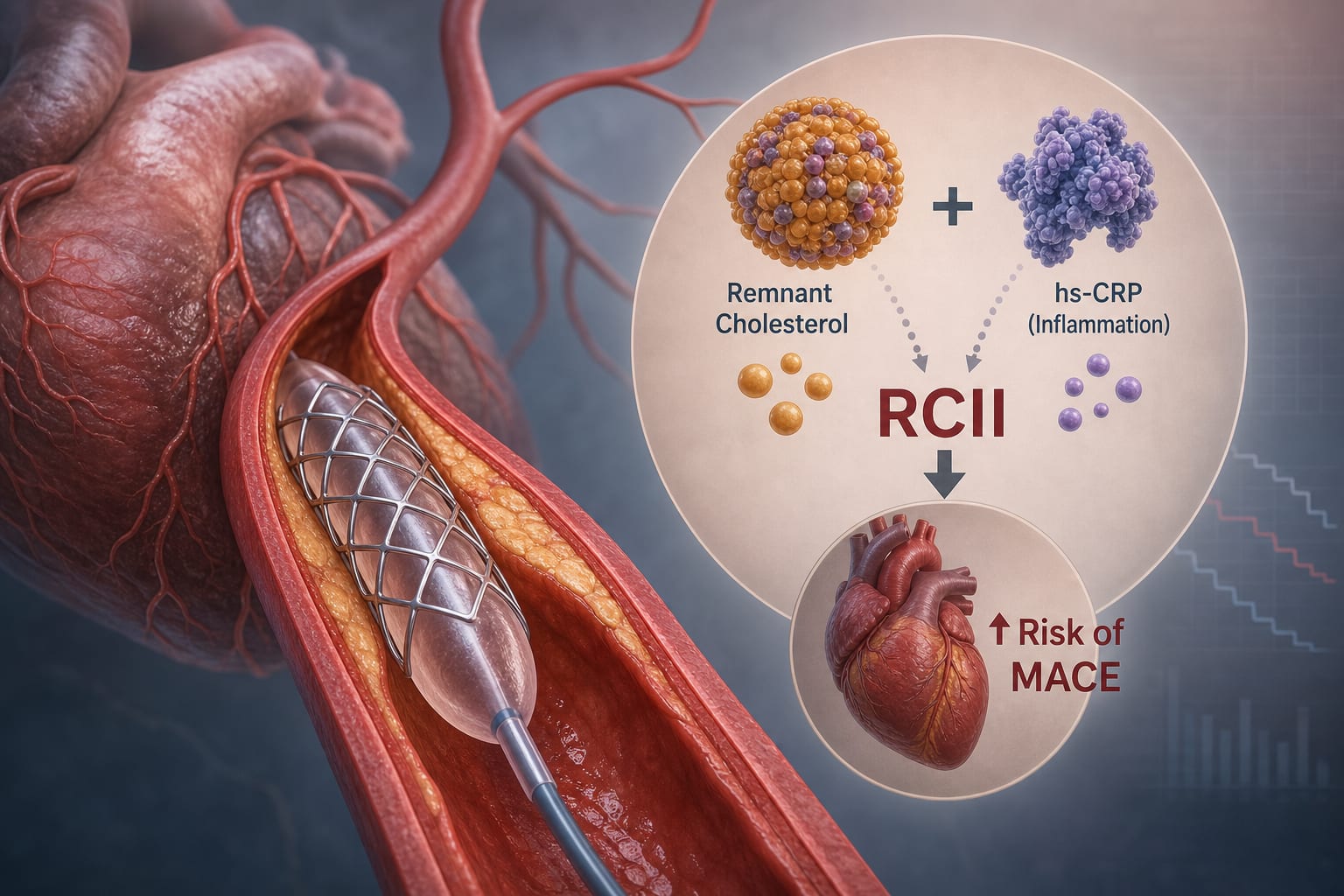
    The remnant cholesterol-inflammation index (RCII) combines remnant cholesterol and hs-CRP to assess cardiovascular risk in angina patients.

  • 2

    In a study of 2,171 angina patients undergoing PCI, higher baseline RCII was linked to increased risk of major adverse cardiovascular events (MACE).

  • 3

    Each standard deviation increase in RCII correlated with a 5% higher MACE risk, with significant associations across various subgroups.

  • 4

    Non-linear analysis indicated a strong positive relationship between RCII and MACE risk, emphasizing its potential as a clinical biomarker.

  • 5

    Time-dependent ROC analysis showed moderate predictive ability of RCII for MACE risk over a 36-month follow-up period.

Original Source(s)

Related Content