Radon balneotherapy in rheumatologic diseases: potential mechanisms and implications for cardiovascular autonomic control and inflammation - Takeaways - MDSpire

Radon balneotherapy in rheumatologic diseases: potential mechanisms and implications for cardiovascular autonomic control and inflammation

  • By

  • Gabriel D. Rodrigues

  • Earric Lee

  • Benoit Dugué

  • Christian Hanshans

  • Maria Chiara Maccarone

  • Konstantinos Triantafyllias

  • Arnulf Hartl

  • Eugenijus Kaniusas

  • Sabrina Mörkl

  • Thomas E. Schmid

  • Goda-Camille Mickeviciute

  • Hannes Untner

  • Werner Klingler

  • Martin Offenbächer

  • June 24, 2026

  • 0 min

Share

  • 1

    Rheumatologic diseases involve chronic conditions affecting joints and systemic health, increasing cardiovascular risk and reducing quality of life.

  • 2

    Radon balneotherapy combines low-dose radon exposure with mineral-rich water immersion and is practiced in various European spa regions.

  • 3

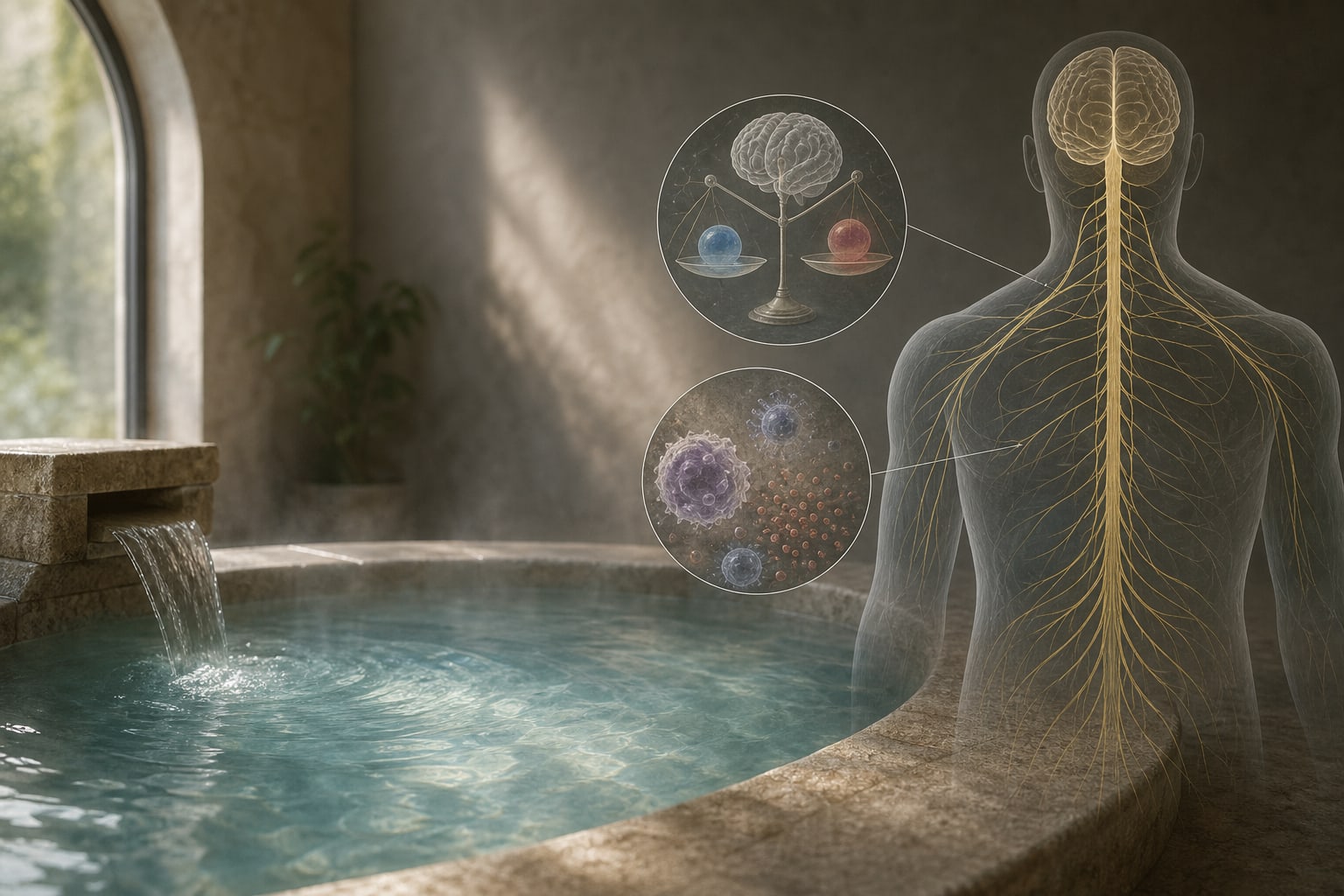
    The therapy is believed to produce systemic effects through redox modulation, immune regulation, and autonomic nervous system balance.

  • 4

    This narrative review aims to synthesize evidence on radon balneotherapy's clinical effects and explore its mechanisms in rheumatologic conditions.

  • 5

    The review also discusses the risks, controversies, and regulatory constraints surrounding the use of radon in medical treatments.

Original Source(s)

Related Content