Environmental and family correlates of daily TV-watching time in children with autism spectrum disorder and typically developing children - Takeaways - MDSpire
Coming Soon: Introducing MDSpire News. Learn more
Conexiant’s news site is now MDSpire News. Learn more

Influence of Environmental and Familial Factors on Daily Television Viewing in Children with Autism Spectrum Disorder Compared to Typically Developing Peers

  • By

  • Preeta Rajandran

  • Sophia Ang

  • Woonyoung Song

  • Jaehoon Lee

  • Shin Ying Chu

  • Onn Wah Lee

  • Pui Juan Woi

  • Ling-Yi Lin

  • Chien-Ju Chang

  • June 22, 2026

Share

  • 1

    The study included 225 children aged 3 to 6 years, with 65 diagnosed with autism spectrum disorder (ASD) and 160 typically developing (TD) children.

  • 2

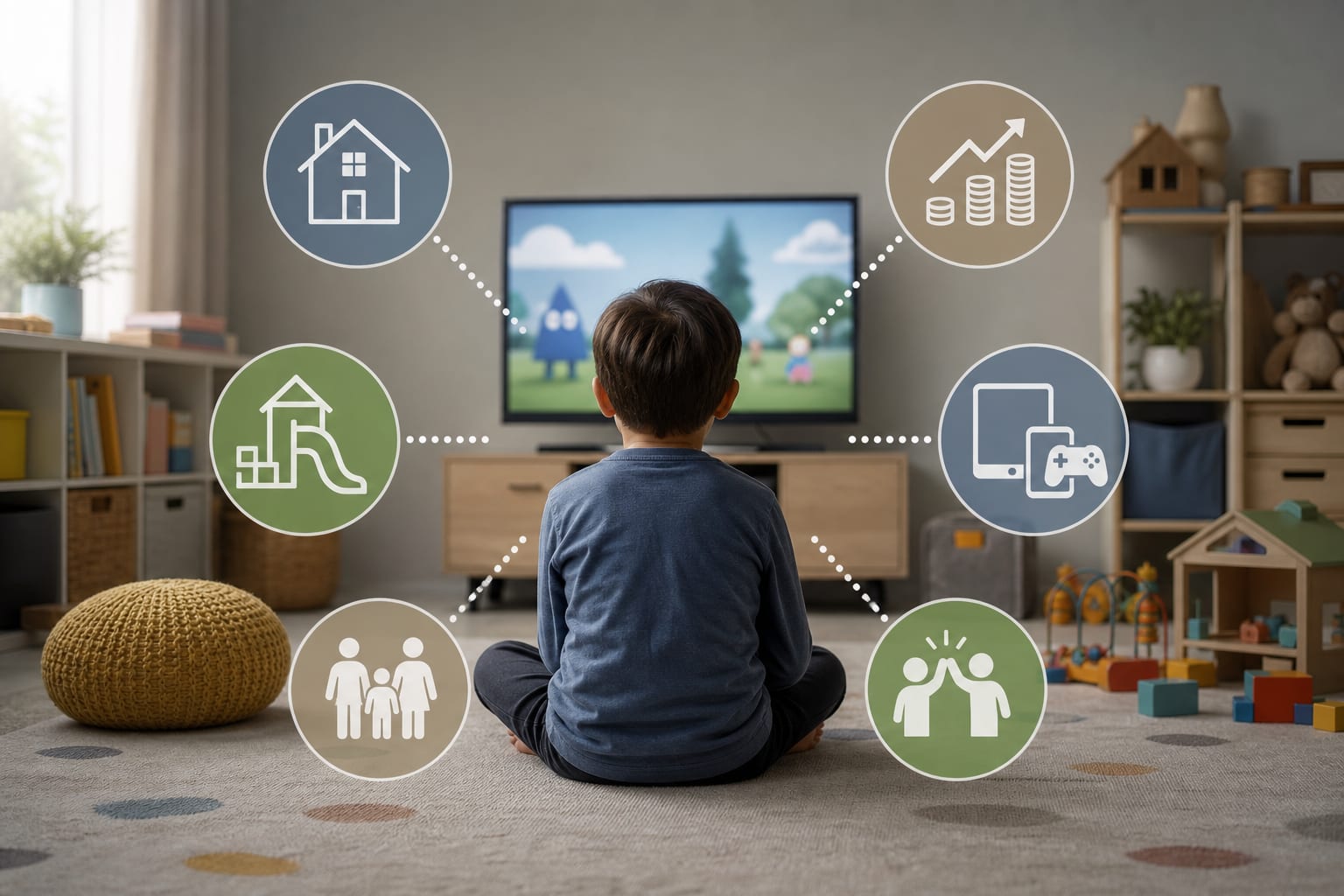
    Regression analysis revealed that non-television electronic device usage and indoor space availability significantly influenced TV watching time.

  • 3

    Children with ASD watched slightly less TV daily (1.88 hours) compared to TD children (2.03 hours), indicating differences in viewing habits.

  • 4

    Higher family interaction during holidays was linked to reduced TV watching time in children with ASD, suggesting family engagement's protective role.

  • 5

    Lower socioeconomic status and limited indoor play spaces were associated with increased TV watching time among both ASD and TD children.

Original Source(s)

Related Content