Understanding cardiac toxicity and immune responses to thoracic radiation therapy in non-small cell lung cancer – implications for future research - Takeaways - MDSpire

Understanding cardiac toxicity and immune responses to thoracic radiation therapy in non-small cell lung cancer – implications for future research

  • By

  • Zeta Chow

  • Ronald Charles McGarry

  • Jordan Miller

  • Waleed Fouad Mourad

  • Ralph Zinner

  • Bernard Mark Evers

  • Weisi Yan

  • May 28, 2026

  • 0 min

Share

  • 1

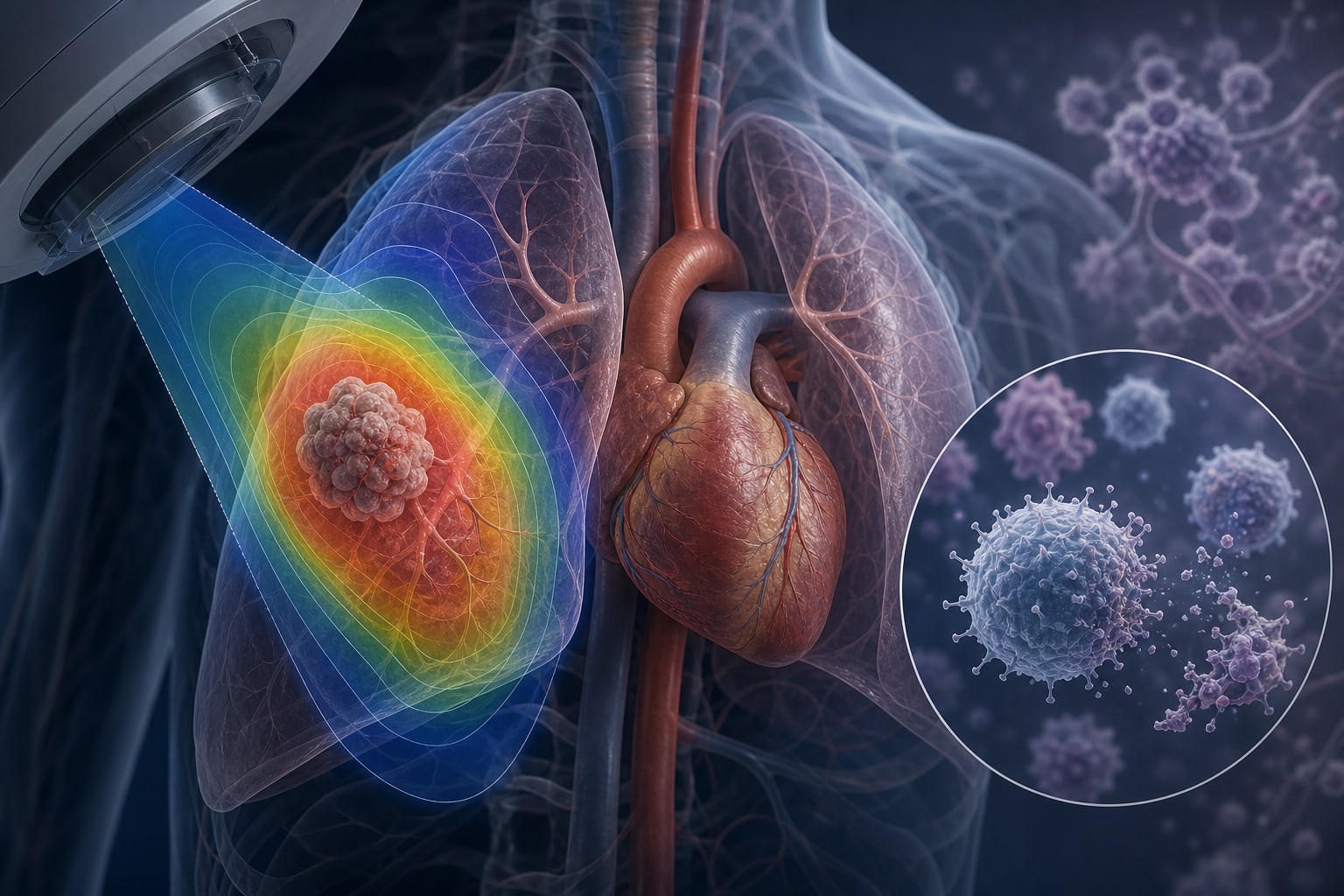
    Thoracic radiation therapy is a key treatment for locally advanced non-small cell lung cancer, but it poses significant long-term cardiac and immune system toxicities.

  • 2

    Higher radiation doses to the heart correlate with increased mortality, indicating that cardiac toxicity adversely affects survival outcomes in NSCLC patients.

  • 3

    Specific cardiac substructures, such as the sinoatrial node and coronary vessels, have been identified as critical areas linked to worse survival following thoracic RT.

  • 4

    Thoracic RT may induce lymphopenia and compromise immune surveillance, potentially reducing the effectiveness of concurrent immunotherapy.

  • 5

    Future research should focus on preserving immune integrity and integrating immune-sparing techniques into radiation planning for NSCLC.

Original Source(s)

Related Content