Current status of human biomonitoring of beauvericin and enniatins - Takeaways - MDSpire
Coming Soon: Introducing MDSpire News. Learn more
Conexiant’s news site is now MDSpire News. Learn more

Overview of Human Biomonitoring Efforts for Beauvericin and Enniatins

  • By

  • Gsela H. Degen

  • Anamarija Romac

  • September 1, 2026

Share

  • 1

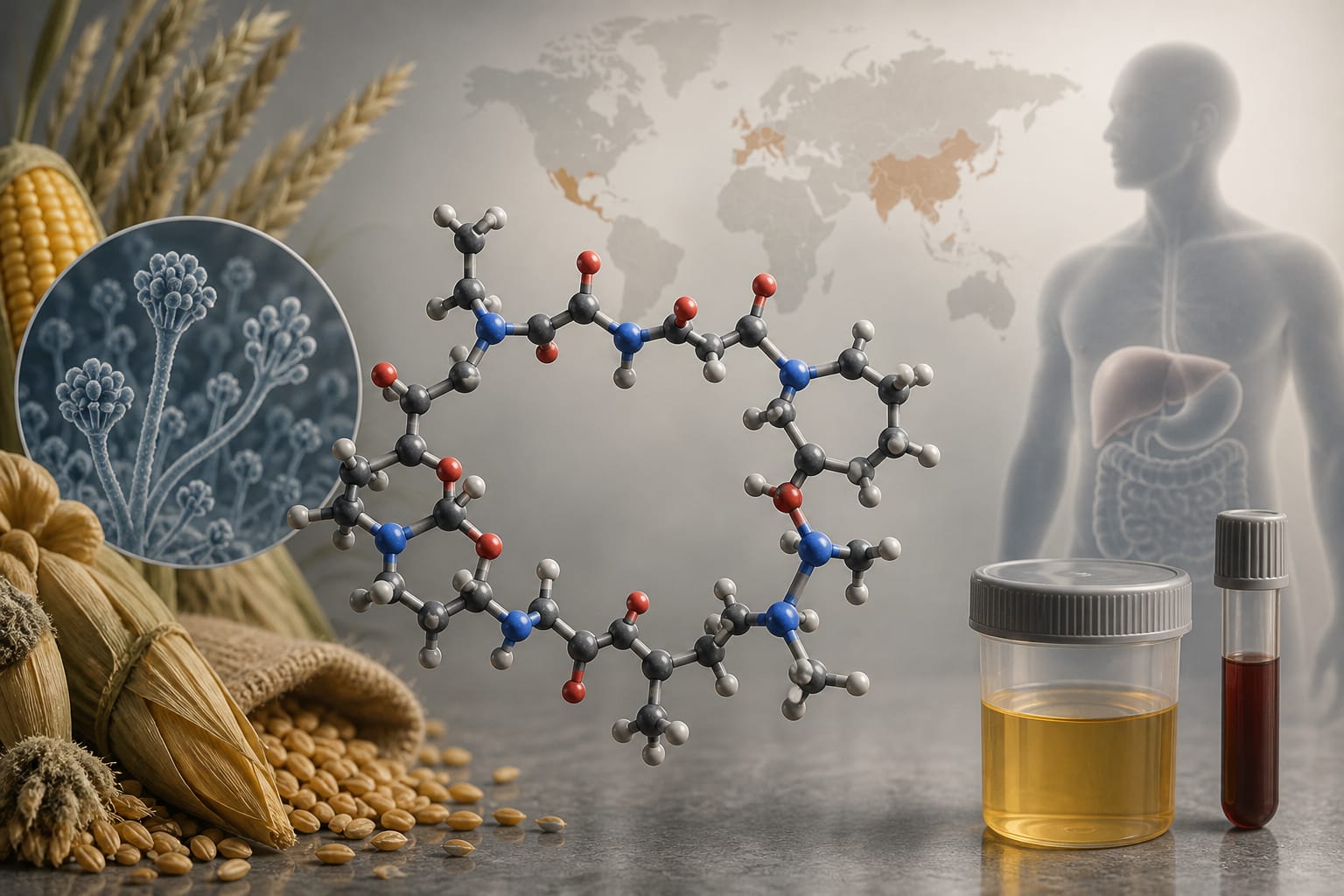
    Beauvericin (BEA) and enniatins (ENNs) are emerging mycotoxins produced by Fusarium species and are prevalent in food and feed globally.

  • 2

    BEA and ENNs exhibit cytotoxic effects in vitro at low concentrations, but BEA lacks genotoxic activity according to recent evaluations.

  • 3

    Dietary exposure to BEA and ENNs primarily comes from grains and grain-derived products, with acute exposures significantly below mouse LD50 values.

  • 4

    Human biomonitoring (HBM) has been utilized to detect BEA and ENNs in biological samples, providing insights into their internal concentrations.

  • 5

    Current analytical methods for detecting BEA and ENNs in human samples involve liquid chromatography and mass spectrometry, with ongoing research to improve risk assessment.

Original Source(s)

Related Content