A review of mechanisms and optimization strategies for clinical improvement after repetitive transcranial magnetic stimulation in bipolar disorder - Takeaways - MDSpire

A review of mechanisms and optimization strategies for clinical improvement after repetitive transcranial magnetic stimulation in bipolar disorder

  • By

  • Wojciech Korzeniowski

  • Piotr Koceniak

  • Napoleon Waszkiewicz

  • Krzysztof Walczewski

  • Gabriela Rusin

  • Jakub Antczak

  • July 2, 2026

  • 0 min

Share

  • 1

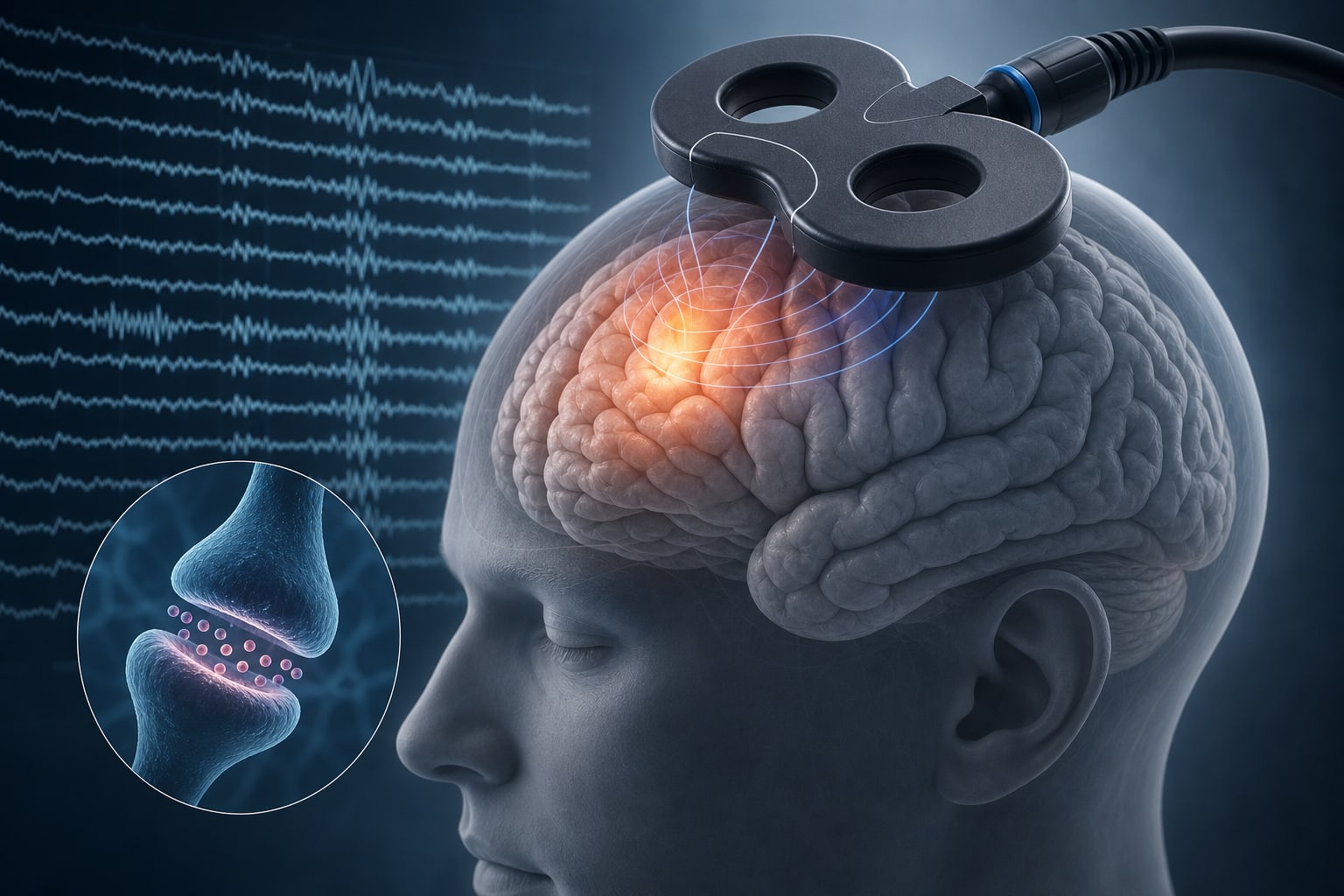
    Repetitive transcranial magnetic stimulation (rTMS) is an established treatment for drug-resistant depression, with less clear efficacy in bipolar disorder (BD).

  • 2

    Clinical response to rTMS in BD may be linked to lower left frontal cortex volume, slower EEG activity, and reduced default mode network activity.

  • 3

    rTMS induces neurochemical changes and alters blood flow, primarily in the stimulated area, but studies on its effects in BD are limited.

  • 4

    Navigated rTMS may enhance therapeutic outcomes by targeting brain areas based on their connectivity with other regions, particularly for cognitive performance.

  • 5

    Anatomical and neurophysiological factors are associated with rTMS response in BD, indicating the need for further research in this area.

Original Source(s)

Related Content