Diagnostic interpretation of CFH expression in pan-cancer analyses: the importance of factor H–like 1 isoform resolution - Takeaways - MDSpire
Coming Soon: Introducing MDSpire News. Learn more
Conexiant’s news site is now MDSpire News. Learn more

Interpreting CFH Expression Across Cancers: Why Resolving the Factor H–Like 1 Isoform Matters

  • By

  • Simon J. Clark

  • October 11, 2026

Share

  • 1

    Zheng et al. reported that CFH transcription was associated with tumour stage, survival, immune infiltration, tumour mutational burden, and microsatellite instability across cancers.

  • 2

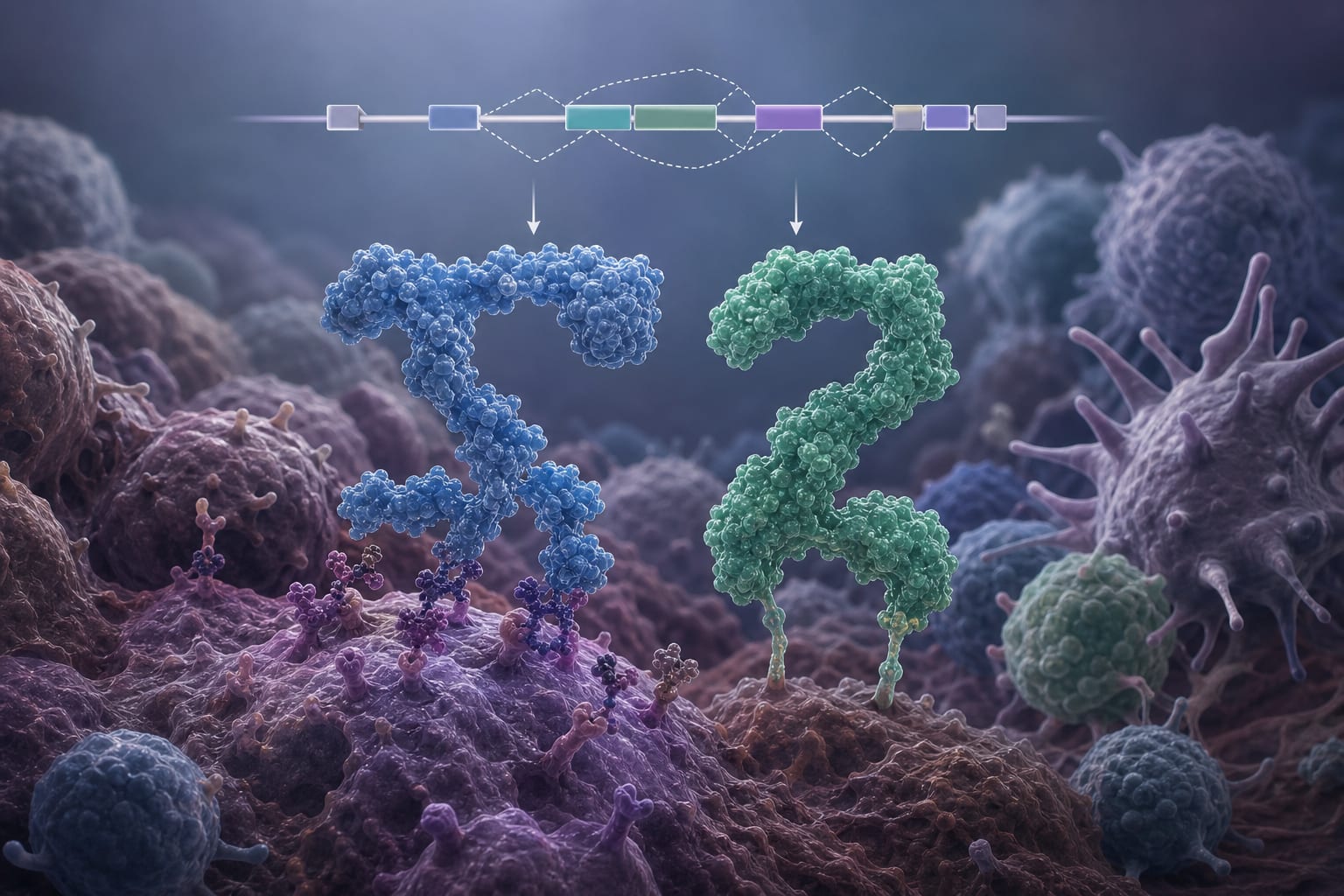
    CFH encodes full-length factor H (FH) and the alternatively spliced factor H–like 1 (FHL-1), which has seven complement control protein domains and a distinctive short tail.

  • 3

    The study’s N-terminal qRT-PCR primers and shRNA constructs target sequences shared by FH and FHL-1, so they measure or suppress both isoforms.

  • 4

    FHL-1 is expressed in several tissues and tumour cells, and its extracellular matrix retention may give it distinct local effects on complement regulation.

  • 5

    The authors suggest that future biomarker studies use isoform-resolved methods, including splice-junction–specific qPCR, long-read RNA sequencing, or differentiating proteomic techniques.

Original Source(s)

Related Content