Rare pathogenic mutation of KCNH2 p.D501N associated with early-onset malignant long QT syndrome - Takeaways - MDSpire

Rare pathogenic mutation of KCNH2 p.D501N associated with early-onset malignant long QT syndrome

  • By

  • Yubi Lin

  • Xingchen Li

  • Mingsui Gao

  • Yechang Chen

  • Zhuguo Wu

  • Jia Chen

  • June 10, 2026

  • 0 min

Share

  • 1

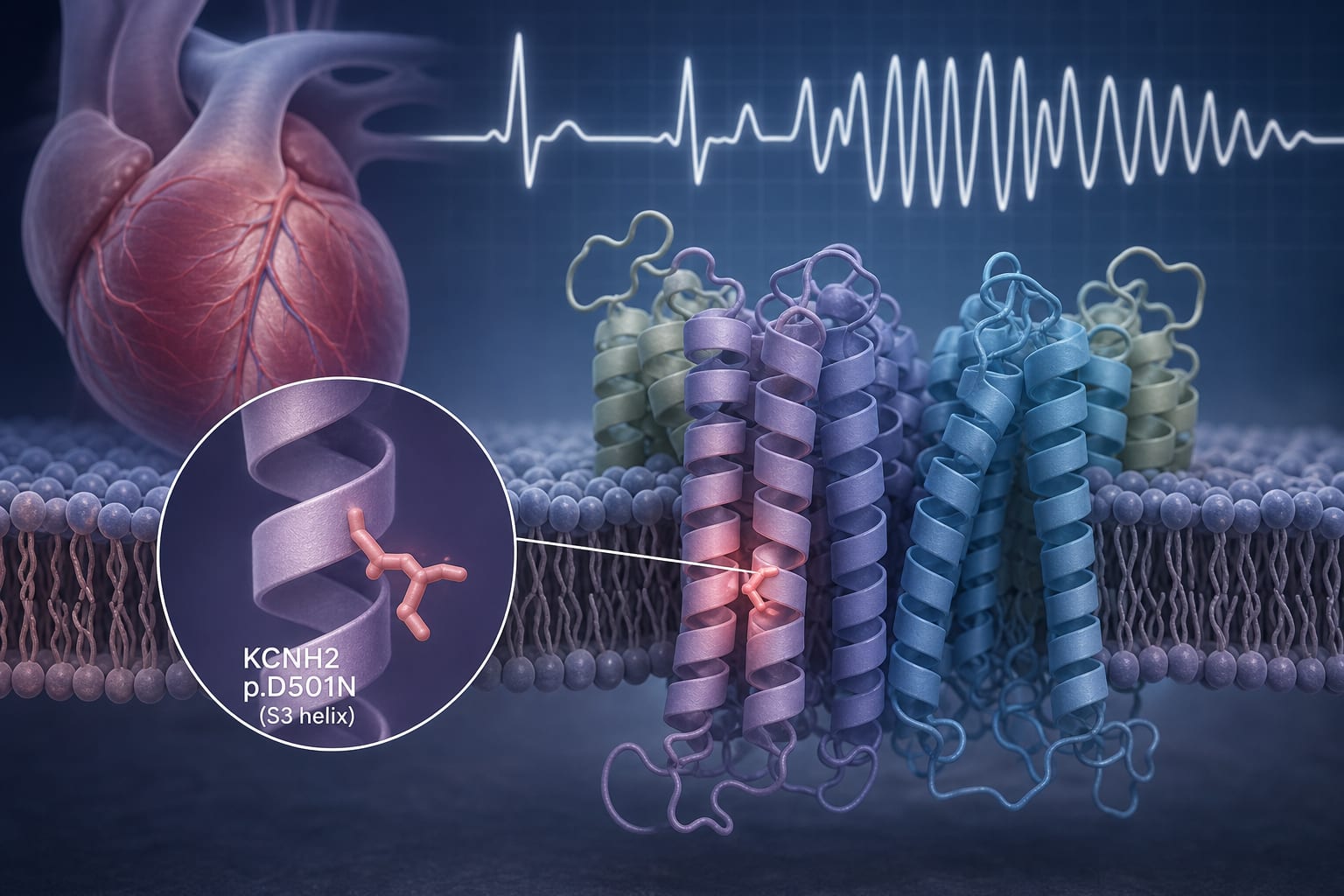
    A 16-year-old girl with LQTS exhibited prolonged QT interval, TdP, VT, and VF due to the de novo KCNH2 p.D501N mutation.

  • 2

    The KCNH2 p.D501N mutation is predicted to alter the Kv11.1 protein's secondary structure and impair cardiac IKr current.

  • 3

    This mutation leads to significant changes in the physicochemical properties of the Kv11.1 protein, affecting its function.

  • 4

    The patient required ICD therapy, long-term β-blocker treatment, and potassium–magnesium supplementation for management.

  • 5

    LQT2 is associated with life-threatening arrhythmias and is primarily caused by mutations in ion channel genes, including KCNH2.

Original Source(s)

Related Content