Radiation-induced cranial meningiomas are associated with earlier relapse: a propensity score–matched cohort study - Takeaways - MDSpire
Coming Soon: Introducing MDSpire News. Learn more
Conexiant’s news site is now MDSpire News. Learn more

Cranial Meningiomas Induced by Radiation Linked to Earlier Disease Recurrence: A Propensity Score-Matched Analysis

  • By

  • Leon Schmidt

  • Dragan Jankovic

  • Santhosh Thavarajasingam

  • Reem Fakak

  • Michael Kosterhon

  • Alice Dauth

  • Marc Brockmann

  • Clemens Sommer

  • Florian Ringel

  • Darius Kalasauskas

  • September 22, 2026

Share

  • 1

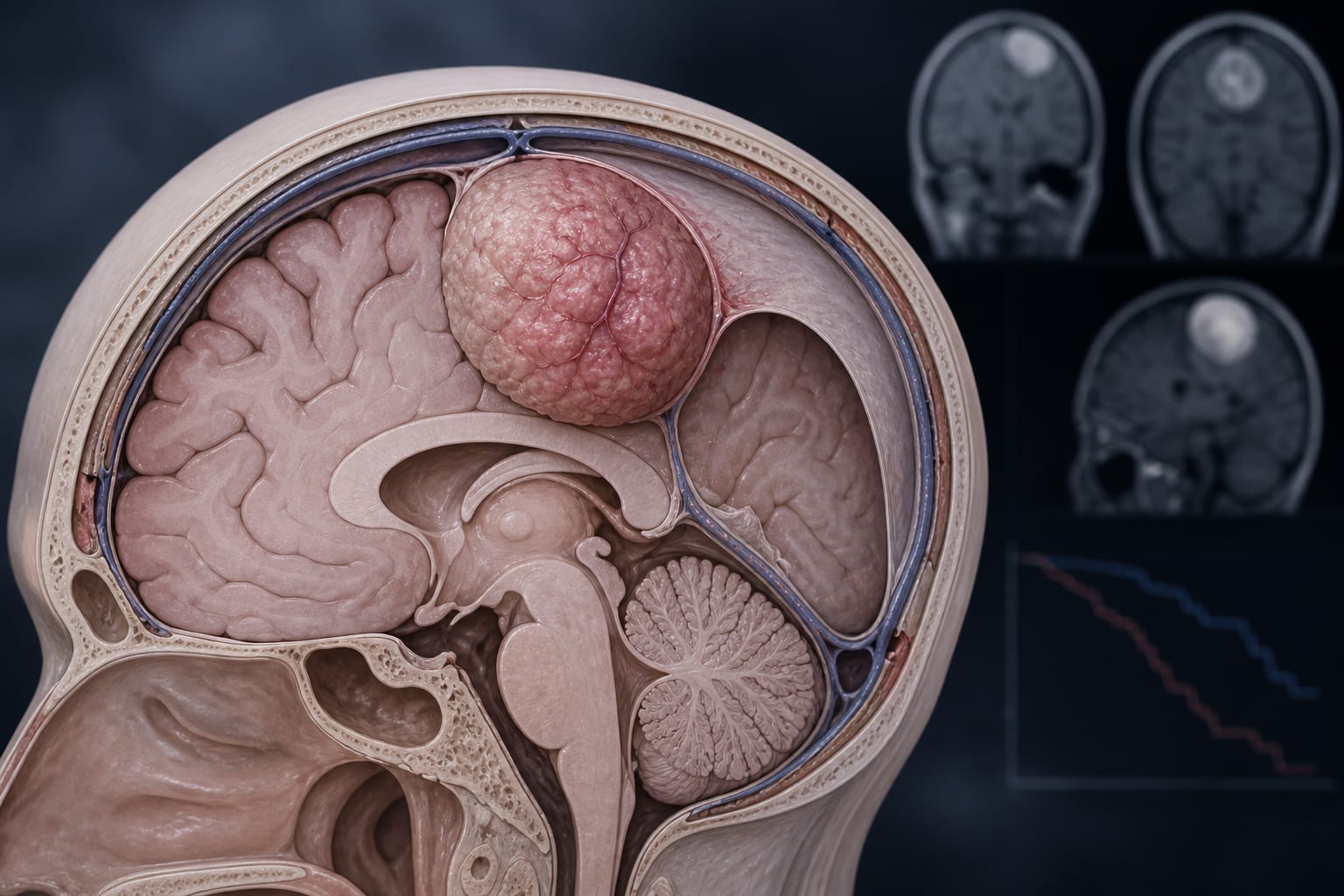
    Meningiomas are the most common primary intracranial tumors, accounting for 40% of CNS tumors with a population incidence of 8–9 per 100,000 person-years.

  • 2

    Radiation-induced meningiomas typically develop 15–35 years after cranial irradiation and are associated with higher recurrence rates compared to sporadic tumors.

  • 3

    Factors influencing meningioma recurrence include WHO histological grade, resection extent, tumor location, and patient age.

  • 4

    This study utilized propensity score matching to assess recurrence risk in radiation-induced versus sporadic meningiomas, addressing potential confounding factors.

  • 5

    Radiation-induced meningiomas are often diagnosed at younger ages and may exhibit more aggressive clinical behavior than sporadic meningiomas.

Original Source(s)

Related Content