Effects of mandibular advancement devices vs. CPAP on blood pressure in obstructive sleep apnea: a systematic review and meta-analysis of randomized controlled trials - Takeaways - MDSpire

Effects of mandibular advancement devices vs. CPAP on blood pressure in obstructive sleep apnea: a systematic review and meta-analysis of randomized controlled trials

  • By

  • Ting Cheng

  • Qiang Wang

  • Wei Wei

  • May 20, 2026

  • 0 min

Share

  • 1

    Mandibular advancement devices (MAD) showed trends of blood pressure reduction compared to inactive controls in patients with obstructive sleep apnea (OSA).

  • 2

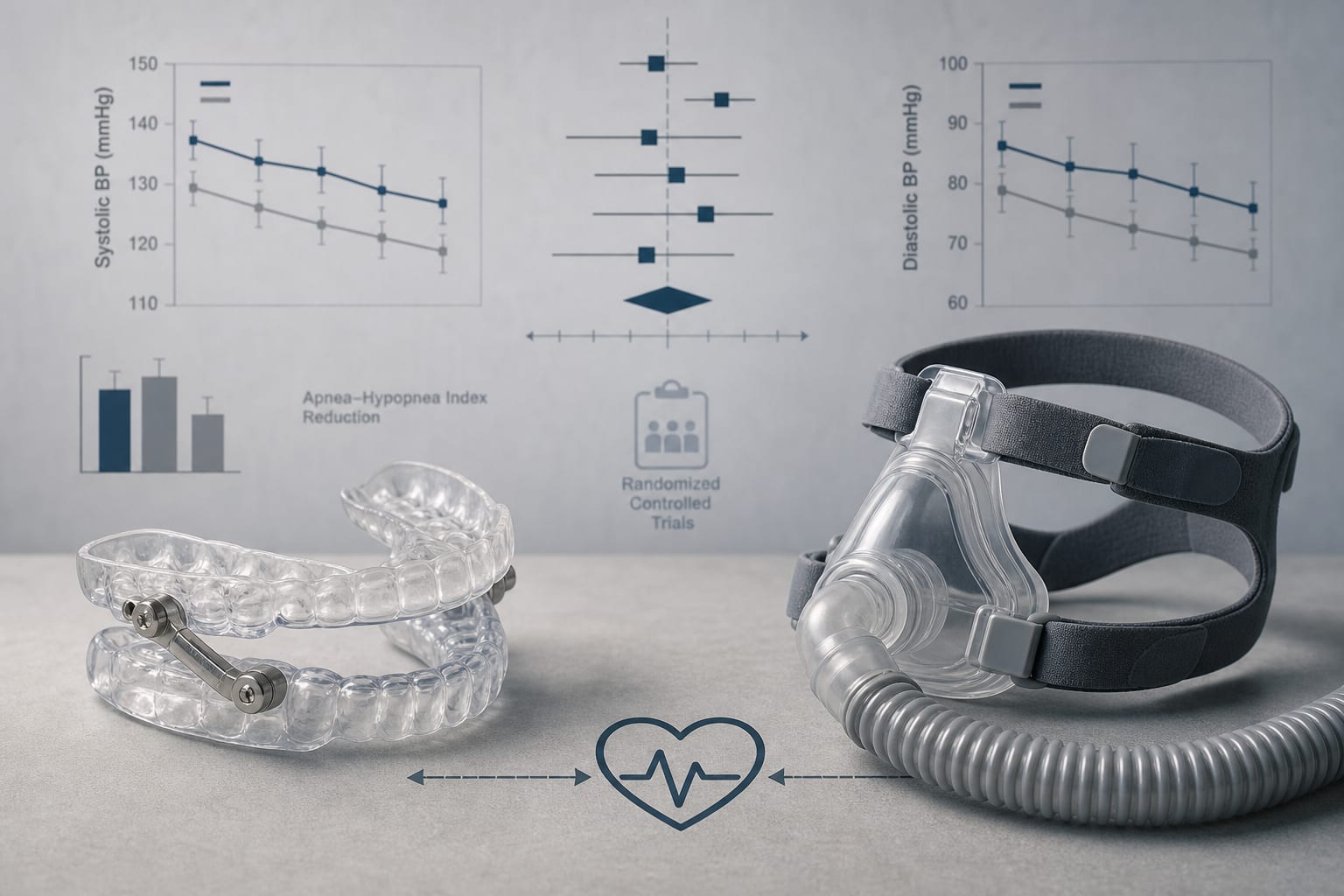
    MAD achieved a significantly greater reduction in daytime systolic blood pressure compared to CPAP, with a mean difference of -1.99 mmHg.

  • 3

    While CPAP was more effective in reducing the apnea-hypopnea index, MAD and CPAP had comparable effects on subjective sleepiness as measured by the Epworth Sleepiness Scale.

  • 4

    MAD demonstrated significantly longer nightly adherence than CPAP, with a mean difference of 0.71 hours per night.

  • 5

    MAD may serve as a viable alternative for cardiovascular risk management in OSA patients who cannot tolerate CPAP, despite its inferiority in reducing AHI.

Original Source(s)

Related Content