An investigation into the simulation sickness with head-mounted displays in people with aphasia - Takeaways - MDSpire
Coming Soon: Introducing MDSpire News. Learn more
Conexiant’s news site is now MDSpire News. Learn more

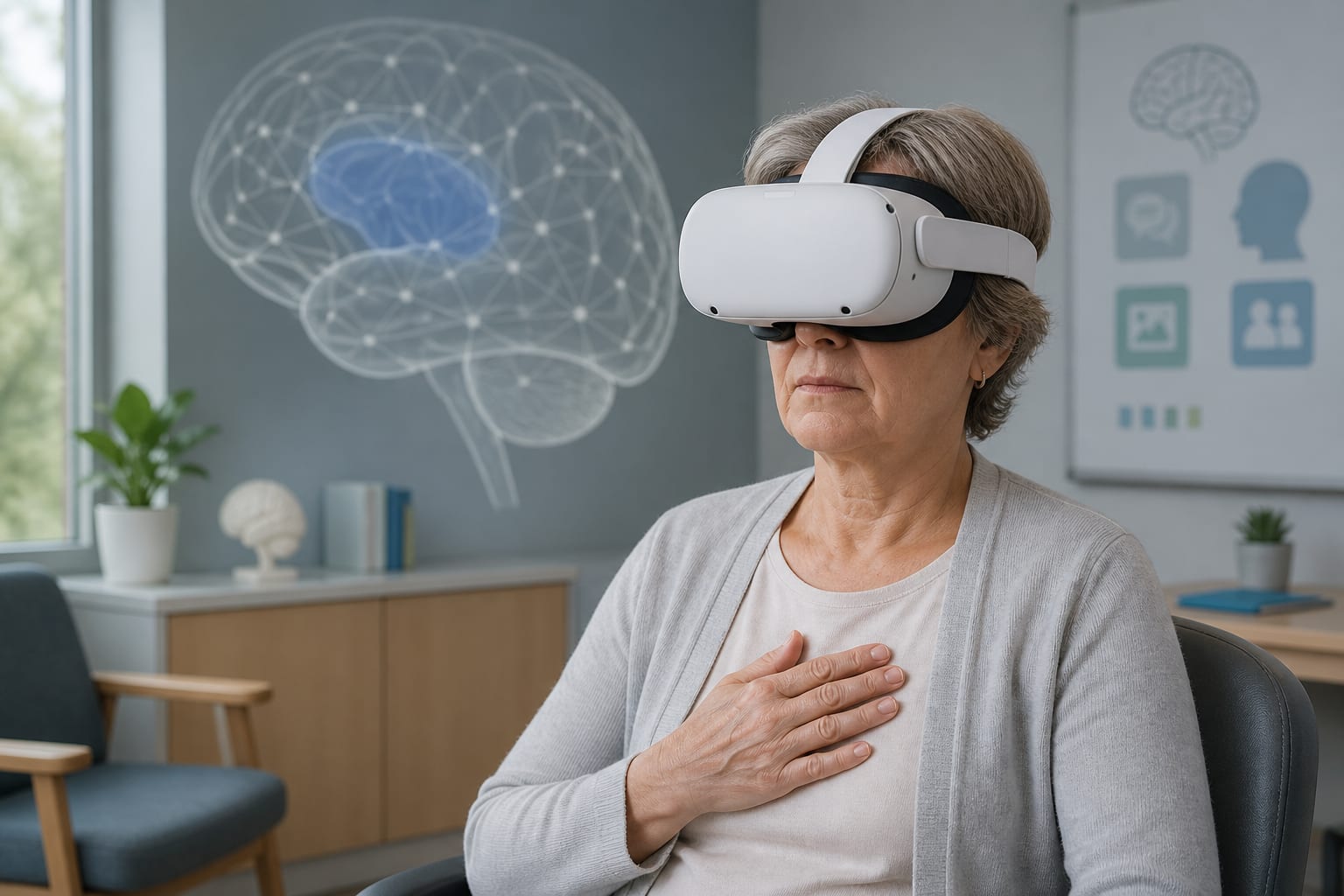
Exploring Motion Sickness Induced by Head-Mounted Displays in Individuals with Aphasia

  • By

  • Muhammed Intiaz

  • Rajath Shenoy

  • Apoorva Pauranik

  • Girish Menon

  • Shivani Tiwari

  • Aparna Pai

  • Gopee Krishnan

  • August 22, 2026

Share

  • 1

    Aphasia affects one-third of individuals with stroke or brain damage, impairing language and communication.

  • 2

    Extended Realities (XR) technologies, including VR, AR, and MR, create engaging therapeutic environments for rehabilitation.

  • 3

    VR interventions for aphasia focus on enhancing linguistic outcomes and functional communication through simulated environments.

  • 4

    Simulation sickness is a common adverse effect of head-mounted displays, causing symptoms like nausea and dizziness.

  • 5

    Factors influencing simulation sickness include visual-vestibular conflict, display properties, and user-specific characteristics.

Original Source(s)

Related Content