Surgical repair of paraesophageal hernia resolves unexplained iron deficiency anemia in the vast majority of patients: a propensity-matched multicenter study - Takeaways - MDSpire

Surgical repair of paraesophageal hernia resolves unexplained iron deficiency anemia in the vast majority of patients: a propensity-matched multicenter study

  • By

  • Fahim Kanani

  • Maria Shaiban

  • Chaya Shwaartz

  • Majd Khalil

  • Katia Dayan

  • Rula Francis

  • Daniel Solomon

  • Yonatan Lessing

  • Narmin Zoabi

  • Eviatar Kuhnreich

  • Eviatar Nesher

  • Amir Szold

  • Boaz Sagi

  • Nir Messer

  • May 21, 2026

  • 0 min

Share

  • 1

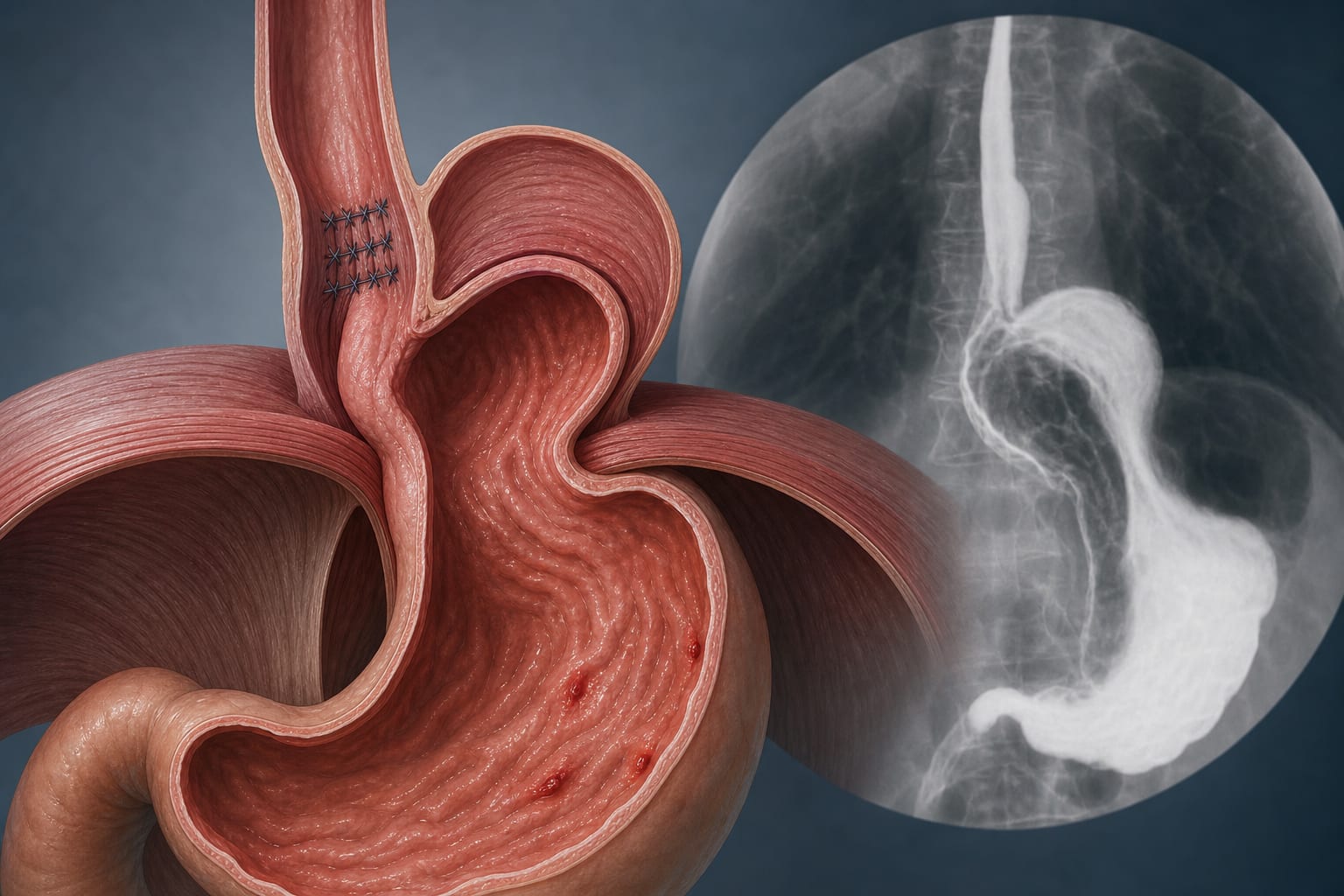
    Paraesophageal hernias (PEH) are linked to iron deficiency anemia (IDA) in 30–50% of patients, often presenting without typical gastrointestinal symptoms.

  • 2

    Surgical repair of PEH has been shown to effectively resolve IDA in most patients, despite limited prior studies on this therapeutic impact.

  • 3

    The study included adults with confirmed PEH and unexplained IDA, excluding those with prior bariatric surgery or identifiable bleeding sources.

  • 4

    Comprehensive preoperative evaluations were conducted, including upper endoscopy and imaging, to confirm PEH and rule out other anemia causes.

  • 5

    The findings support surgical intervention for PEH as a definitive treatment for IDA, even in asymptomatic patients without classic symptoms.

Original Source(s)

Related Content