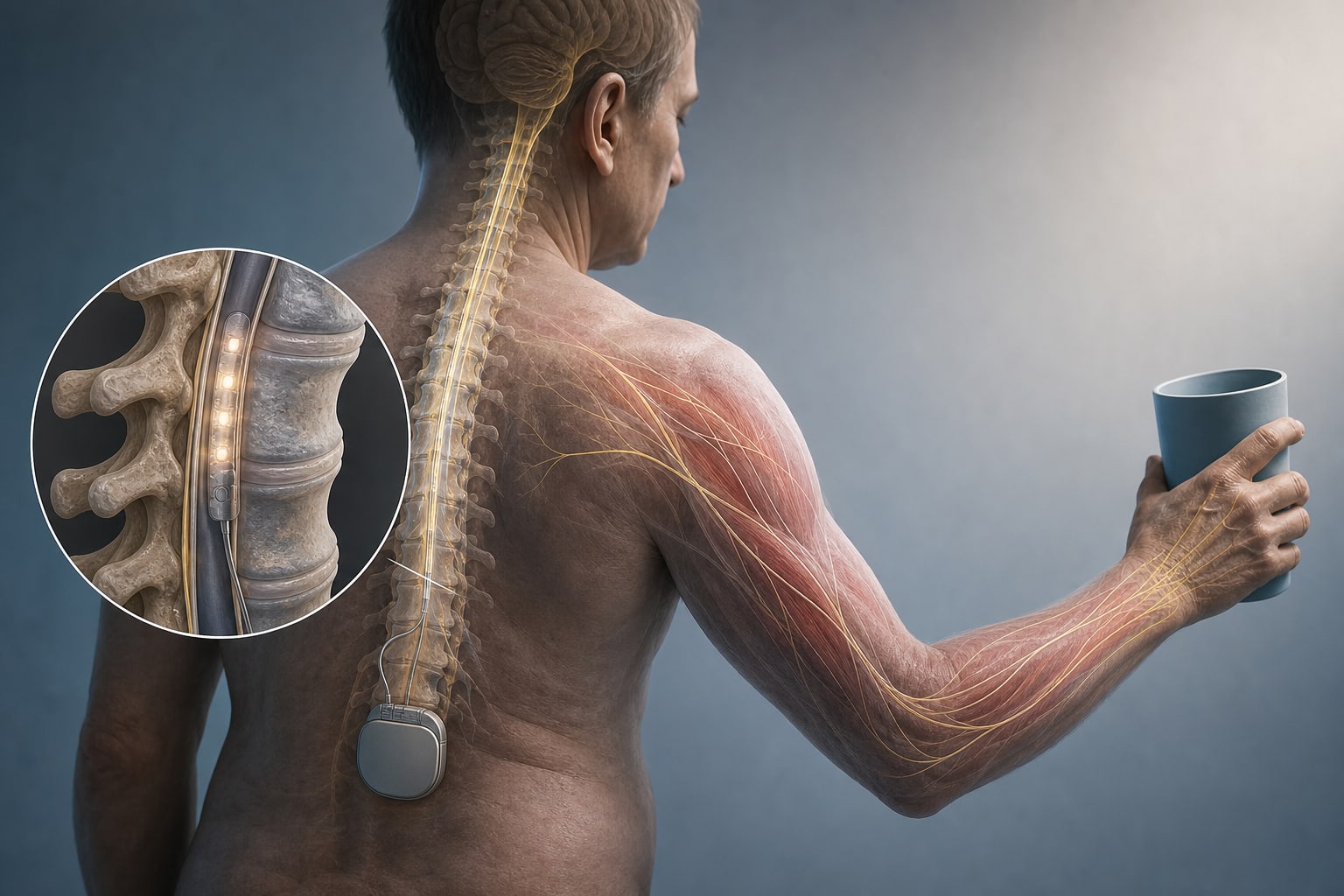
Spinal cord stimulation for upper limb motor function in people with chronic post-stroke hemiparesis: a feasibility trial - Takeaways - MDSpire

Spinal cord stimulation for upper limb motor function in people with chronic post-stroke hemiparesis: a feasibility trial

  • By

  • Roberto M. de Freitas

  • Shovan Bhatia

  • Erynn Sorensen

  • Nikhil Verma

  • Erick Carranza

  • Scott Ensel

  • Luigi Borda

  • Amy Boos

  • Jeff Goldsmith

  • Lee E. Fisher

  • Daryl P. Fields

  • Marc P. Powell

  • Shane Gordon

  • Jeffrey Balzer

  • Robert M. Friedlander

  • George F. Wittenberg

  • Peter C. Gerszten

  • John W. Krakauer

  • Elvira Pirondini

  • Douglas J. Weber

  • Marco Capogrosso

  • June 4, 2026

  • 0 min

Share

  • 1

    Stroke causes significant arm paralysis, affecting approximately 400,000 individuals annually in the U.S.

  • 2

    Epidural spinal cord stimulation (SCS) may enhance motor function in chronic post-stroke hemiparesis without requiring rehabilitation.

  • 3

    The pilot study demonstrated that SCS is safe and feasible, improving strength, dexterity, spasticity, and movement synergies.

  • 4

    Maximal motor improvements occurred with SCS ON, while retention of benefits depended on continued use of the device.

  • 5

    Participants with milder sensory impairments showed greater responsiveness to SCS, indicating variability in treatment outcomes.

Original Source(s)

Related Content