Lysophosphatidylcholine and lysophosphatidic acid as key messengers in atherosclerosis: from a lipid-inflammation vicious cycle to therapeutic translation - Takeaways - MDSpire

Lysophosphatidylcholine and lysophosphatidic acid: pivotal signaling molecules in atherosclerosis and their potential for therapeutic application

  • By

  • Xue Guan

  • Zhongyan Li

  • Huan Cheng

  • Jingru Li

  • Najie Wen

  • Luqiao Wang

  • July 21, 2026

Share

  • 1

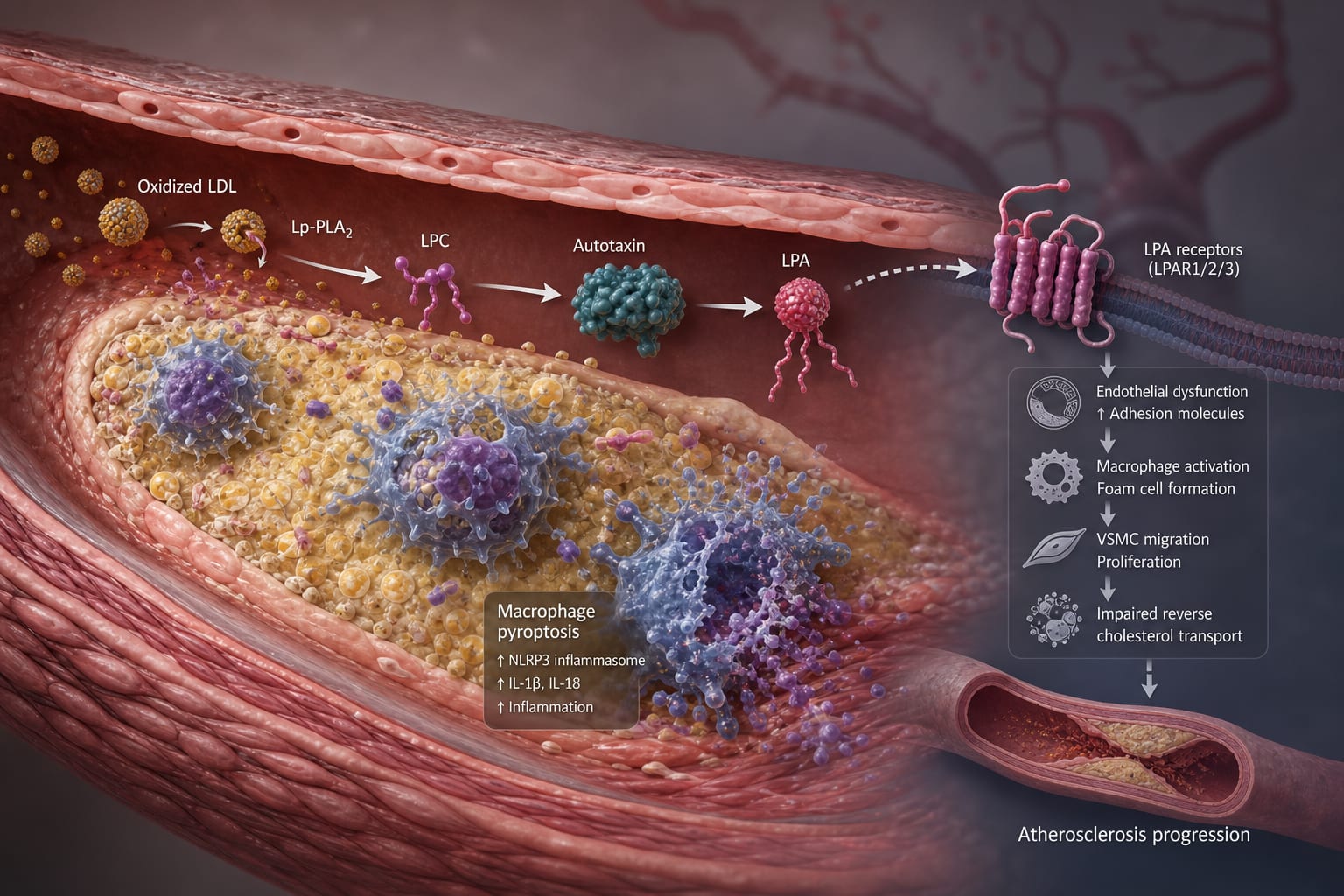
    Lysophosphatidylcholine (LPC) and lysophosphatidic acid (LPA) are key lysophospholipids involved in the pathology of atherosclerosis.

  • 2

    LPC is generated from oxidized LDL by lipoprotein-associated phospholipase A2, while LPA is produced from LPC by autotaxin.

  • 3

    These lysophospholipids activate G protein-coupled receptors, triggering inflammatory signaling and promoting macrophage pyroptosis.

  • 4

    Spatial metabolomics has identified LPC (18:0) and LPA (18:1) as enriched in macrophage-rich regions of vulnerable plaques.

  • 5

    The review discusses the potential for therapeutic strategies targeting the LPC-LPA axis to address residual risk in atherosclerosis.

Original Source(s)

Related Content