The emerging clinical relevance of cell-free DNA in lupus: from mechanistic insights to therapeutic opportunities - Takeaways - MDSpire
Coming Soon: Introducing MDSpire News. Learn more
Conexiant’s news site is now MDSpire News. Learn more

The Growing Importance of Cell-Free DNA in Systemic Lupus Erythematosus: Insights into Mechanisms and Potential Therapeutic Applications

  • By

  • Emily Jones

  • Kiki Cano-Gamez

  • June 23, 2026

Share

  • 1

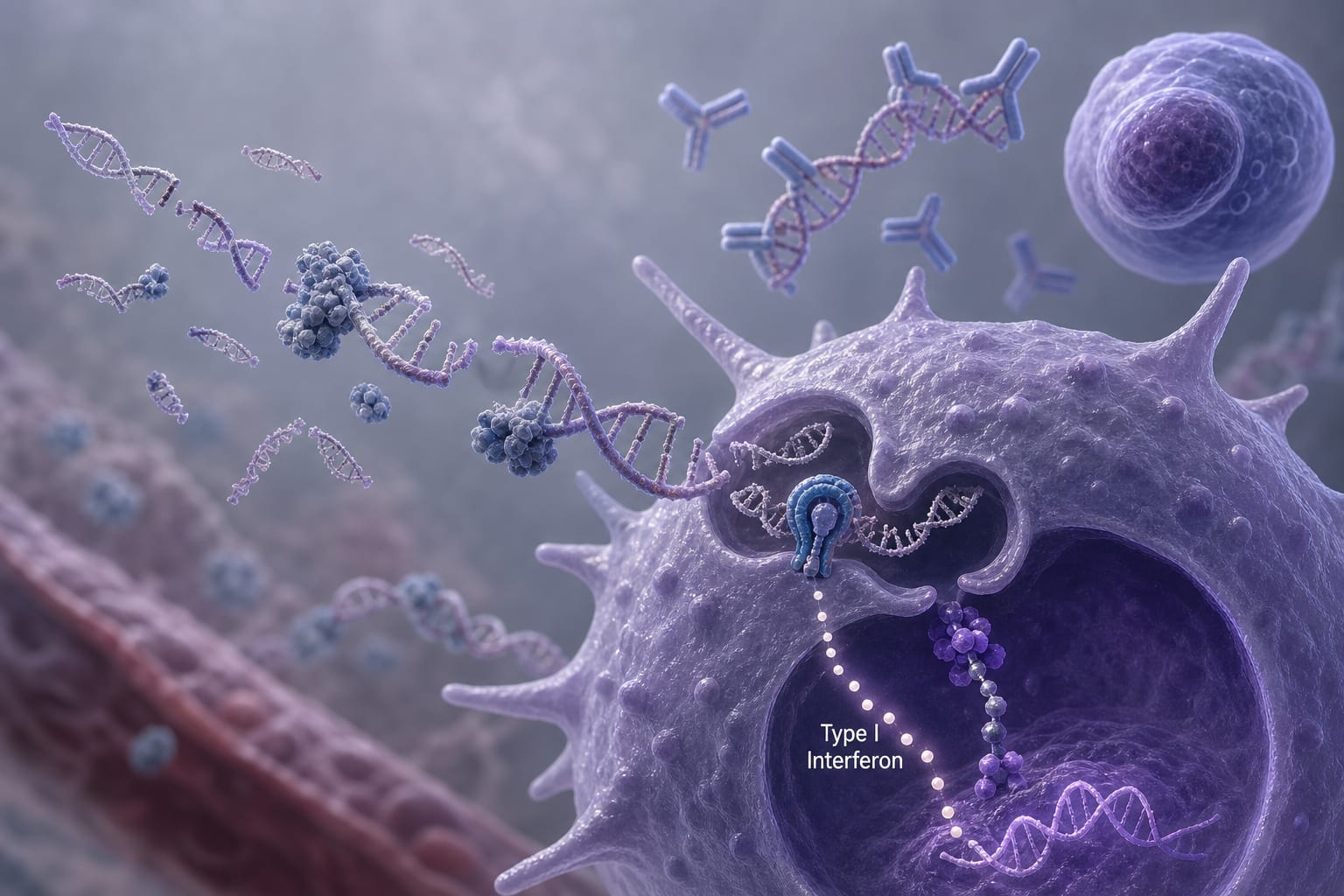
    Cell-free DNA (cfDNA) plays a significant role in the immune activation associated with systemic lupus erythematosus (SLE).

  • 2

    Deficiencies in DNASE1L3 lead to altered cfDNA fragmentation and increased immunogenic potential in SLE patients.

  • 3

    Aberrant cfDNA can trigger type I interferon responses and stimulate anti-double-stranded DNA antibody production.

  • 4

    cfDNA features, such as fragment length and epigenetic modifications, can serve as biomarkers for monitoring SLE disease activity.

  • 5

    Large-scale validation and standardization of cfDNA insights are essential for advancing precision medicine in SLE.

Original Source(s)

Related Content