Adaptive deep brain stimulation for dynamic gait control in Parkinson’s disease: a randomized feasibility trial - Takeaways - MDSpire

Adaptive deep brain stimulation for dynamic gait control in Parkinson’s disease: a randomized feasibility trial

  • By

  • Kenneth H. Louie

  • Jannine P. Balakid

  • Jessica E. Bath

  • Seongmi Song

  • Hamid Fekri Azgomi

  • Jacob H. Marks

  • Julia T. Choi

  • Philip A. Starr

  • Doris D. Wang

  • June 15, 2026

  • 0 min

Share

  • 1

    Gait disturbances significantly impair quality of life in Parkinson's disease, increasing fall risk and reducing independence.

  • 2

    Current deep brain stimulation (DBS) therapies often fail to improve gait due to their continuous stimulation approach, which does not adapt to movement states.

  • 3

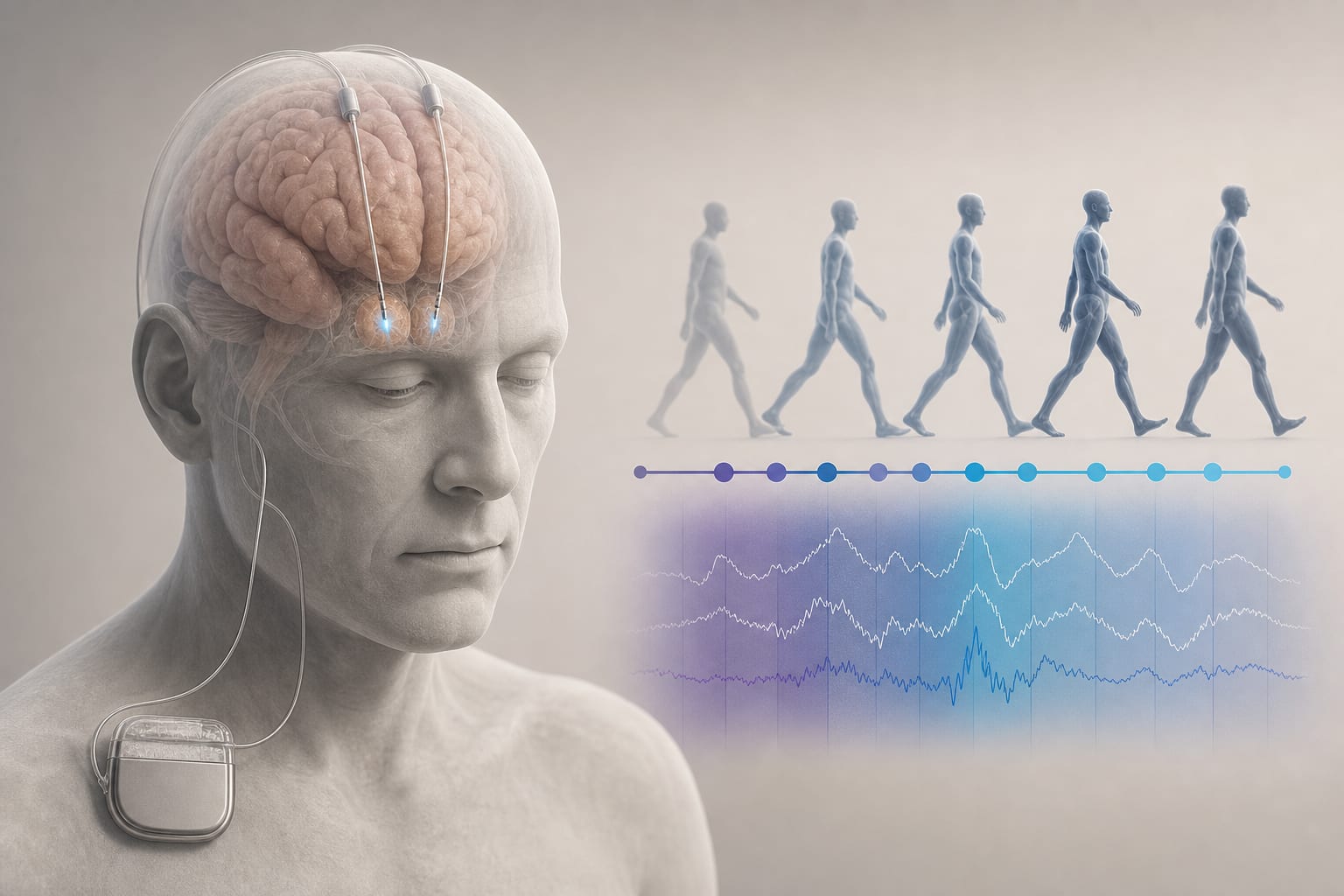
    Adaptive DBS (aDBS) adjusts stimulation based on real-time neural signals, offering a promising alternative to enhance gait without compromising other symptoms.

  • 4

    The behavior-contingent aDBS paradigm synchronizes stimulation with discrete phases of the gait cycle, improving gait metrics in patients.

  • 5

    In a feasibility study, patients tolerated rapid stimulation adjustments with aDBS, maintaining symptom control and showing improved gait performance.

Original Source(s)

Related Content