Cardiac morphology in children at 2 and 10 years of age after congenital diaphragmatic hernia repair: a comparative MRI-based analysis of ECMO and non-ECMO patients - Takeaways - MDSpire
Coming Soon: Introducing MDSpire News. Learn more
Conexiant’s news site is now MDSpire News. Learn more

Cardiac Structure in Pediatric Patients at Ages 2 and 10 Following Repair of Congenital Diaphragmatic Hernia: A Comparative MRI Study of ECMO and Non-ECMO Cases

  • By

  • Schanas Jawhar

  • Greta Thater

  • Stefan Appelhaus

  • Michael Boettcher

  • Julia Elrod

  • Frank G. Zoellner

  • Florian Kipfmueller

  • Marcia Matos-Karaorman

  • Stefan O. Schoenberg

  • Meike Weis

  • September 9, 2026

Share

  • 1

    Congenital diaphragmatic hernia (CDH) affects 1 in 2000–5000 live births and can lead to pulmonary hypoplasia and pulmonary arterial hypertension (PAH).

  • 2

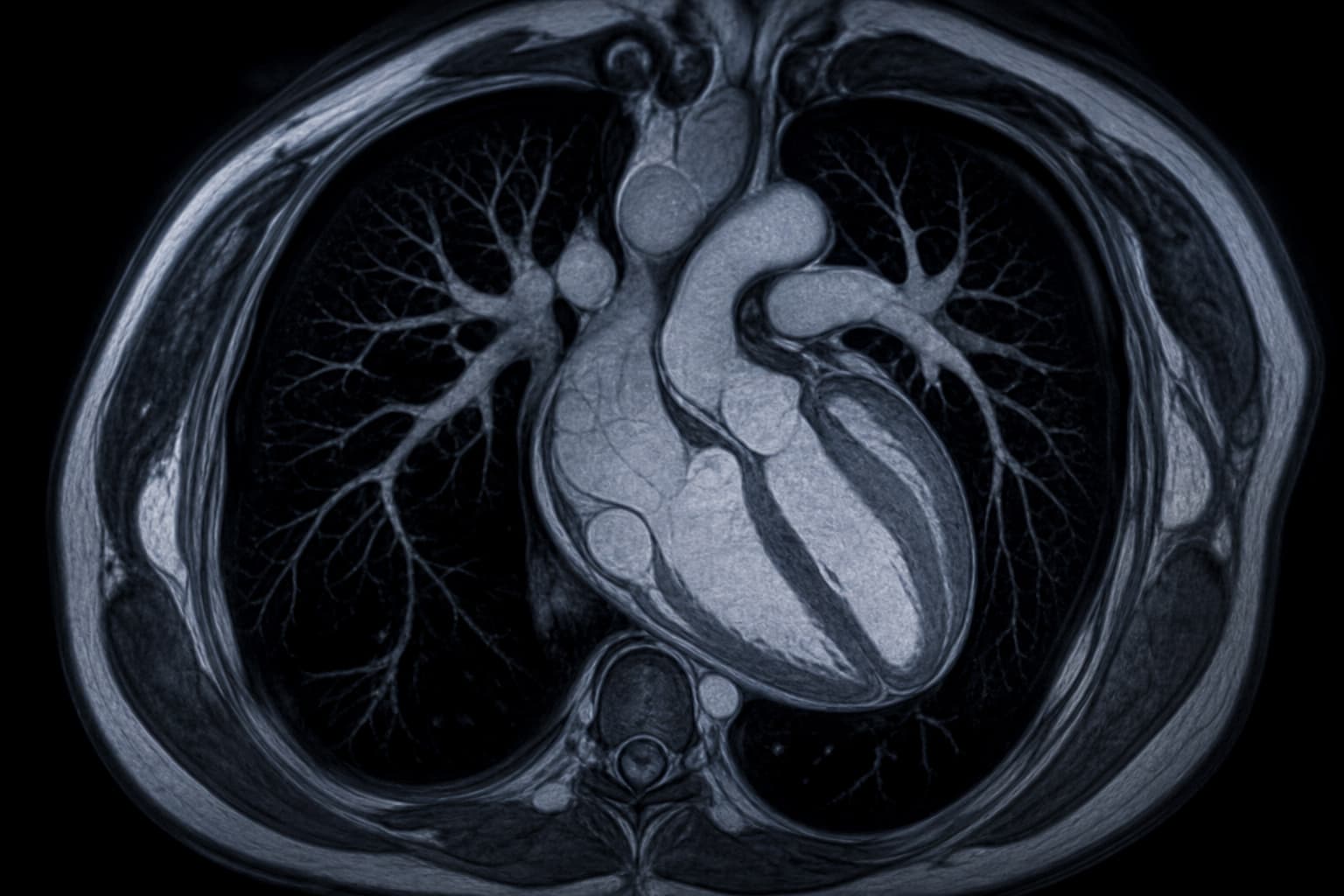
    The study compared cardiac morphology and function in 57 children with CDH, categorized into ECMO and non-ECMO groups, using MRI at ages 2 and 10.

  • 3

    Cardiac parameters assessed included the pulmonary artery to aorta ratio (PA/Ao), right-to-left ventricular ratio (RV/LV), and eccentricity index (EI).

  • 4

    The ECMO group had a higher prevalence of right-sided hernias and differences in patch use compared to the non-ECMO group.

  • 5

    Statistical analyses included independent-samples t-tests and binary logistic regression to evaluate associations between ECMO treatment and cardiac morphology.

Original Source(s)

Related Content