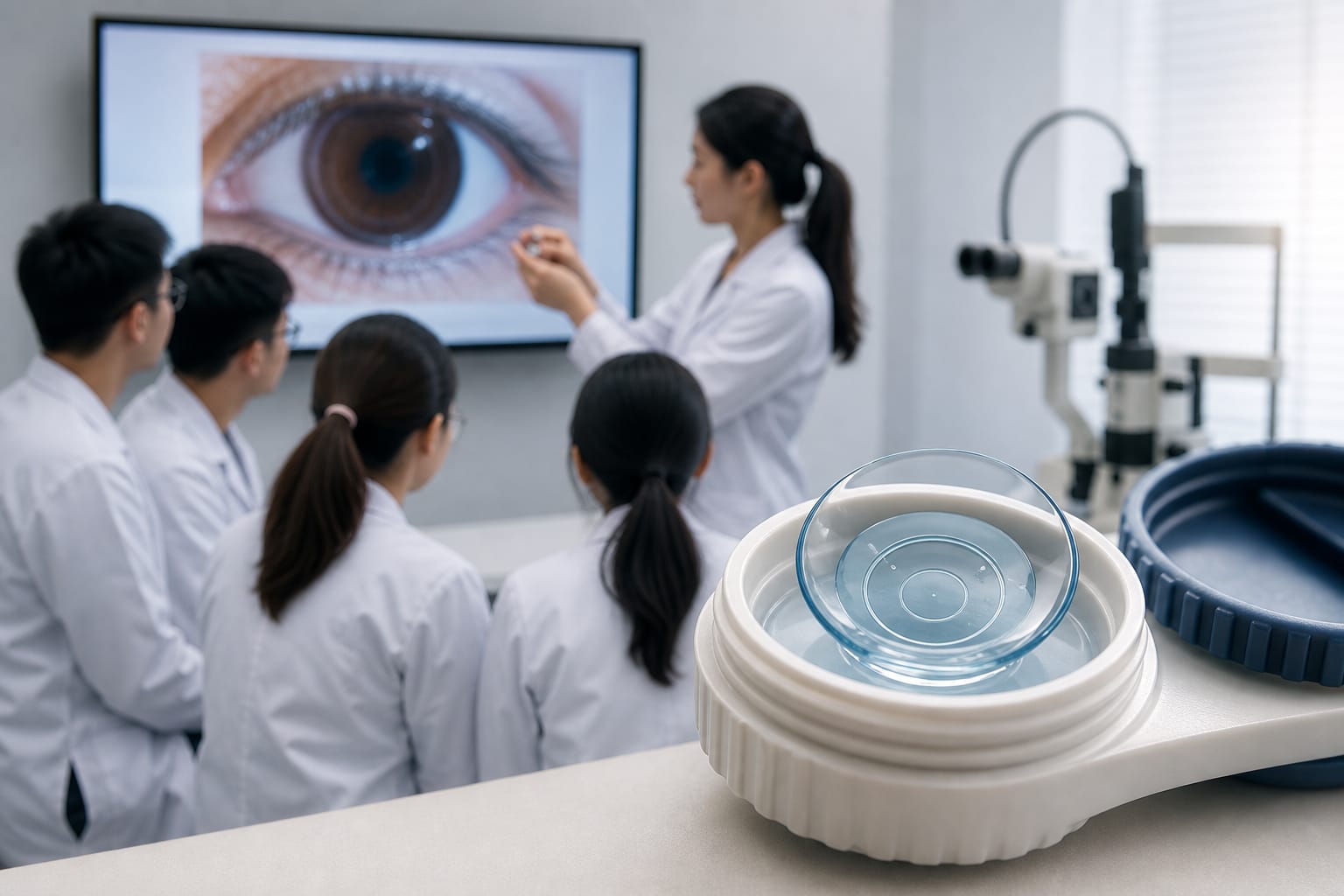
Fitting Retinal Disease Patients
Before initiating any contact lens fitting, confirm retinal stability because many retinal diseases—including diabetic macular edema, retinal vein occlusion, and postoperative scarring following retinal detachment—can fluctuate over time.
By
Ryan McKinnis, OD, FAAO
March 2, 2026
1
Confirm retinal stability before fitting contact lenses in patients with retinal disease to ensure successful outcomes.
2
Understanding patients' subjective visual experiences is crucial for selecting appropriate contact lenses for those with retinal disease.
3
High-DK silicone hydrogel or scleral lenses are recommended for patients with ocular surface disease to enhance comfort and wear time.
4
Training for lens insertion and removal may take longer for older patients recovering from retinal disease due to dexterity concerns.
5
Candid discussions about expected outcomes and adaptation timelines can reduce anxiety and improve patient satisfaction.