PLA2G2F/lysoplasmalogen axis links epidermal lipid metabolism to type 2 inflammation and itch in atopic dermatitis - Takeaways - MDSpire
Coming Soon: Introducing MDSpire News. Learn more
Conexiant’s news site is now MDSpire News. Learn more

The Role of the PLA2G2F/Lysoplasmalogen Pathway in Connecting Epidermal Lipid Metabolism to Type 2 Inflammatory Responses and Pruritus in Atopic Dermatitis

  • By

  • Yoshimi Miki

  • Natsumi Higashisaka

  • Honami Inubushi

  • Niki Hirabayashi

  • Kanji Watanabe

  • Saho Fukui

  • Masayoshi Onitsuka

  • Chiaki Fukaura

  • Mariko Ogawa-Momohara

  • Kana Tanahashi

  • Yuki Nagasaki

  • Takuya Takeichi

  • Masashi Akiyama

  • Makoto Murakami

  • Kei Yamamoto

  • September 7, 2026

Share

  • 1

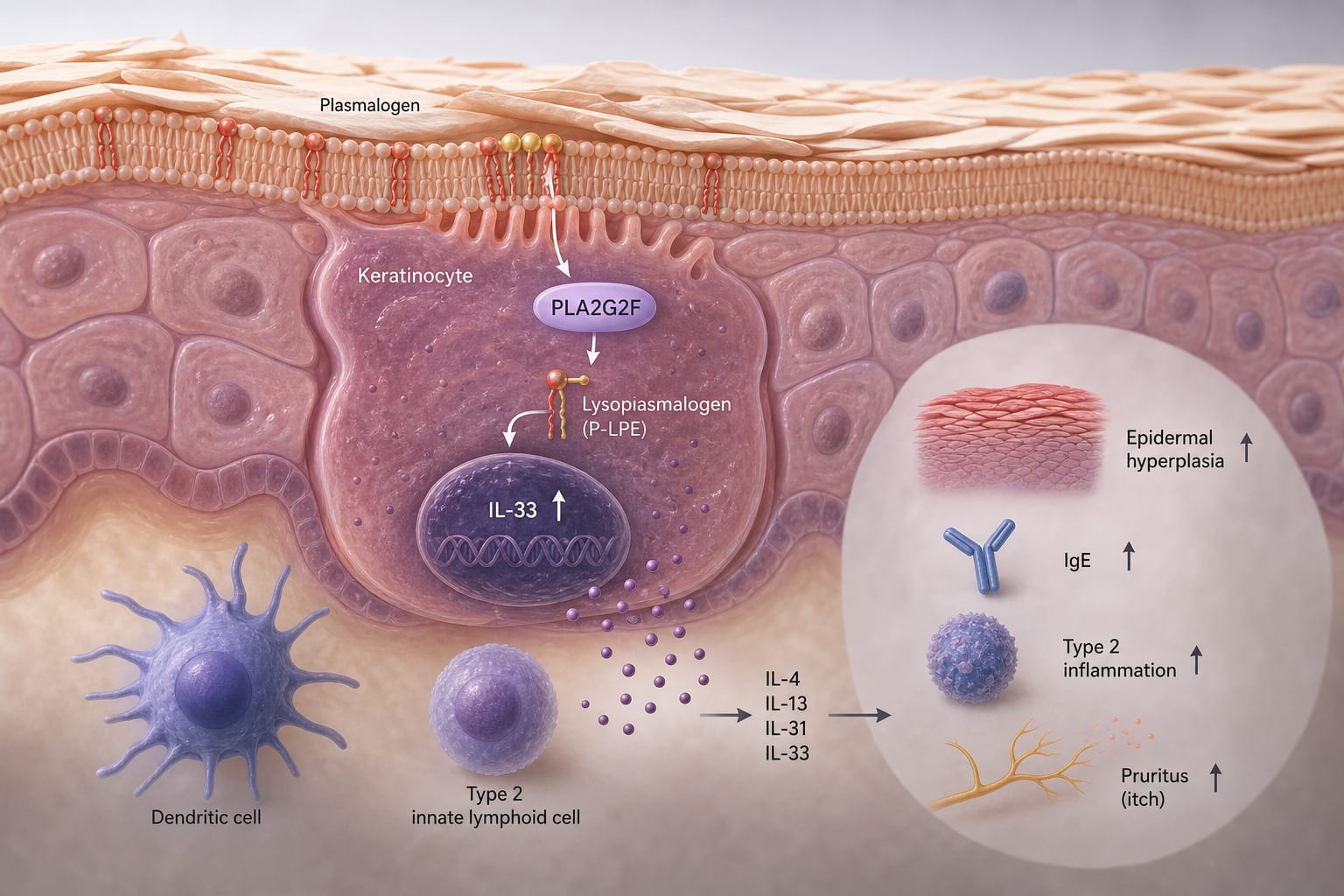
    Atopic dermatitis is characterized by type 2 immune responses, intense pruritus, and disrupted lipid metabolism.

  • 2

    PLA2G2F, induced by type 2 cytokines, produces lysoplasmalogen, contributing to atopic dermatitis exacerbation and itch.

  • 3

    Genetic deletion of Pla2g2f in mice reduced IL-33 expression, epidermal hyperplasia, and type 2 inflammation without altering neuronal function.

  • 4

    Topical PLA2 inhibitors or breakdown of P-LPE reduced itch in wild-type mice, while exogenous P-LPE increased scratching in Pla2g2f-deficient mice.

  • 5

    Higher P-LPE concentrations in the stratum corneum correlate with disease severity in atopic dermatitis patients, indicating its potential as a biomarker.

Original Source(s)

Related Content