Survival and hematologic toxicity after whole-brain radiotherapy, photon craniospinal irradiation, and proton craniospinal irradiation for solid-tumor leptomeningeal disease: a systematic review - Takeaways - MDSpire
Coming Soon: Introducing MDSpire News. Learn more
Conexiant’s news site is now MDSpire News. Learn more

Outcomes and hematologic side effects following whole-brain radiotherapy, photon craniospinal irradiation, and proton craniospinal irradiation in patients with solid-tumor leptomeningeal disease: a systematic analysis

  • By

  • Mishaal Munir

  • Kavita Sehrawat

  • Hanan Hassan

  • Matthew Hall

  • Minesh P. Mehta

  • Jonathan. T. Yang

  • Rupesh Kotecha

  • August 29, 2026

Share

  • 1

    Leptomeningeal disease (LMD) is a complication of advanced solid tumors, notably breast cancer and non-small cell lung cancer.

  • 2

    Management of LMD is complex and may involve systemic agents, intrathecal therapy, and various forms of radiotherapy.

  • 3

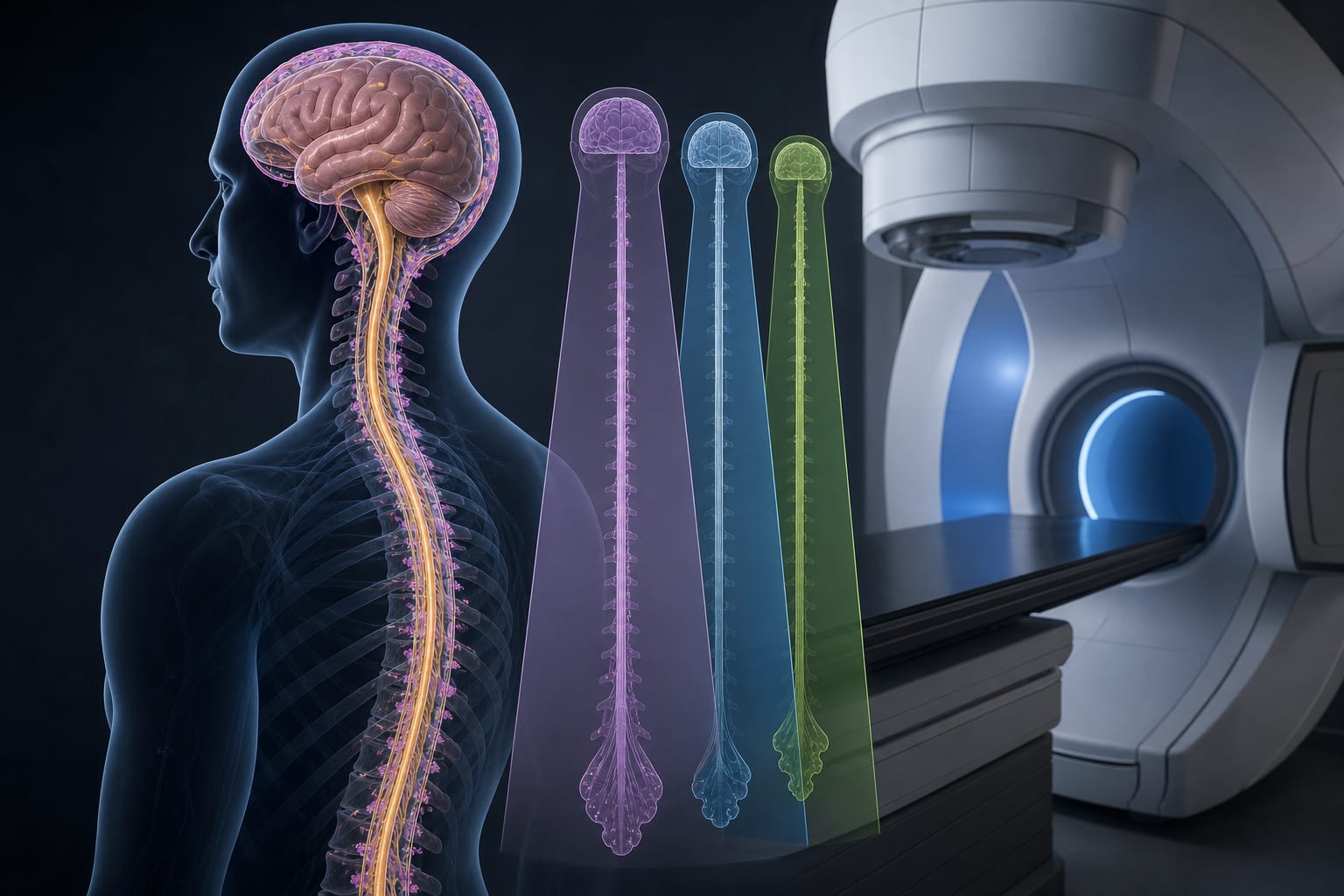
    Proton craniospinal irradiation (CSI) may reduce radiation exposure to normal tissues compared to conventional photon CSI.

  • 4

    Early studies suggest proton CSI may improve CNS progression-free survival and overall survival without increasing serious adverse events.

  • 5

    A systematic review is needed to synthesize outcomes of different radiotherapy modalities for solid-tumor LMD due to existing evidence heterogeneity.

Original Source(s)

Related Content