Collateral circulation after revascularization in moyamoya disease: influencing factors and underlying mechanisms - Takeaways - MDSpire

Collateral circulation after revascularization in moyamoya disease: influencing factors and underlying mechanisms

  • By

  • Zhenwei Li

  • Liming Zhao

  • Pengpeng Yan

  • Shangyu Jin

  • Hao Liang

  • Ziqiang Liu

  • Yang Liu

  • Yuxue Sun

  • Tao Gao

  • Chaoyue Li

  • Gaochao Guo

  • July 6, 2026

  • 0 min

Share

  • 1

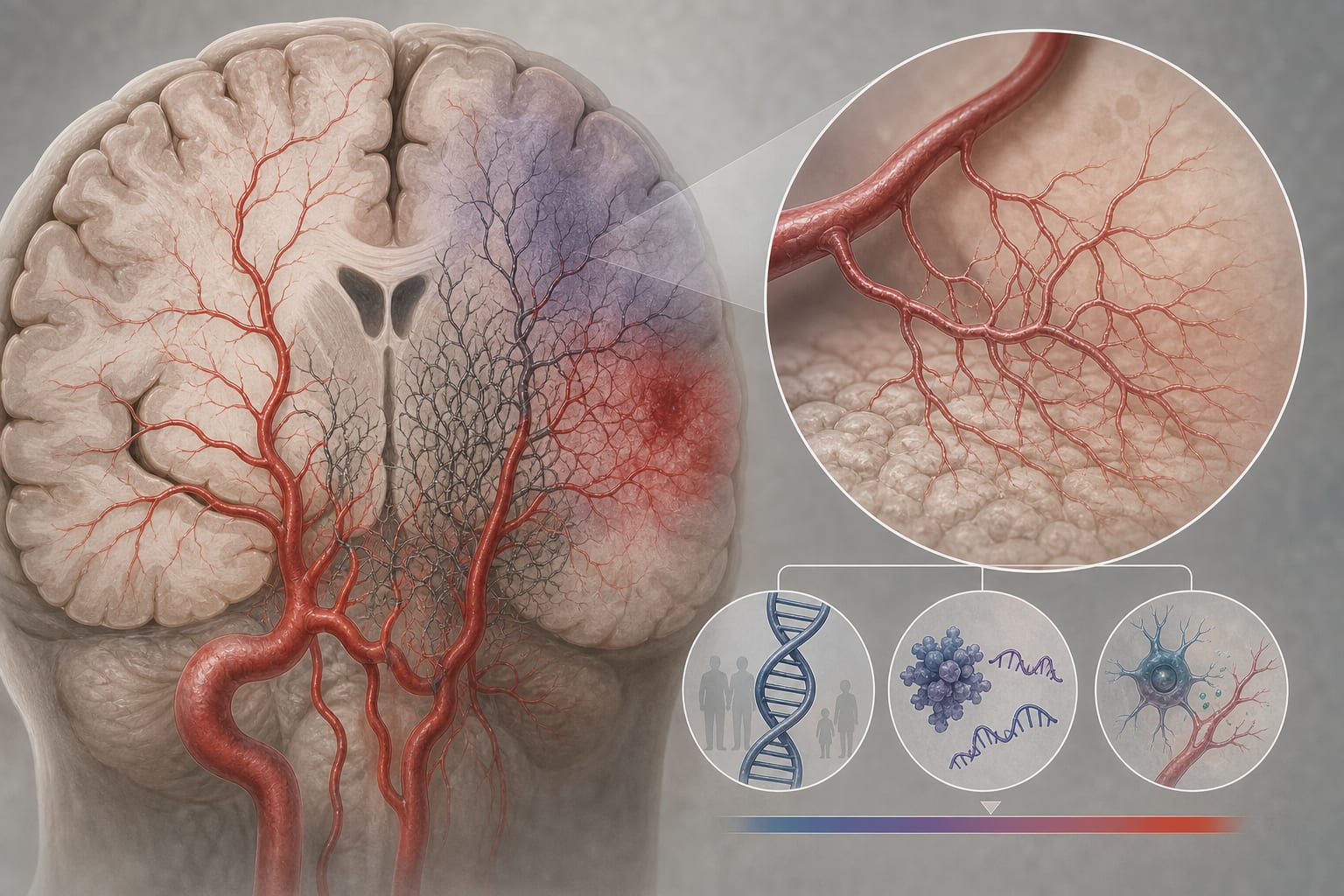
    Cerebral revascularization is the primary treatment for moyamoya disease, aimed at improving cerebral perfusion and reducing stroke recurrence.

  • 2

    Postoperative collateral circulation formation varies among individuals, impacting the risk of recurrent ischemia or hemorrhage.

  • 3

    Factors influencing collateral circulation include genetic susceptibility, angiogenic growth factors, and clinical variables like surgical modality and patient age.

  • 4

    Direct revascularization may improve angiographic vascular reconstruction and reduce recurrent stroke risk compared to indirect methods.

  • 5

    Poor postoperative collateral circulation formation is linked to a higher incidence of stroke and may predict long-term prognosis in moyamoya disease.

Original Source(s)

Related Content