Neuroprognostication after cardiac arrest: time-anchored reassessment and uncertainty around zero false positives - Takeaways - MDSpire
Coming Soon: Introducing MDSpire News. Learn more
Conexiant’s news site is now MDSpire News. Learn more

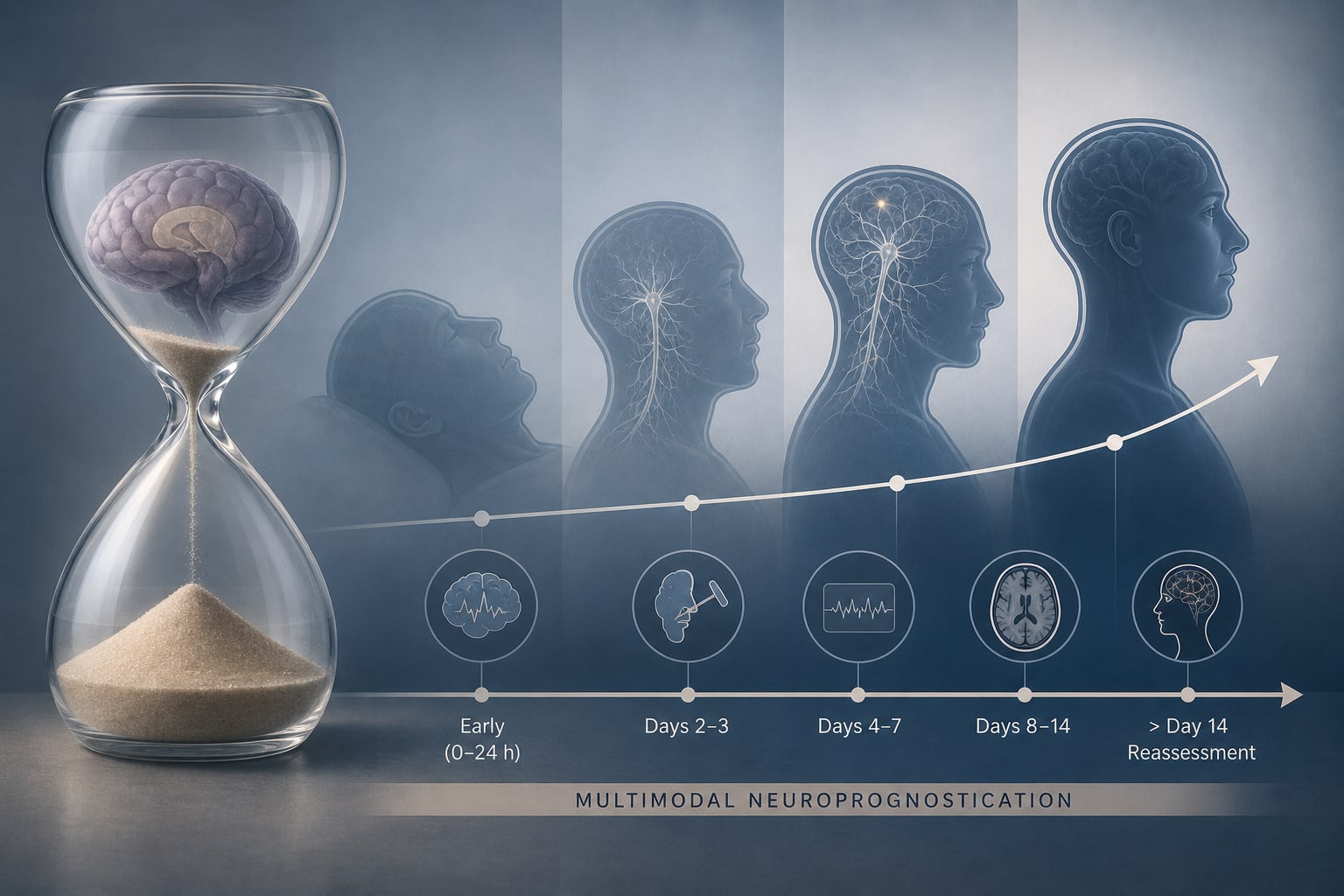
Reassessing Neuroprognostic Indicators Following Cardiac Arrest: Addressing Temporal Factors and the Challenge of Eliminating False Positives

  • By

  • Li-Xia Xu

  • August 21, 2026

Share

  • 1

    Goetze et al.'s study provides evidence on multimodal prognostication during ongoing care after cardiac arrest.

  • 2

    Reassessment of neuroprognostic markers showed fewer false-positive classifications and improved prognostic information.

  • 3

    The timing of assessments significantly affects false-positive rates and prognostic accuracy of neuroprognostic markers.

  • 4

    The absence of false positives does not confirm that the true false-positive rate is below the prespecified 10% threshold.

  • 5

    Analyses should focus on marker trajectories and uncertainty around false-positive results for better bedside neuroprognostication.

Original Source(s)

Related Content