Epithelial–mesenchymal transition in cutaneous fibrosis disease: from mechanisms to therapy - Takeaways - MDSpire

Epithelial–mesenchymal transition in cutaneous fibrosis disease: from mechanisms to therapy

  • By

  • ShaoXiang Yuan

  • Ziyi Luo

  • Nina Yang

  • Tao Xiong

  • YueZhong Chen

  • Xichao Jian

  • Yun Wang

  • Shune Xiao

  • Junzhe Chen

  • Chengliang Deng

  • June 9, 2026

  • 0 min

Share

  • 1

    Cutaneous fibrosis results from chronic inflammation, tissue trauma, or autoimmune reactions, leading to abnormal tissue remodeling.

  • 2

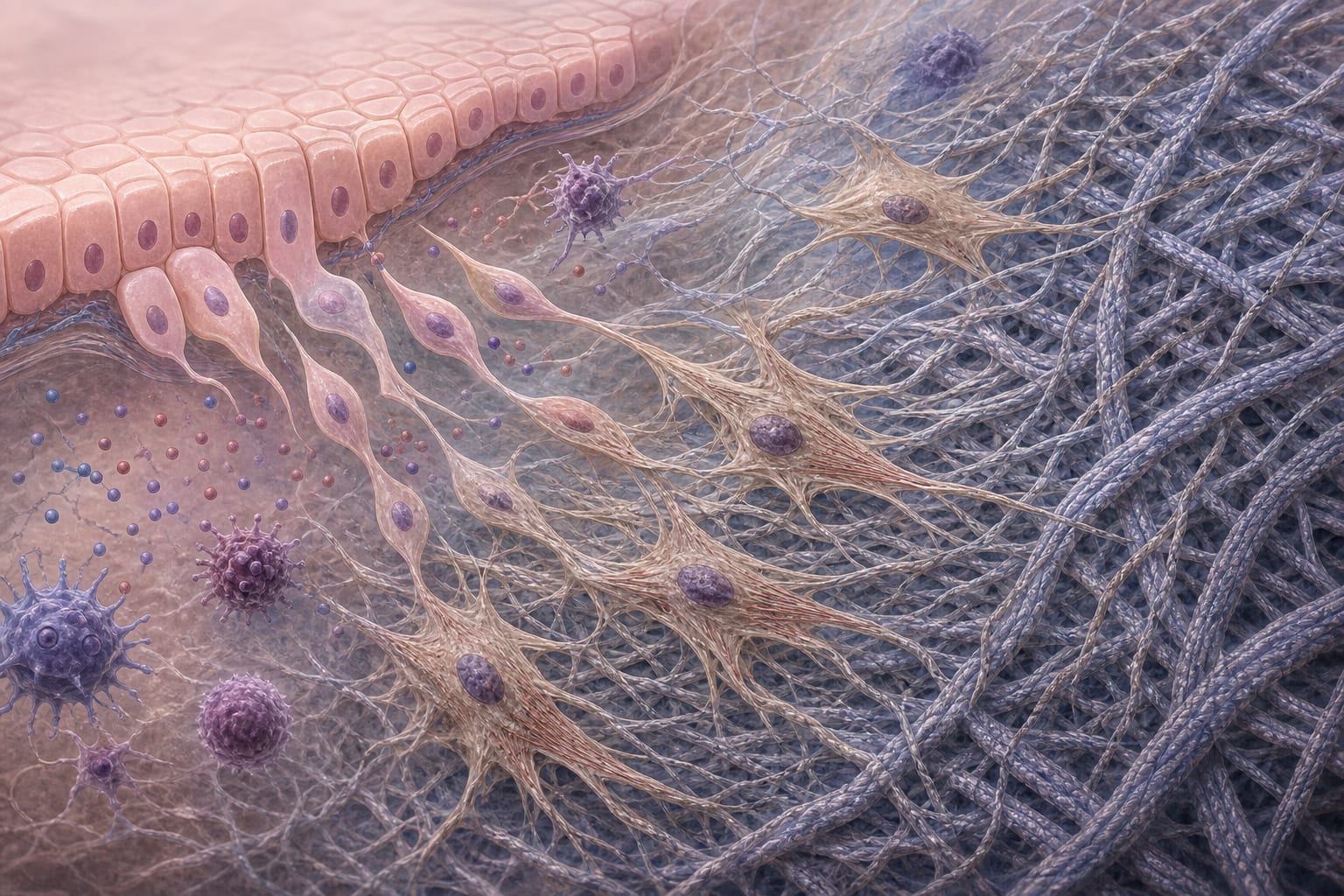
    Epithelial–mesenchymal transition (EMT) plays a critical role in the development of fibrotic disorders by enabling epithelial cells to acquire mesenchymal properties.

  • 3

    EMT contributes to fibrogenesis, potentially acting as an immediate cellular origin of fibroblasts and myofibroblasts in fibrotic tissue.

  • 4

    Type II EMT is associated with tissue repair and organ fibrosis, where epithelial cells adopt myofibroblast-like characteristics.

  • 5

    Targeting EMT may provide a promising therapeutic approach for treating cutaneous fibrosis by addressing its underlying mechanisms.

Original Source(s)

Related Content