Hypoxia-driven tumor immune escape: mechanisms and therapeutic opportunities - Takeaways - MDSpire

Hypoxia-driven tumor immune escape: mechanisms and therapeutic opportunities

  • By

  • Hongran Qin

  • Shuqiang Yang

  • Jiawei He

  • Meijia Zhao

  • Luqian Zhao

  • Jingjing Wang

  • Xiulin Jiang

  • Xiaowen Chen

  • Xin Xu

  • July 1, 2026

  • 0 min

Share

  • 1

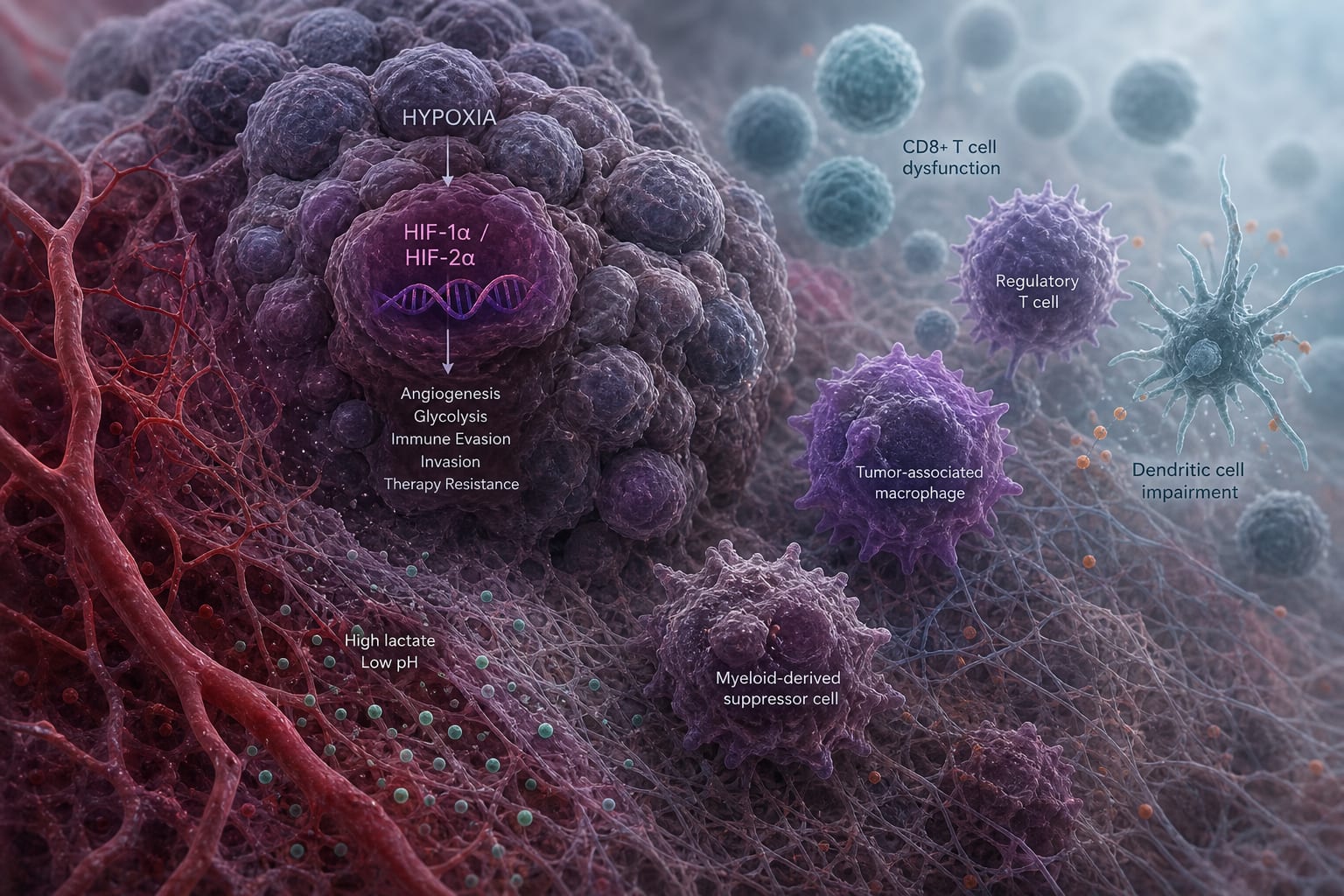
    Hypoxia is prevalent in solid tumors, resulting from inadequate vascularization and rapid growth, leading to oxygen deprivation.

  • 2

    Hypoxia-inducible factors HIF-1α and HIF-2α activate programs that enhance tumor survival, angiogenesis, and therapy resistance.

  • 3

    Hypoxia remodels the immune microenvironment by suppressing cytotoxic immune cells and promoting immunosuppressive cell types.

  • 4

    HIF signaling drives tumor immune evasion through metabolic changes, immune cell composition alterations, and RNA modifications.

  • 5

    Targeting hypoxia-related pathways may improve antitumor immunity, but effective strategies require combination therapies due to overlapping escape mechanisms.

Original Source(s)

Related Content