Fetal sex shapes maternal immune adaptation: placental extracellular vesicles differentially reprogram the phenotype, metabolism, and function of circulating monocytes - Takeaways - MDSpire

Maternal Immune Response Influenced by Fetal Sex: Distinct Effects of Placental Extracellular Vesicles on the Phenotype, Metabolism, and Function of Circulating Monocytes

  • By

  • Julieta Avalos

  • Florencia Sabbione

  • Daiana Rios

  • Daniel H. Grasso

  • M. Noe Garcia

  • Franco Aguilera

  • Fatima Merech

  • Horacio Aiello

  • Cesar Meller

  • Rosanna Ramhorst

  • Vanesa Hauk

  • Soledad Gori

  • Claudia Pérez Leirós

  • Daiana M. Vota

  • Daniel E. Paparini

  • July 17, 2026

Share

  • 1

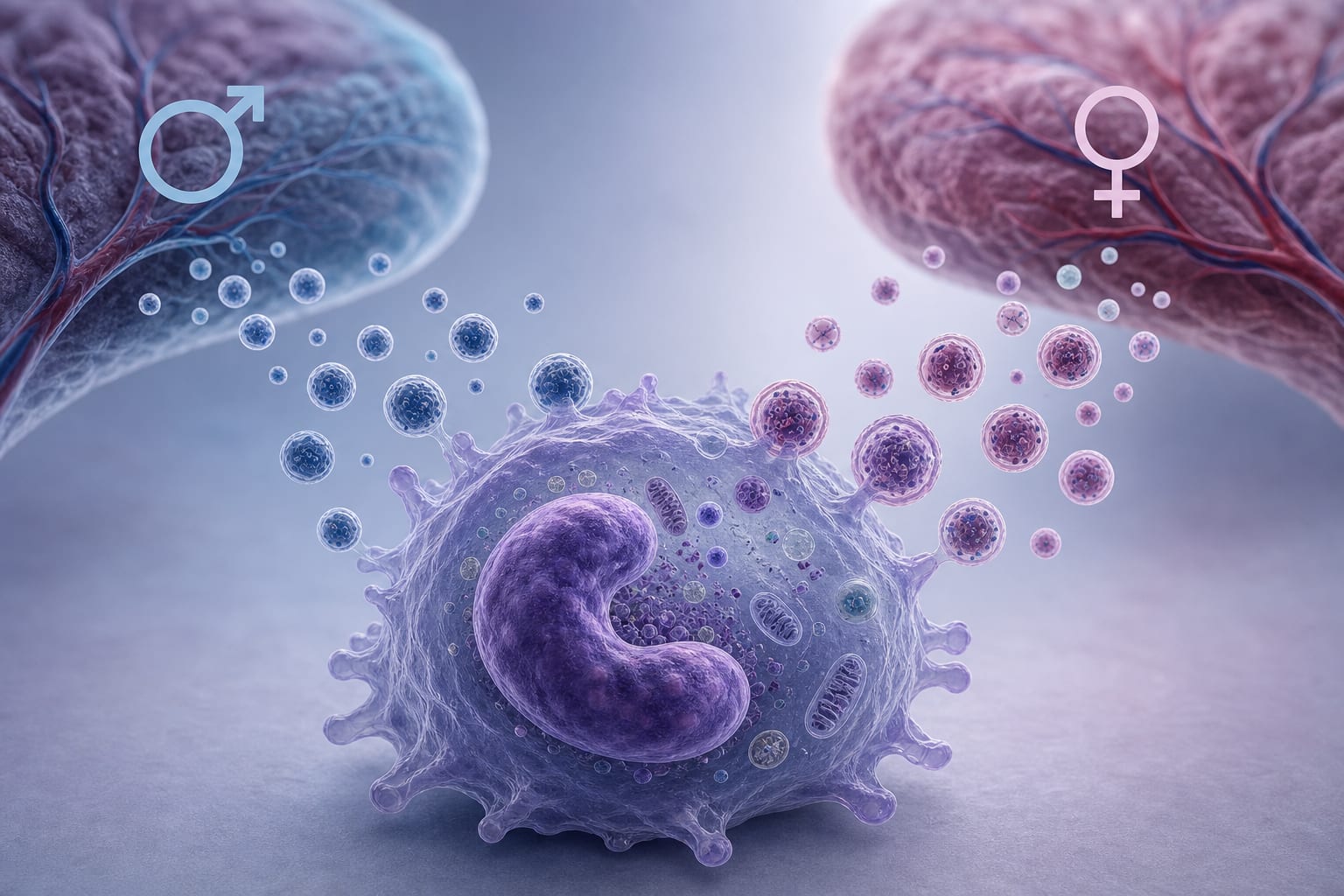
    Placental extracellular vesicles (pEVs) from male and female fetuses induce distinct changes in the phenotype and function of circulating monocytes.

  • 2

    F-pEVs decrease CD11b and CD11c expression while increasing CD14, CD39, and IL-10 production in monocytes.

  • 3

    M-pEVs enhance CD14 expression and IL-1β secretion, promoting a pro-inflammatory profile in monocytes.

  • 4

    Metabolic analyses show M-pEVs increase lactate and reactive oxygen species, while F-pEVs enhance fatty acid uptake and mitochondrial activity.

  • 5

    Both M- and F-pEVs promote efferocytosis in monocytes, but exhibit different sensitivities to metabolic inhibitors.

Original Source(s)

Related Content