Penicillin-Cephalosporin Cross-Reactivity Alert Modifications and Cephalosporin Use Among Patients With - Takeaways - MDSpire
Coming Soon: Introducing MDSpire News. Learn more
Conexiant’s news site is now MDSpire News. Learn more

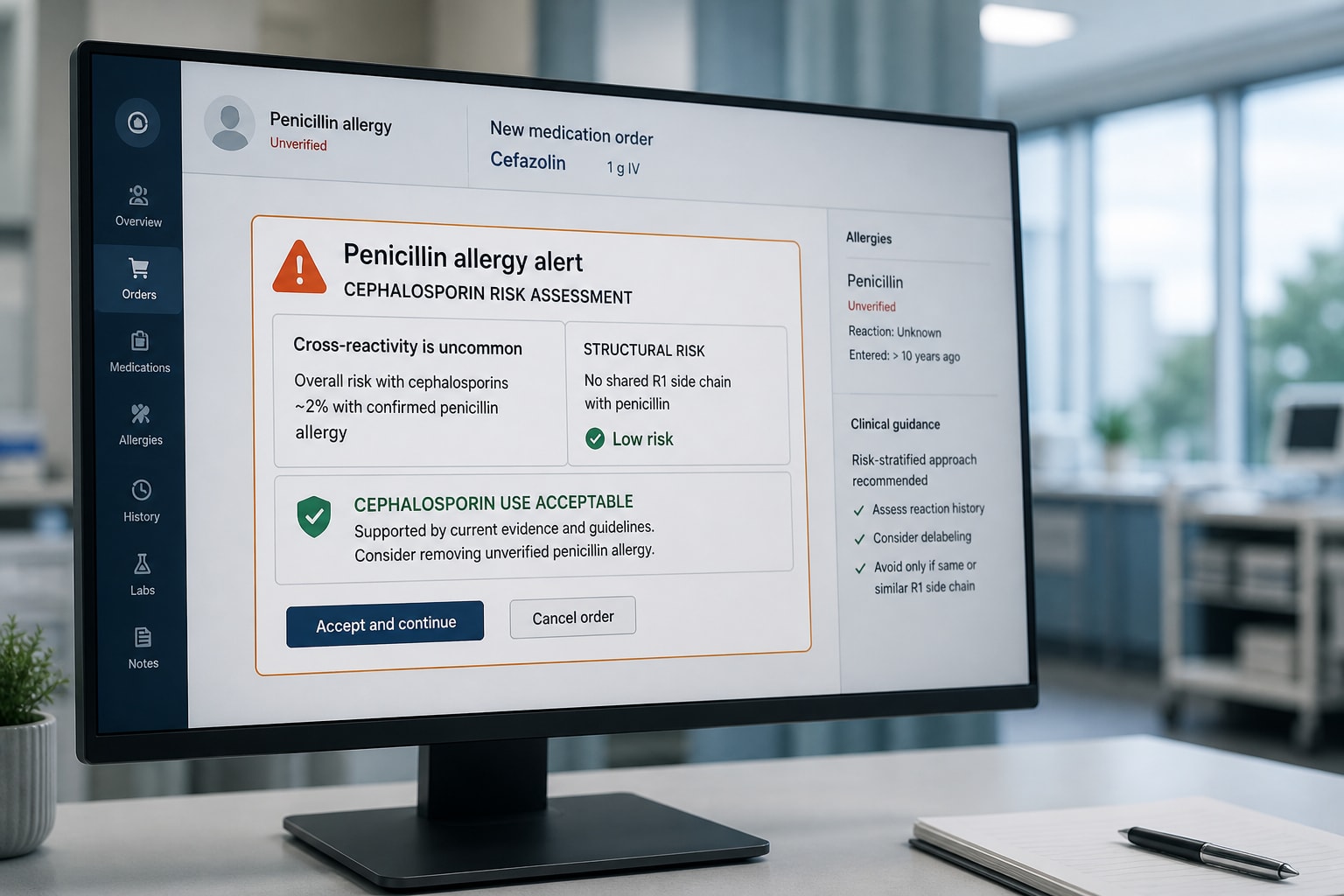
Updated Penicillin–Cephalosporin Cross-Reactivity Alerts and Cephalosporin Use in Patients With Penicillin Allergy

  • By

  • Cosby A. Stone

  • Scott D. Nelson

  • Laura Zahn

  • Allison B. McCoy

  • Megan Z. Wang

  • Ritu Banerjee

  • Milner Staub

  • Dara Mize

  • Elizabeth J. Phillips

  • Adam Wright

  • November 13, 2026

Share

  • 1

    Among 26,903 patients with penicillin allergy labels, a revised risk-stratified alert was associated with increased cephalosporin use across inpatient, operating room, and outpatient settings.

  • 2

    Mean weekly cephalosporin use increased 17.8% for inpatient administrations, 35.4% in operating rooms, and 16.7% for outpatient orders.

  • 3

    After implementation, weekly fluoroquinolone use decreased 12.5% and clindamycin use decreased 34.5%, while carbapenem and metronidazole use did not change significantly.

  • 4

    The revised alerts reduced weekly penicillin-cephalosporin cross-reactivity alerts by 86%, and prescribers canceled 67.2% of orders after receiving the new in-line alert.

  • 5

    Review of 28 epinephrine administrations within 1 hour of cephalosporin exposure found no anaphylaxis; long-term outcomes and delayed allergy effects were not evaluated.

Original Source(s)

Related Content