Elevated angiography-derived microvascular resistance and HbA1c levels jointly predict adverse outcomes in patients with diabetic STEMI: a multicenter retrospective cohort study - Takeaways - MDSpire

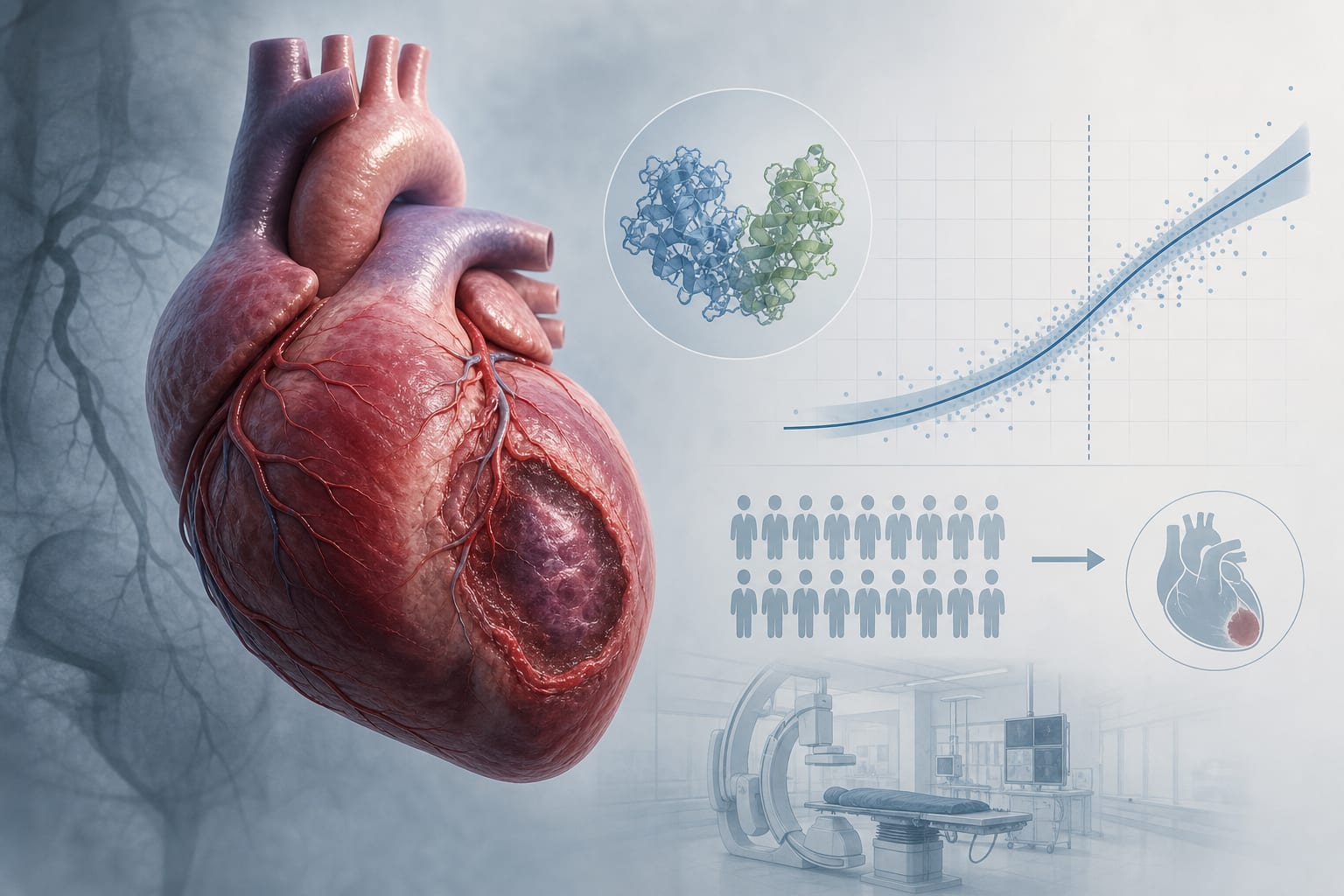
Elevated angiography-derived microvascular resistance and HbA1c levels jointly predict adverse outcomes in patients with diabetic STEMI: a multicenter retrospective cohort study

  • By

  • Shiyi Gao

  • Yu Wang

  • Jun Wang

  • Qiang Zeng

  • Zengwei Cheng

  • Zichen Han

  • Hongju Wang

  • Miaonan Li

  • Sigan Hu

  • June 22, 2026

  • 0 min

Share

  • 1

    The study analyzed 545 patients with new-onset STEMI and type 2 diabetes mellitus (T2DM) to assess predictors of major adverse cardiovascular events.

  • 2

    Angiography-derived microvascular resistance (AMR) and HbA1c levels were independently associated with major adverse cardiovascular and cerebrovascular events (MACCEs).

  • 3

    Patients with HbA1c ≥6.5% and AMR ≥250.5 mmHg·s/m had the highest risk of MACCEs, with a hazard ratio of 6.903.

  • 4

    The study utilized a multivariable Cox proportional hazards model to adjust for covariates in the analysis of MACCEs.

  • 5

    Findings suggest that combined evaluation of AMR and HbA1c may enhance risk stratification for MACCEs in patients with STEMI and T2DM.

Original Source(s)

Related Content