Machine learning-based prediction of difficult laryngoscopy in infants with Pierre Robin sequence using quantitative 3D computed tomography parameters - Takeaways - MDSpire

Machine learning-based prediction of difficult laryngoscopy in infants with Pierre Robin sequence using quantitative 3D computed tomography parameters

  • By

  • Danling Hu

  • Weiwei Cai

  • Anwen Zheng

  • ShuaiLi You

  • Shan Zhong

  • June 24, 2026

  • 0 min

Share

  • 1

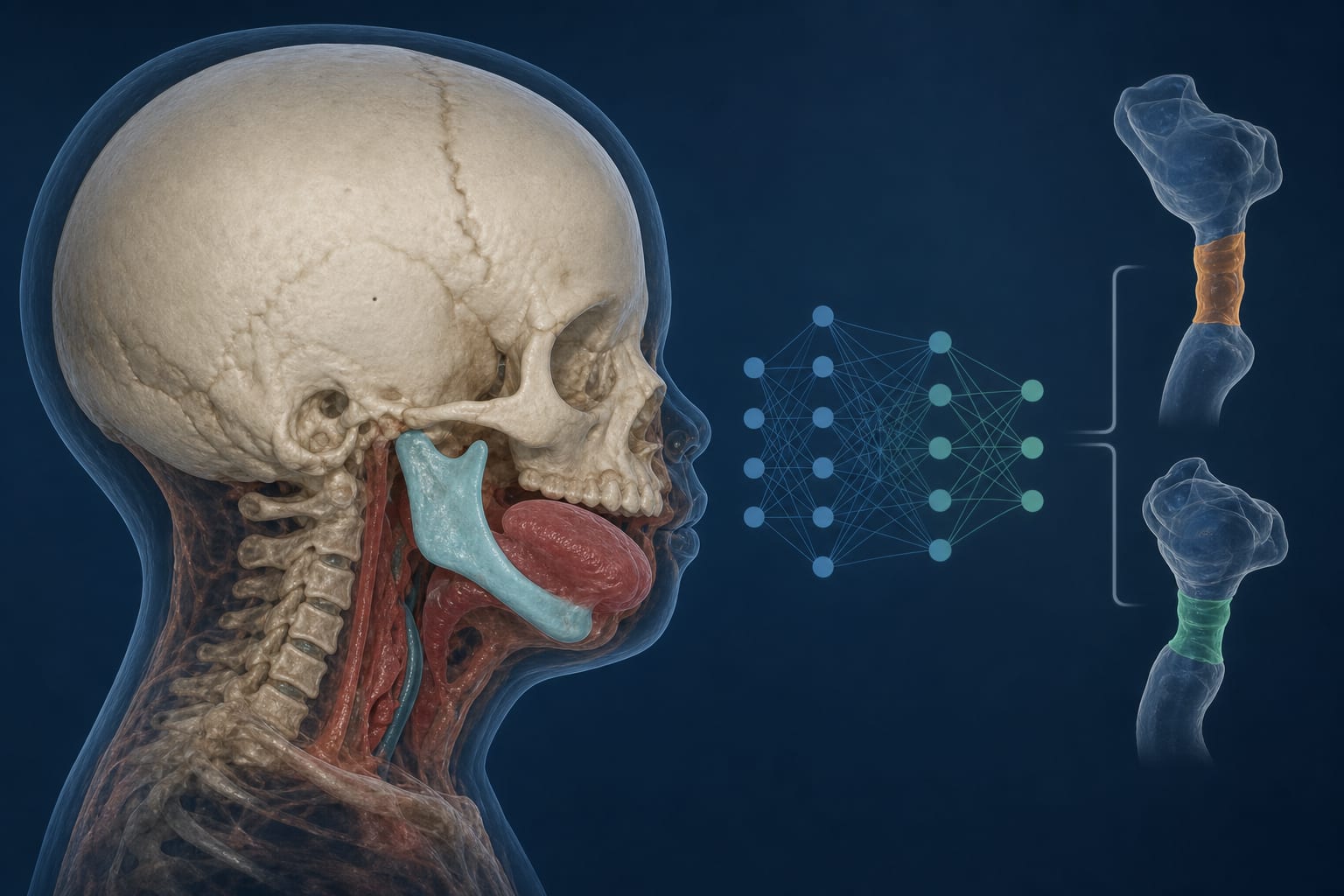
    Infants with Pierre Robin sequence often experience difficult laryngoscopic exposure due to anatomical challenges like mandibular hypoplasia and glossoptosis.

  • 2

    The study analyzed 214 infants with Pierre Robin sequence to identify 3D-CT parameters predictive of difficult laryngoscopic exposure.

  • 3

    Four independent predictors of difficult laryngoscopic exposure were identified: tongue length, tongue base-posterior pharyngeal wall distance, oropharyngeal area, and tongue base-epiglottic angle.

  • 4

    The Extra Trees machine learning model demonstrated superior generalizability in predicting difficult laryngoscopy with an AUC of 0.876 in an independent validation cohort.

  • 5

    Quantitative 3D-CT parameters are clinically relevant for predicting laryngoscopic exposure challenges in infants with Pierre Robin sequence.

Original Source(s)

Related Content