Clinical characteristics and outcomes in leptomeningeal disease with or without brain metastasis: insights from an explorative data analysis of the Charité LMD registry - Takeaways - MDSpire

Clinical characteristics and outcomes in leptomeningeal disease with or without brain metastasis: insights from an explorative data analysis of the Charité LMD registry

  • By

  • David Wasilewski

  • Chiara Eitner

  • Rober Ates

  • Selin Murad

  • Zoe Shaked

  • Julia Alexandra Steinle

  • Andreas Wetzel-Yalelis

  • Tarik Alp Sargut

  • Judith Rösler

  • Majd Abdulhamid Samman

  • Peter Truckenmüller

  • Robert Mertens

  • Daniel Kroneberg

  • Alexander Kowski

  • Helena Radbruch

  • David Capper

  • Felix Ehret

  • Siyer Roohani

  • Nikolaj Frost

  • Jawed Nawabi

  • Julia Onken

  • Maximilian Schlaak

  • Jens-Uwe Blohmer

  • Uwe Pelzer

  • Ulrich Keller

  • Jalid Sehouli

  • Peter Vajkoczy

  • Ulrich Keilholz

  • Martin Misch

  • February 11, 2025

  • 0 min

Share

  • 1

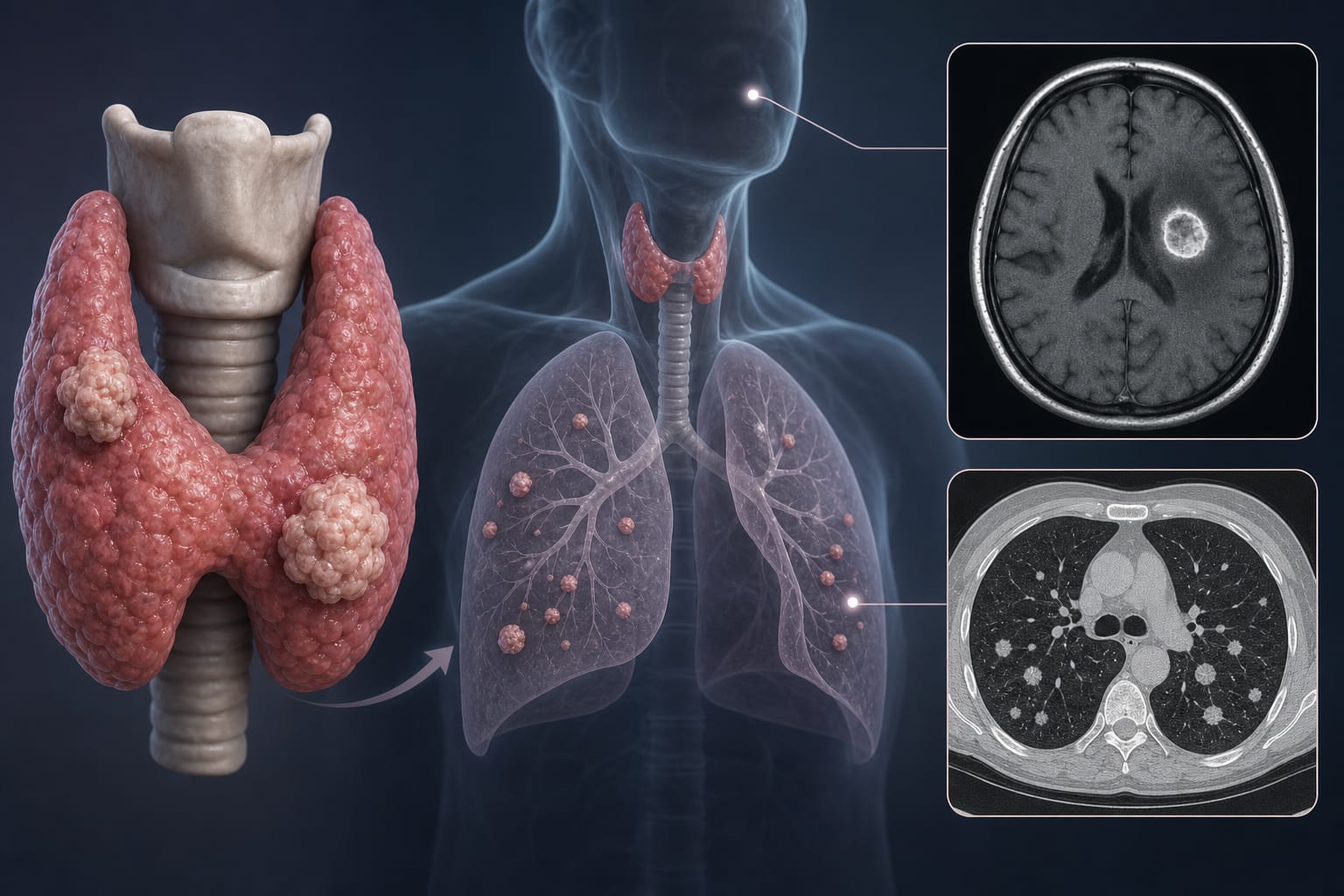
    Leptomeningeal disease (LMD) is a late-stage complication of metastatic malignancies, leading to significant morbidity and poor prognosis.

  • 2

    Common tumors associated with LMD include breast cancer, non-small cell lung cancer, and melanoma, with LMD affecting up to 37% of brain metastasis patients.

  • 3

    Diagnosis of LMD typically involves cranial and spinal MRI, CSF sampling, or biopsy, with incidence rising due to improved cancer therapies.

  • 4

    This study aims to analyze clinical characteristics and prognostic factors in LMD patients, focusing on intracranial and extracranial disease burden.

  • 5

    Statistical analyses were performed to summarize patient data and estimate median overall survival using Kaplan-Meier analysis and Cox regression.

Original Source(s)

Related Content