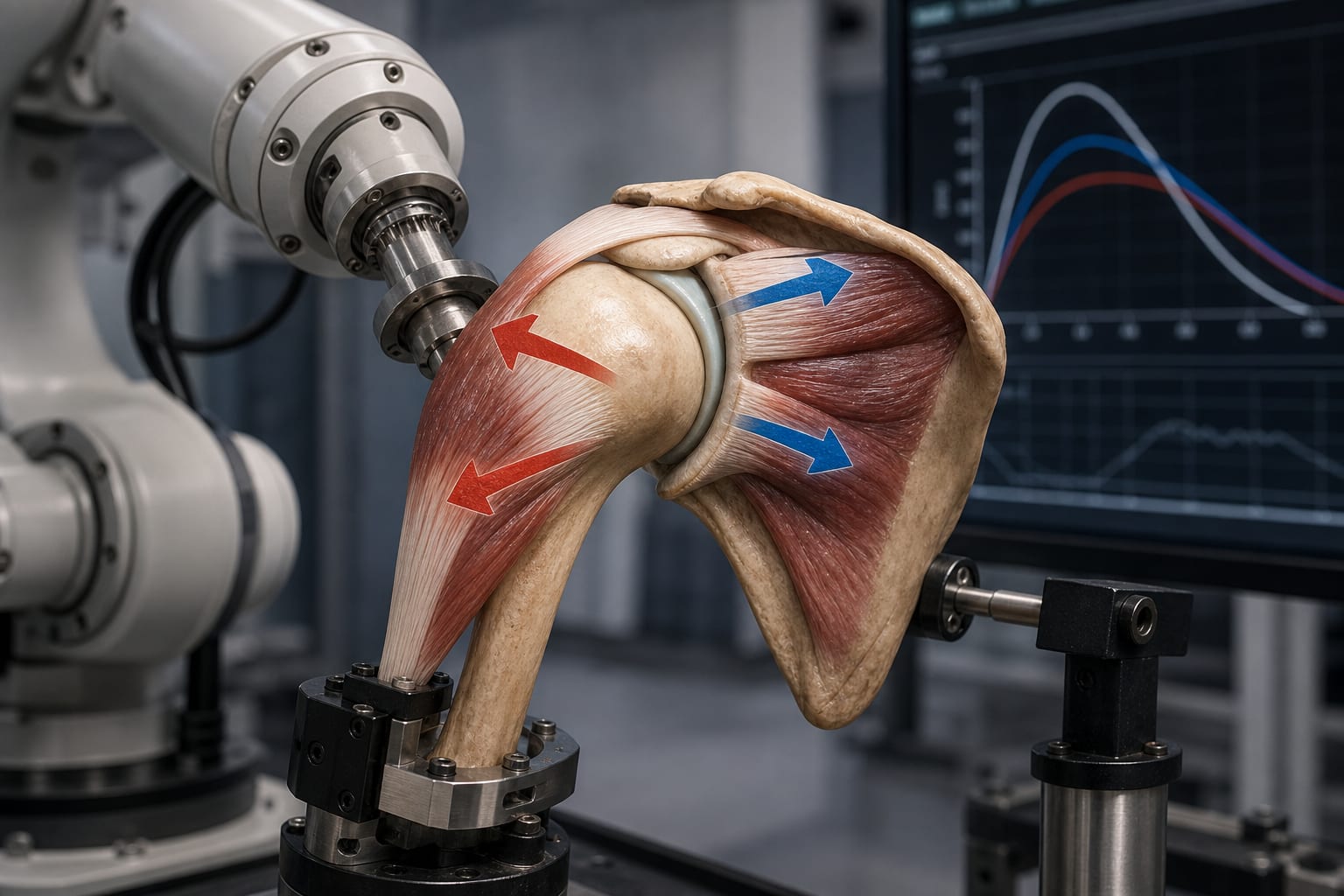
Simulated tears of antero-posterior rotator cuff force-couple and reduced glenoid concavity decrease anterior glenohumeral stability: a robot-assisted biomechanical analysis of a load and shift sequence - Takeaways - MDSpire

Simulated tears of antero-posterior rotator cuff force-couple and reduced glenoid concavity decrease anterior glenohumeral stability: a robot-assisted biomechanical analysis of a load and shift sequence

  • By

  • Mats Jonas Karlsfeld

  • Jens Wermers

  • Stefanie Tänzler

  • Julia Sußiek

  • Elmar Herbst

  • J. Christoph Katthagen

  • June 18, 2026

  • 0 min

Share

  • 1

    The study investigates the impact of rotator cuff tears and glenoid concavity on anterior glenohumeral stability using a robot-assisted biomechanical model.

  • 2

    Seventeen fresh-frozen human shoulders were initially considered, with eight specimens ultimately included after screening for specific criteria.

  • 3

    The research aims to determine which rotator cuff tear configurations significantly affect glenohumeral stability and require surgical intervention.

  • 4

    The study hypothesizes that isolated tears of the subscapularis tendon have a greater impact on stability than other single tendon tears.

  • 5

    Glenoid concavity is posited as a crucial factor in maintaining glenohumeral stability, influencing the force required by the rotator cuff.

Original Source(s)

Related Content