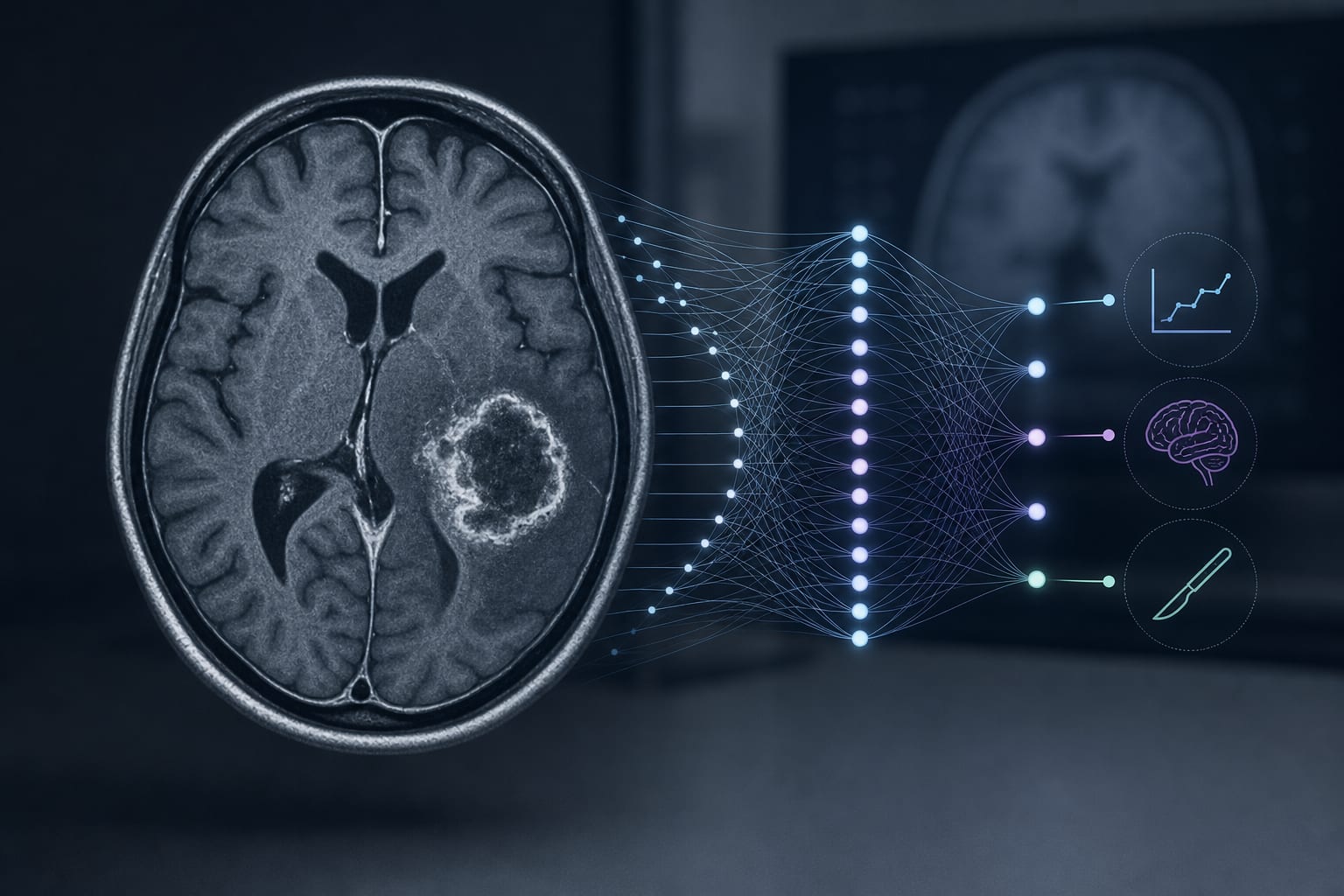
Machine learning-assisted prognosis prediction and surgical decision-making for glioblastoma: perceived benefits and concerns of patients, caregivers, and neurosurgeons - Takeaways - MDSpire

Machine learning-assisted prognosis prediction and surgical decision-making for glioblastoma: perceived benefits and concerns of patients, caregivers, and neurosurgeons

  • By

  • Meredith V. Parsons

  • Olivia Buckley

  • Hamasa Ebadi

  • Eric Leuthardt

  • Tristan McIntosh

  • July 2, 2026

  • 0 min

Share

  • 1

    Participants viewed machine learning (ML) models as beneficial for integrating extensive patient data to aid decision-making in glioblastoma treatment.

  • 2

    Concerns were raised about potential inaccuracies and biases in ML model outputs, as well as the risk of replacing clinical judgment.

  • 3

    Patients and caregivers expressed worries about the early development stage of ML models and their impact on patient hope and understanding.

  • 4

    The study emphasizes the importance of engaging multiple stakeholders to ensure responsible integration of ML in clinical decision-making.

  • 5

    Trust in ML-assisted decision-making is closely linked to patient trust in their physicians, particularly in palliative care contexts.

Original Source(s)

Related Content