A CDK4/6 inhibitor-armed oncolytic adenovirus reverses T cell exhaustion through the Rb-p65-CCL5 pathway and potentiates the antitumor activity of anti-PD-1 or CAR-T therapy in colorectal cancer - Takeaways - MDSpire

A CDK4/6 inhibitor-armed oncolytic adenovirus reverses T cell exhaustion through the Rb-p65-CCL5 pathway and potentiates the antitumor activity of anti-PD-1 or CAR-T therapy in colorectal cancer

  • By

  • Dan Zhou

  • Beibei Ran

  • Lingkai Kong

  • Yan Liu

  • Lingjun Xiao

  • Xiangmei Chen

  • Wencui Liu

  • Xiao Li

  • Jing Zhang

  • Jiahui Zhang

  • Hao Wu

  • Guang Zhang

  • Xiaosong Gu

  • Wenjie Zhang

  • Junhua Wu

  • Chunping Jiang

  • June 15, 2026

  • 0 min

Share

  • 1

    The engineered oncolytic adenovirus ADV-PTD4-D3 enhances tumor control and T cell memory in colorectal cancer models.

  • 2

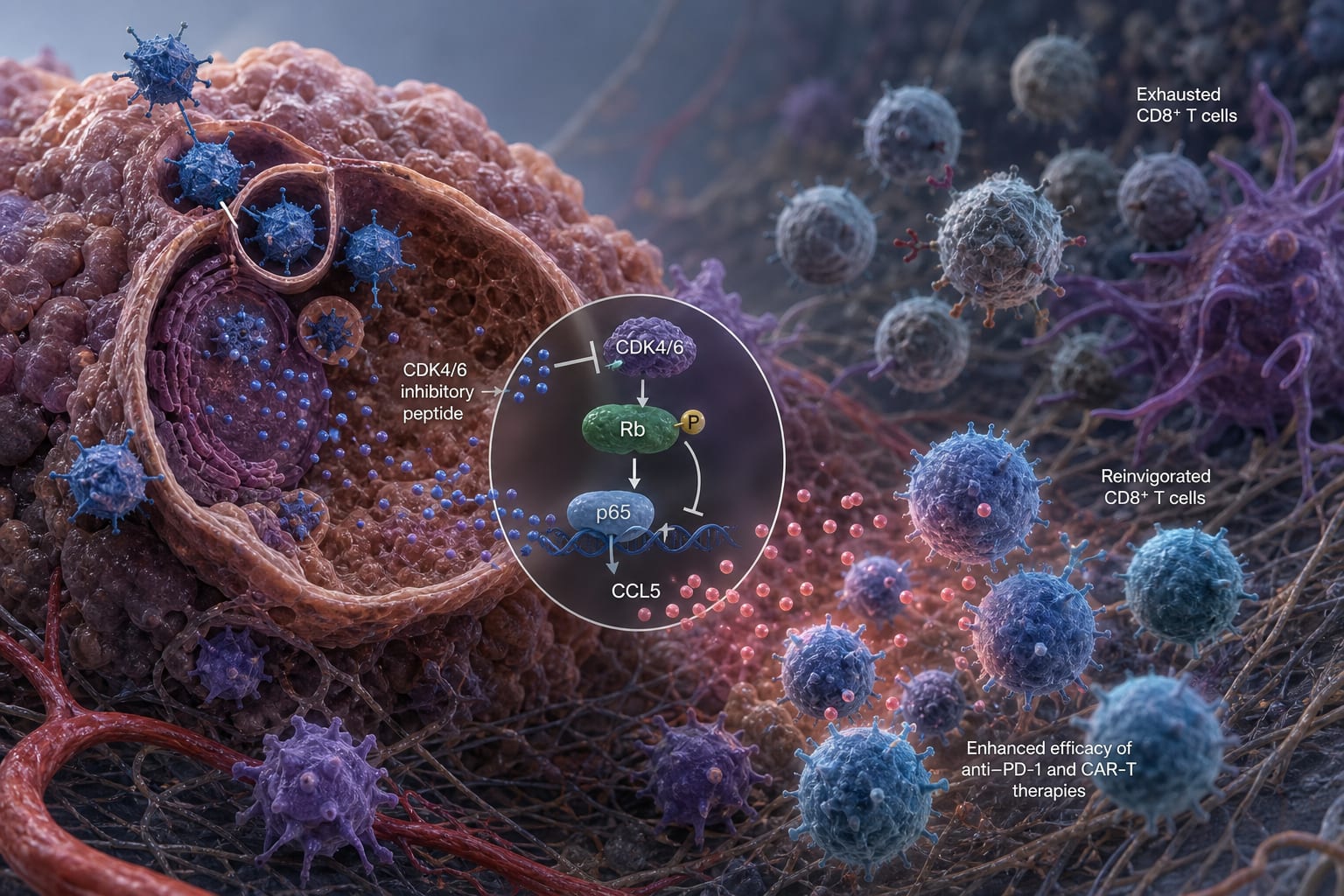
    ADV-PTD4-D3 reverses CD8+ T cell exhaustion by modulating the Rb-p65-CCL5 signaling pathway, improving T cell recruitment.

  • 3

    This therapy shows potent antitumor activity in both murine and humanized xenograft models without significant off-target toxicity.

  • 4

    ADV-PTD4-D3 improves the efficacy of anti-PD-1 and CAR-T therapies by addressing barriers of T cell infiltration and exhaustion.

  • 5

    The study suggests that localized modulation of T cell exhaustion pathways via oncolytic viruses is a viable strategy for enhancing antitumor immunity.

Original Source(s)

Related Content