-
1
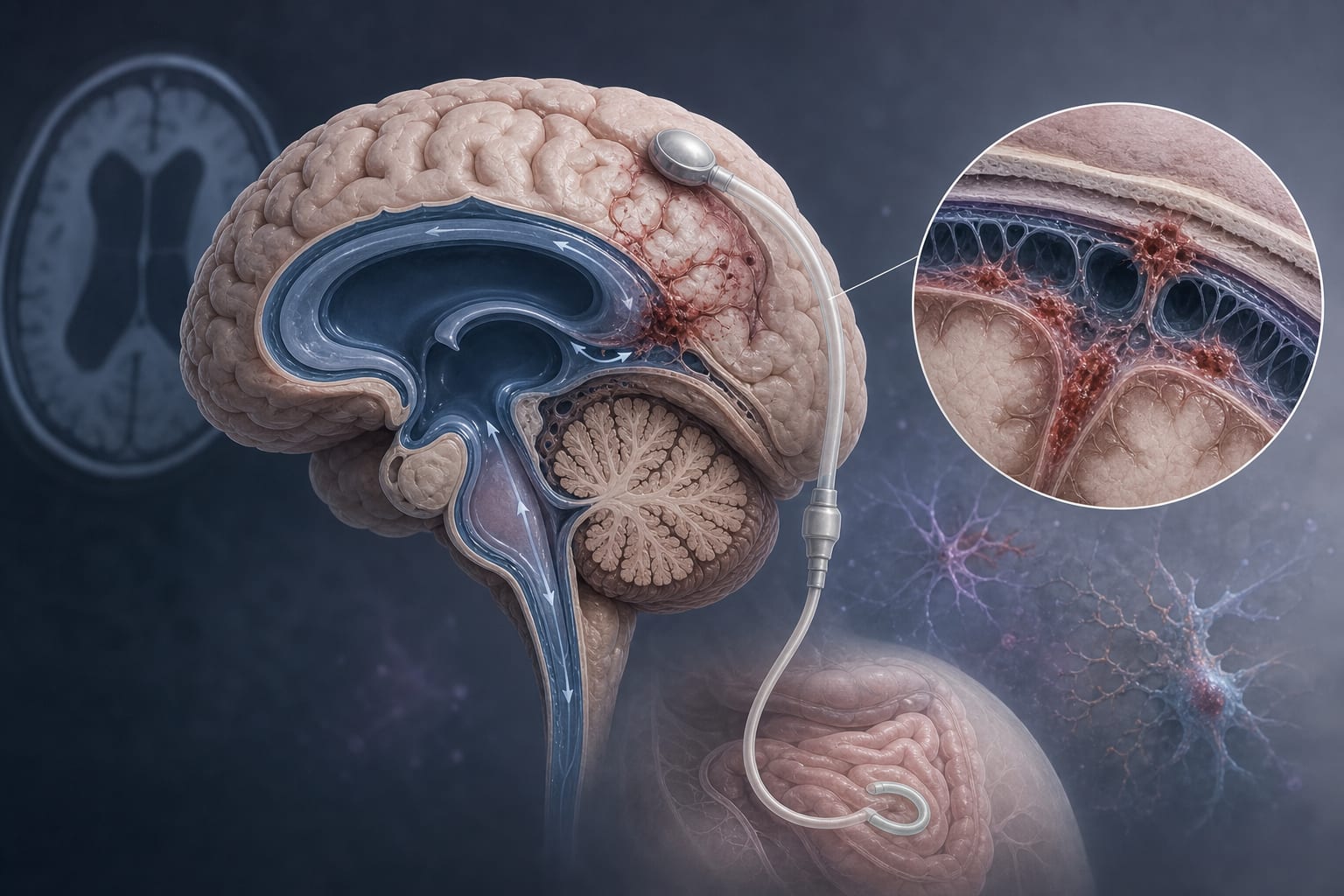
Post-traumatic hydrocephalus (PTH) is a serious complication of traumatic brain injury (TBI) that can increase morbidity and mortality.
-
2
PTH can develop abruptly or later, often linked to factors like severe TBI, hemorrhage, and decompressive craniectomy.
-
3
In a study, PTH occurred in 21.05% of TBI patients, with acute subdural hematoma and midline shift being common findings.
-
4
Low admission Glasgow Coma Score, elevated intracranial pressure, and older age are strong predictors of poor outcomes in PTH patients.
-
5
Management of PTH involves diagnostics, shunting, and monitoring for complications, with surgery indicated primarily for increased intracranial pressure.