Immune checkpoint inhibitor-driven smooth muscle cell phenotypic modulation: a potential contributor to atherosclerotic risk associated with these therapies - Takeaways - MDSpire

Immune checkpoint inhibitor-driven smooth muscle cell phenotypic modulation: a potential contributor to atherosclerotic risk associated with these therapies

  • By

  • Abhijnan Chattopadhyay

  • Aminat O. Dosunmu

  • Darshan Reddy

  • Sree Dharma

  • Krishna Panchal

  • Callie S. Kwartler

  • Dianna M. Milewicz

  • July 13, 2026

Share

  • 1

    Immune checkpoint inhibitors (ICIs) increase the risk of atherosclerotic cardiovascular disease (ASCVD) independent of plasma cholesterol levels.

  • 2

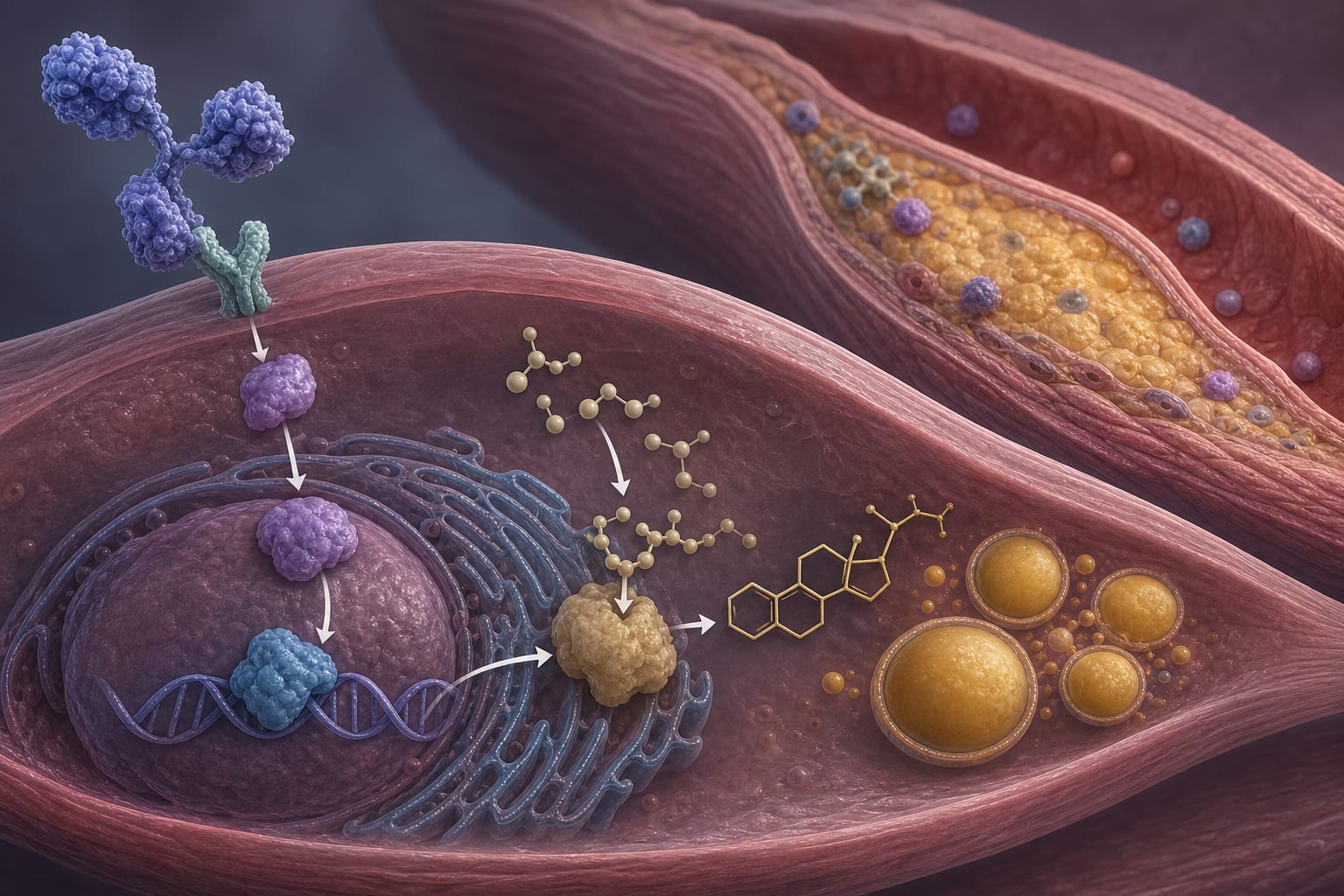
    Nivolumab, an ICI, activates heat shock factor 1 (HSF1) in smooth muscle cells (SMCs), leading to increased cholesterol synthesis.

  • 3

    Activation of HMG-CoA reductase (HMGCR) and accumulation of cholesteryl esters occur following HSF1 activation by nivolumab.

  • 4

    Nivolumab treatment induces endoplasmic reticulum (ER) stress and phenotypic modulation of SMCs, contributing to ASCVD.

  • 5

    Statin therapy, such as pravastatin, can reverse the effects of nivolumab on cholesterol synthesis and SMC modulation.

Original Source(s)

Related Content