Comparative efficacy of virtual reality, robotics, and brain–computer interface interventions for upper limb rehabilitation after stroke: a systematic review and network meta-analysis - Takeaways - MDSpire
Coming Soon: Introducing MDSpire News. Learn more
Conexiant’s news site is now MDSpire News. Learn more

Efficacy Comparison of Virtual Reality, Robotics, and Brain-Computer Interface Techniques for Upper Limb Rehabilitation Post-Stroke: A Systematic Review and Network Meta-Analysis

  • By

  • Ruichun Pang

  • Zhiyin Hu

  • Chongyang Luo

  • Zhongxu Liu

  • Shuna Zhang

  • September 9, 2026

Share

  • 1

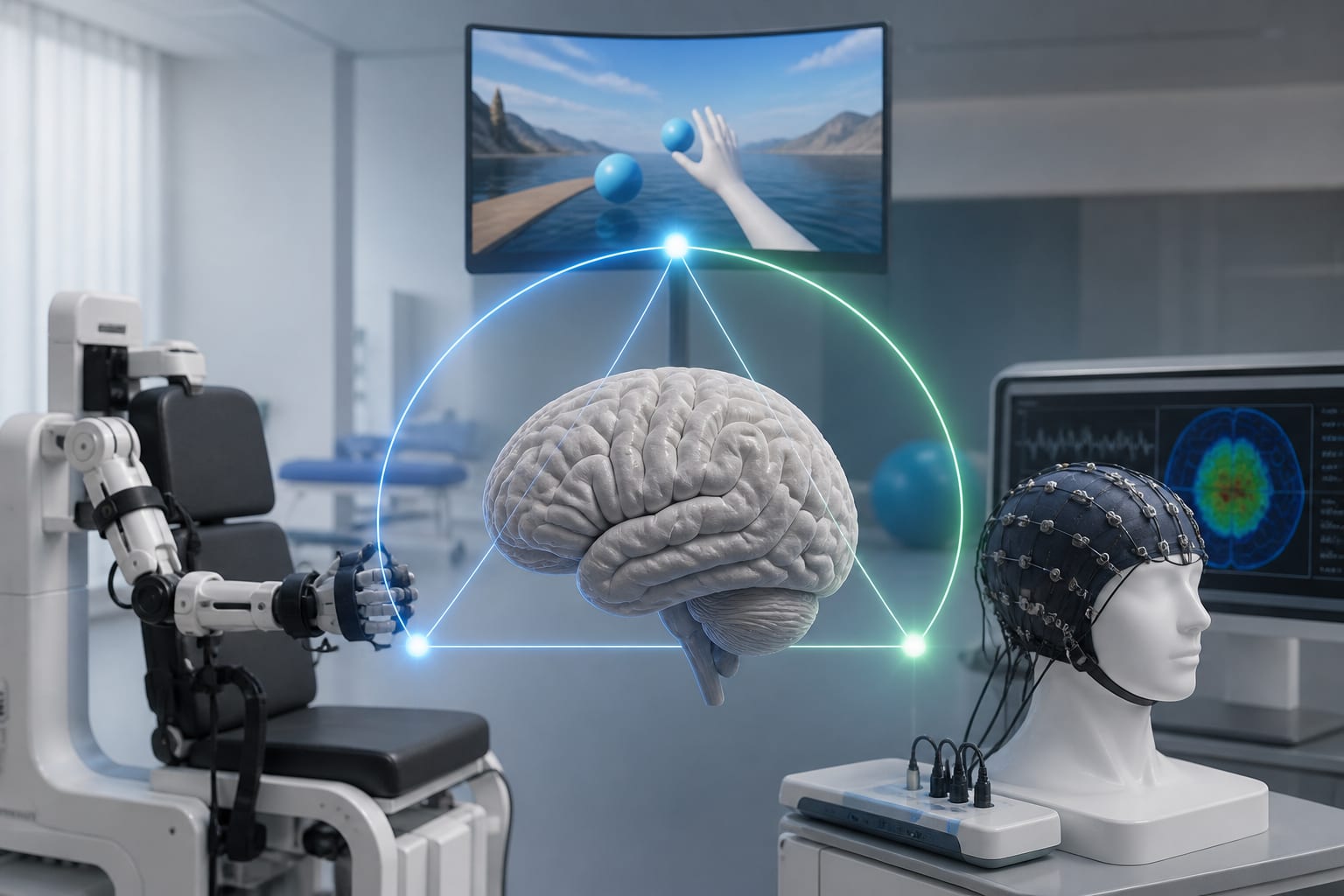
    This systematic review compared the effectiveness of virtual reality, robotics, and brain-computer interfaces for upper limb rehabilitation post-stroke.

  • 2

    The analysis included 25 RCTs with 1,145 stroke survivors, assessing interventions against conventional physical therapy.

  • 3

    Robotics-based interventions showed stronger evidence for improving upper-limb motor function compared to virtual reality and brain-computer interfaces.

  • 4

    ROT-CPT ranked first for the Modified Barthel Index, while VR-CPT ranked first for the Wolf Motor Function Test in secondary outcomes.

  • 5

    BCI-based interventions were represented by only one study, limiting the ability to draw reliable conclusions about their effectiveness.

Original Source(s)

Related Content