The missing microbial link in triclosan toxicity: comment on mechanism of liver fibrosis induced by life-long triclosan exposure in offspring rats - Takeaways - MDSpire
Coming Soon: Introducing MDSpire News. Learn more
Conexiant’s news site is now MDSpire News. Learn more

Uncovering the Microbial Connection to Triclosan-Induced Toxicity: Insights into Liver Fibrosis Mechanisms from Lifelong Exposure in Offspring Rats

  • By

  • Yajun He

  • Ruifang Wang

  • Fang Wang

  • September 8, 2026

Share

  • 1

    Liu et al. (2026) delineate the adverse outcome pathway (AOP) of triclosan (TCS)-induced liver fibrosis, highlighting TGF-β1 and AGEs-RAGE roles.

  • 2

    The model presented overlooks TCS's identity as a potent antimicrobial, focusing solely on its chemical stressor effects.

  • 3

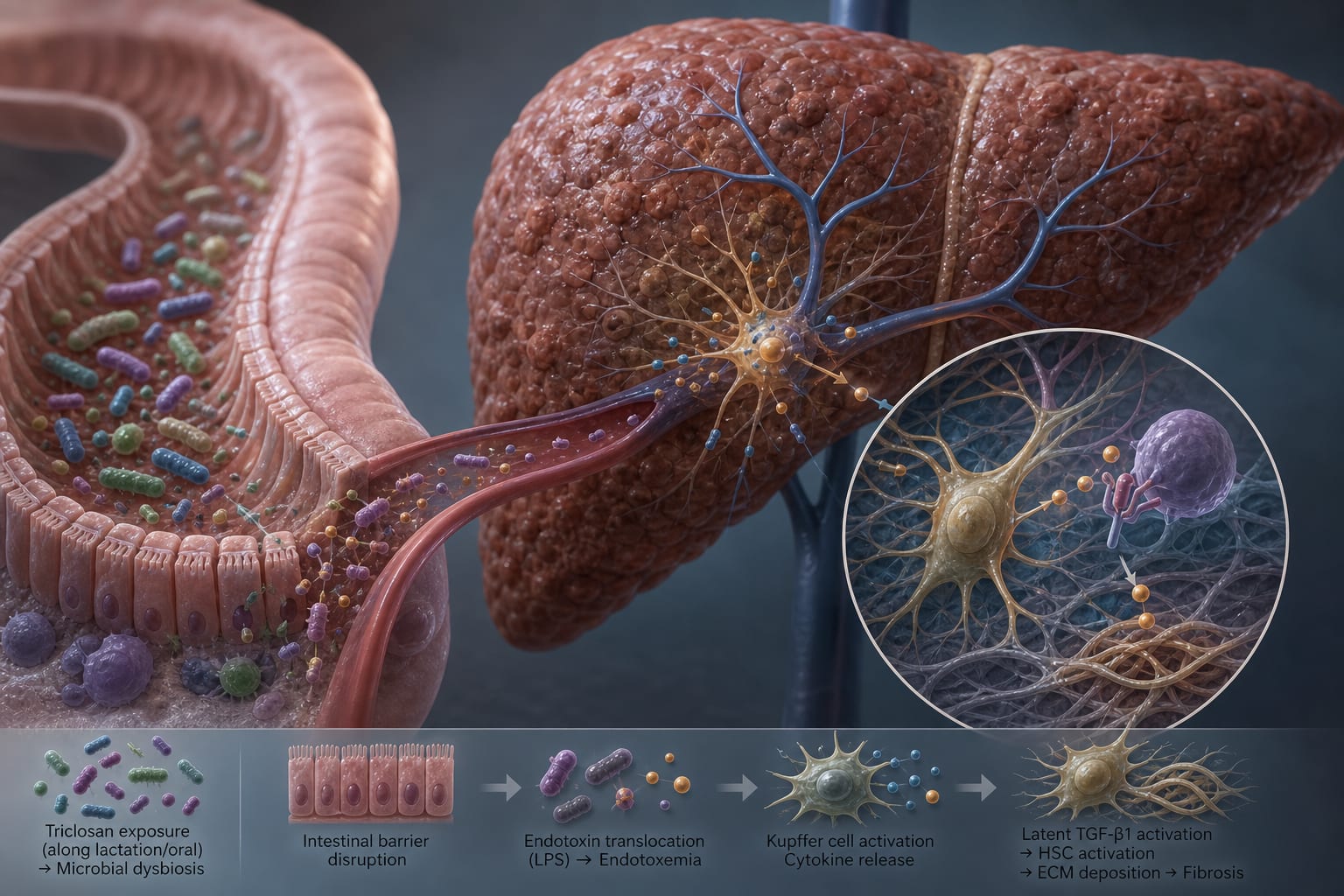
    Exposure to TCS through lactation and oral gavage leads to significant disruption of the neonatal gut microbiome.

  • 4

    Microbial dysbiosis compromises intestinal barrier integrity, allowing lipopolysaccharide (LPS) delivery to the liver.

  • 5

    The authors suggest that microbial dysbiosis and endotoxemia may be the primary events driving TGF-β1 surge in liver fibrosis.

Original Source(s)

Related Content