Type-1 inflammatory imprinting and programmed responsiveness to CD40L enhance Siglec-1-dependent HIV-1 trans-infection by dendritic cells - Takeaways - MDSpire

Type-1 inflammatory imprinting and programmed responsiveness to CD40L enhance Siglec-1-dependent HIV-1 trans-infection by dendritic cells

  • By

  • E. Grace Bothwell

  • Allison E. DePuyt

  • Colleen R. Zaccard

  • Renee. R. Anderko

  • Peter E. J. Shoucair

  • Holly A. Bilben

  • Tatiana M. Garcia-Bates

  • Abigail D. Gerberick

  • Simon C. Watkins

  • Nicolas Sluis-Cremer

  • Charles R. Rinaldo

  • Robbie B. Mailliard

  • June 4, 2026

  • 0 min

Share

  • 1

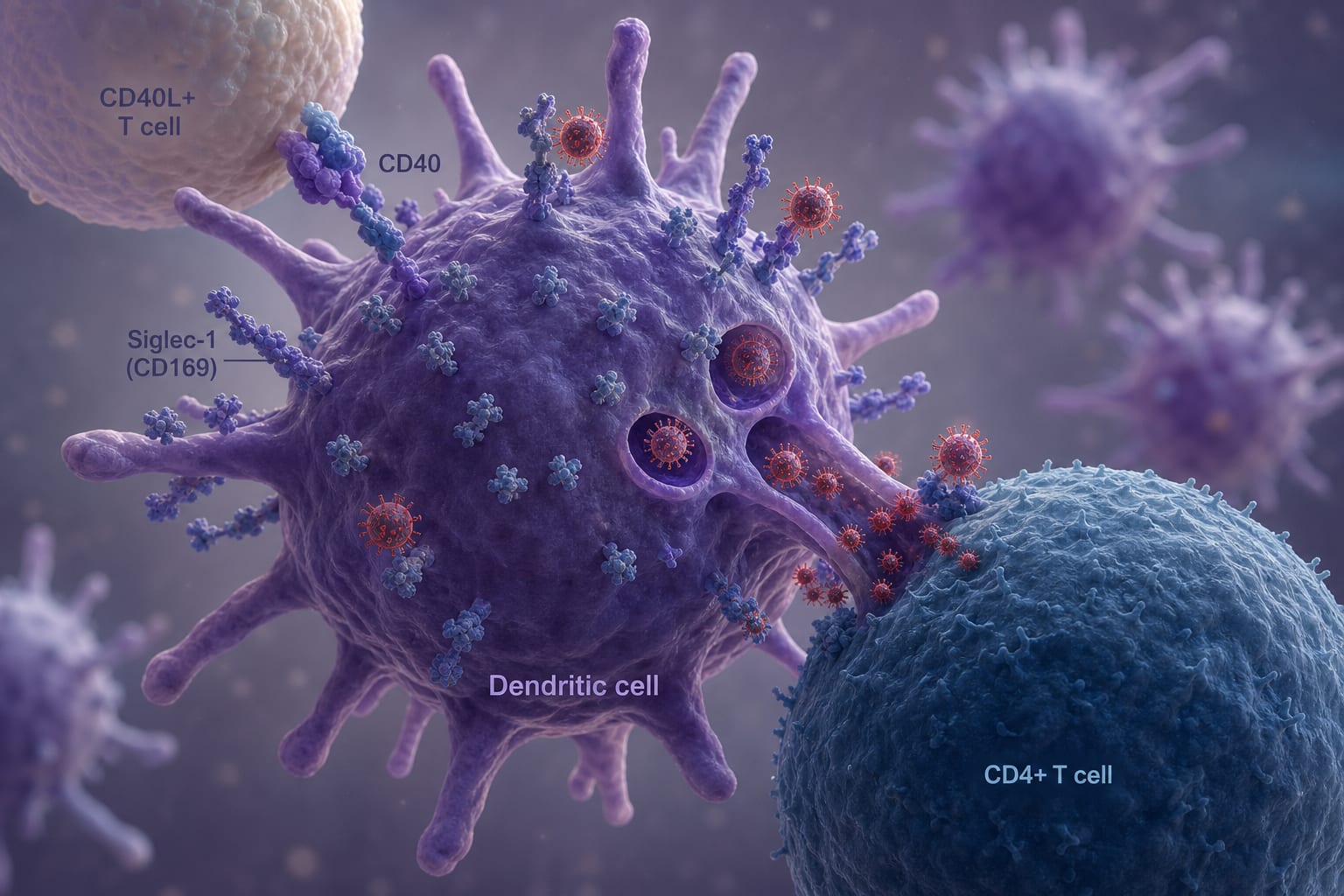
    Monocyte-derived dendritic cells (DC) matured under type-1 proinflammatory conditions enhance HIV-1 trans-infection of CD4+ T cells.

  • 2

    Prostaglandin E2 exposure diminishes the trans-infection capacity of dendritic cells.

  • 3

    Upregulation of Siglec-1 on proinflammatory DC increases HIV-1 binding potential and facilitates trans-infection.

  • 4

    CD40L signaling induces morphological changes in DC and enhances their ability to release CCL20, increasing CD4+ T cell susceptibility to HIV-1.

  • 5

    The nature of environmental signals during DC maturation critically influences their capacity to mediate HIV-1 trans-infection.

Original Source(s)

Related Content